

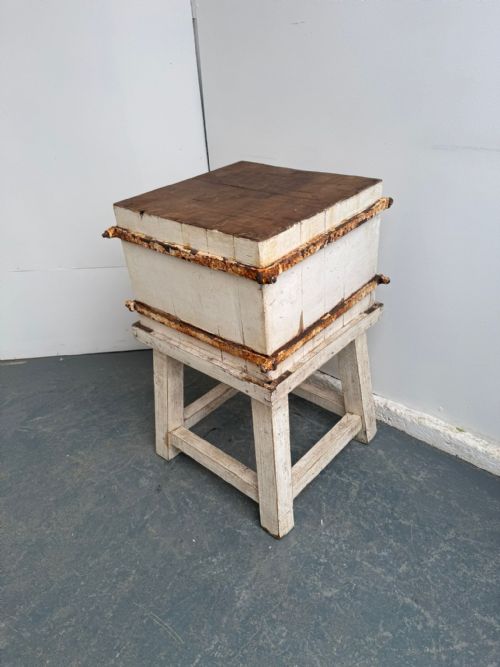


Freestanding Island
A freestanding island brings practical workspace and honest utility to a kitchen, prized for heavy-duty chopping tops and sturdy painted bases.
Freestanding Island
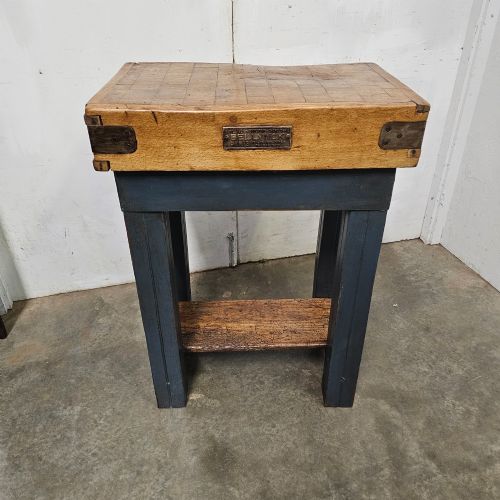
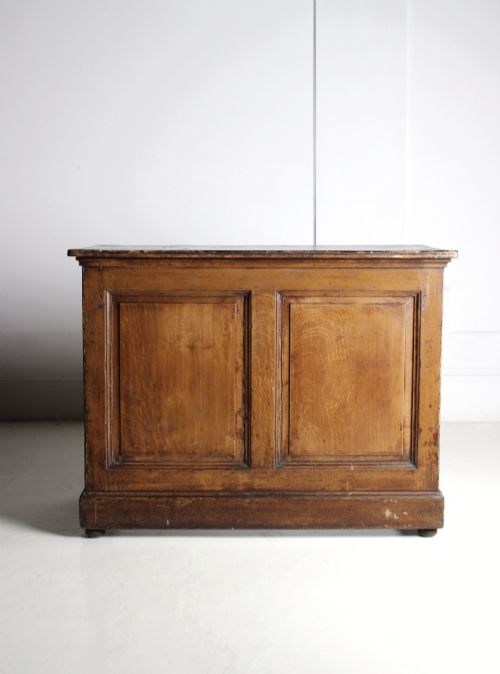
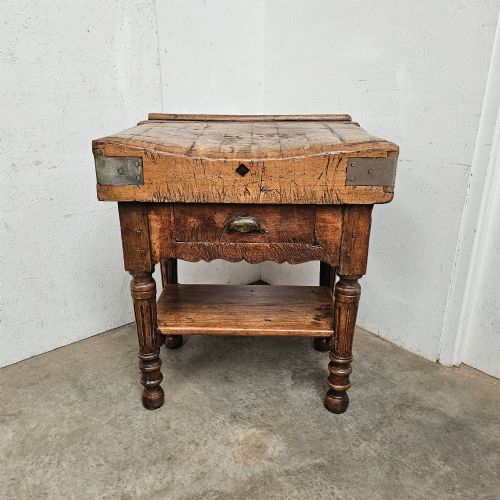
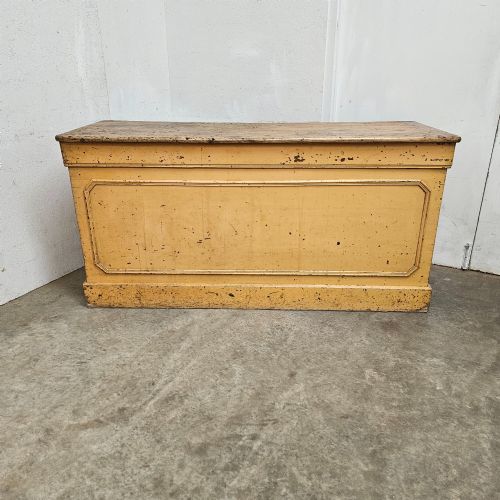
A freestanding island gathers heavy work surfaces like butchers blocks, shop counters, and kitchen tables into a single movable unit.
Most examples on this page are French beech butchers blocks on stands or painted pine shop counters dating from the nineteenth century to the mid-twentieth century.
Buyers choose a freestanding island to anchor a kitchen with authentic working character rather than fitted cabinetry.
How they were made
Heavy work surfaces utilise dense timbers such as beech, sycamore, and pine, jointed and end-grained to withstand daily chopping and preparation.
Bases combine robust iron, steel, or painted wood structures, often retaining original paint or decorative turnings beneath the heavy tops.
Freestanding Island Retail Price Guide 2026
Typical asking prices for freestanding island among the pieces listed under this phrase on Sellingantiques today, from the lower quarter to the upper quarter. They describe what is for sale here now, not the wider market.
Current listings feature pieces spanning the nineteenth century, Edwardian era, and up to nineteen-fifty, utilising beech, pine, and steel.
What varies in quality
Quality rests in the depth and integrity of the timber top, where decades of heavy use leave patinated surfaces rather than structural compromise.
The sophistication of the base elevates a piece, distinguishing utilitarian pine stands from decorative cast iron or French provincial frames.
The Freestanding Island Glossary
- End-grain
- Timber cut across the growth rings to present the hardest fibres upward. This method prevents the surface from splitting under heavy cleaver blows.
- Butchers block
- A thick wooden chopping surface designed for heavy food preparation. These blocks often sit on dedicated stands or integrated cabinets.
- Shop counter
- A long commercial table used in retail spaces to serve customers. Painted pine examples frequently double as kitchen work islands.
- Patina
- The surface sheen and colour developed through years of handling, cleaning, and wear. It indicates genuine age and use.
- French provincial
- A regional domestic style noted for simpler, sturdy construction and practical forms. It avoids heavy urban ornamentation.
Freestanding Island: Frequently Asked Questions
Can I use these blocks for cooking?
Original butchers blocks and chopping blocks are built from dense timbers like beech and sycamore.
They remain entirely suitable for food preparation provided the timber surface is properly cleaned and maintained.
How do I date an island?
Examine the construction methods, tool marks, and paint layers on both the top and the base.
Nineteenth-century pieces often show hand-planed surfaces and forged iron elements, whereas mid-century examples utilise steel components.
Are shop counters sturdy enough?
Shop counters were constructed for heavy commercial daily use in retail environments.
Their substantial pine frames and thick tops provide exceptional stability for modern domestic kitchen tasks.