

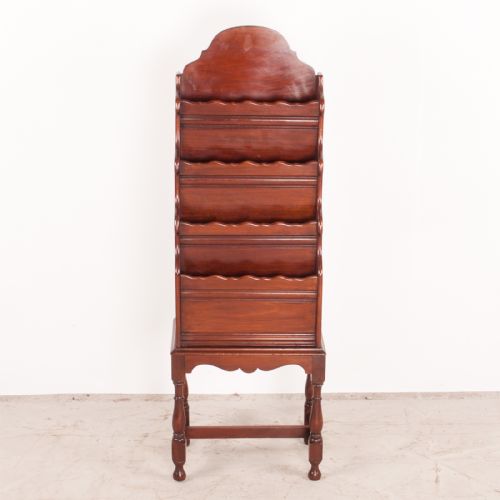


Freestanding Canterbury
A freestanding canterbury is a low, compartmentalised stand for sheet music or periodicals that keeps your floor tidy with genuine period utility.
Freestanding Canterbury
When you search for a freestanding canterbury, you encounter specialised furniture designed to hold books, music sheets, and magazines within easy reach of a chair or desk. These pieces combine vertical dividers with low frames, occasionally incorporating drawers or lower tiers for supplementary storage.
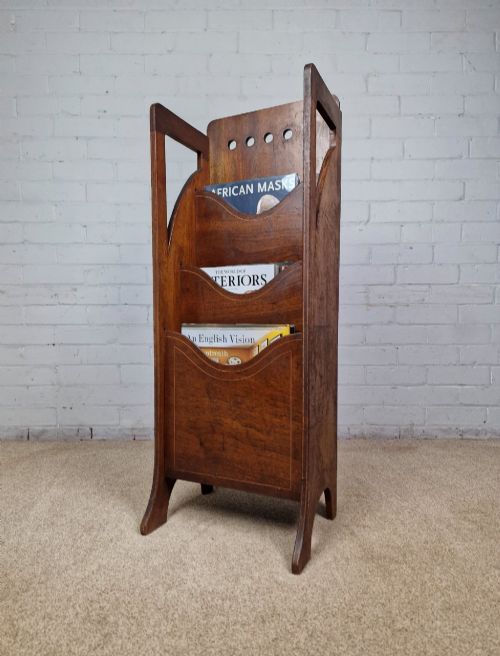
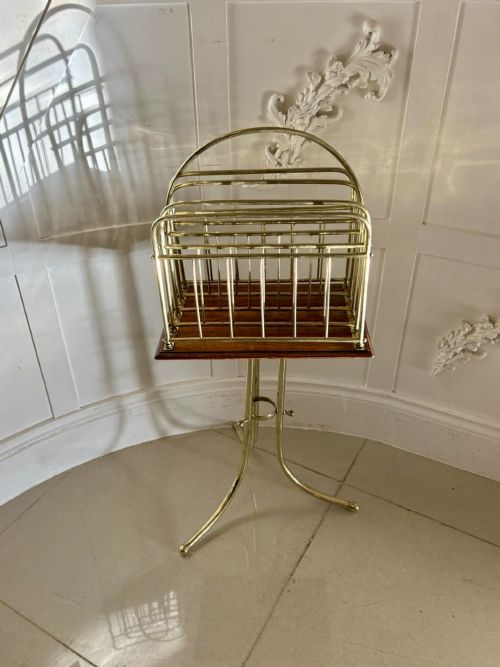
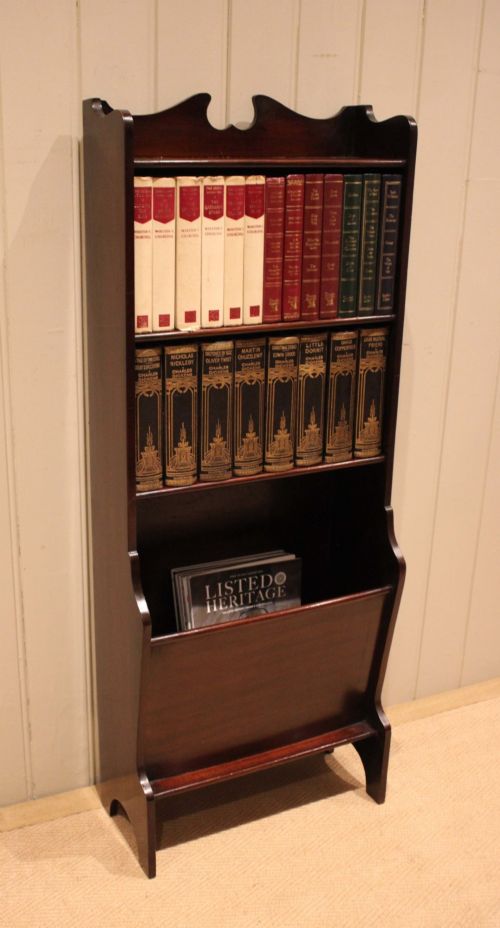
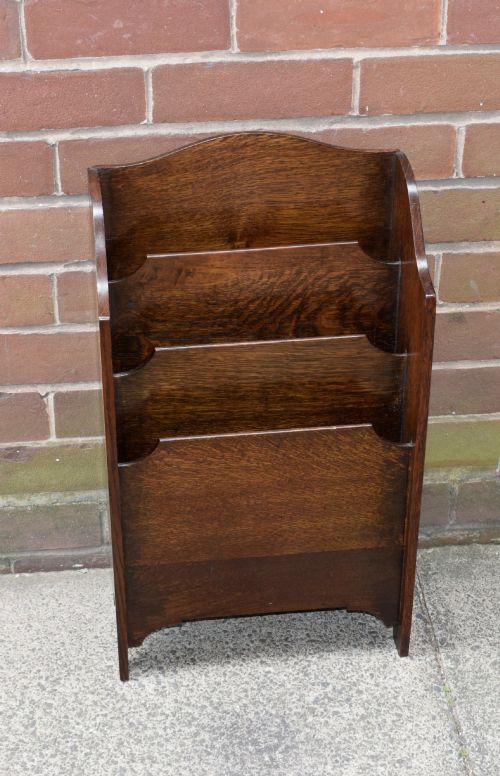
The versions most commonly met on this page span the Georgian, Victorian, and Edwardian eras, alongside later Arts and Crafts interpretations. They appear in forms ranging from traditional timber racks with slatted partitions to revolving metal stands and tiered combinations of bookcases and magazine holders.
How they were made
Cabinet makers constructed these pieces primarily using timbers such as mahogany, oak, walnut, and burr walnut, often enhancing plain surfaces with boxwood inlay. Structural integrity relied on solid framing for the dividers, which needed to support heavy loads of paper without warping.
Freestanding Canterbury Retail Price Guide 2026
Typical asking prices for freestanding canterbury among the pieces listed under this phrase on Sellingantiques today, from the lower quarter to the upper quarter. They describe what is for sale here now, not the wider market.
Some models revolve so energetically you might accidentally spin your evening newspaper into the fireplace.
What varies in quality
The distinction between standard utility items and finer examples lies in the selection of timbers and the crispness of decorative details like boxwood inlay. Superior pieces exhibit carefully matched wood grains, particularly in burr walnut veneers, and robust joinery that keeps dividers rigid.
Hardware choice and mechanical smoothness further differentiate the range, as seen in the steady rotation of revolving stands or the precise fit of a lower drawer. The integration of mixed materials, such as combination stands featuring both brass and figured hardwoods, indicates higher ambition in the workshop.
Finnigans
The Freestanding Canterbury Glossary
- Canterbury
- A low stand traditionally used for holding sheet music or books, divided into vertical sections. It often includes a small drawer beneath the main compartments.
- Whatnot
- A piece of open shelving with multiple tiers used for displaying or storing small items. They frequently appear combined with canterbury compartments.
- Boxwood Inlay
- Contrasting light wood inserted into darker timber surfaces to create decorative patterns or geometric borders. It adds visual definition to mahogany and walnut panels.
- Revolving Stand
- A piece mounted on a central pivot that allows the entire rack to turn for easy access from multiple seating positions. These typically utilise brass frameworks and sturdy wooden bases.
Freestanding Canterbury: Frequently Asked Questions
What is a freestanding canterbury used for?
These pieces function primarily as tidy storage for periodicals, sheet music, and books next to a seating area. Their vertical partitions keep softcover items upright and sorted.
Historically, they sat beside pianos or reading chairs for quick access to daily papers or musical scores. Today, they serve the same practical purpose in a living room or study.
How do I date a canterbury?
Dating relies on timber choice, construction methods, and stylistic markers associated with specific periods like George III or the Edwardian era. Heavy mahogany with subtle inlay often points to earlier periods, while bamboo and revolving brass designs lean towards the late nineteenth century.
Examining the underside, drawer construction, and secondary woods helps confirm the era of manufacture. Arts and Crafts examples display simpler, sturdier oak framing characteristic of the early twentieth century.
Can these hold heavy books?
Most standard canterburys suit magazines, sheet music, and moderate paperbacks rather than heavy folio volumes. The vertical slats are built to separate flexible items rather than bear massive weight.
Sturdier oak or mahogany models manage denser collections better than lighter bamboo or revolving brass versions. Checking the rigidity of the base and vertical dividers ensures the piece handles your specific storage needs.
Where should I place it?
A freestanding canterbury works best beside a sofa, armchair, or desk where reading materials accumulate. Because finished wood or metal surrounds all sides, it looks correct placed away from walls.
Revolving models sit well in open spaces or corners to allow easy turning access from multiple seats. Avoid spots with direct sunlight or extreme temperature shifts to protect vulnerable wood veneers and boxwood inlay.