


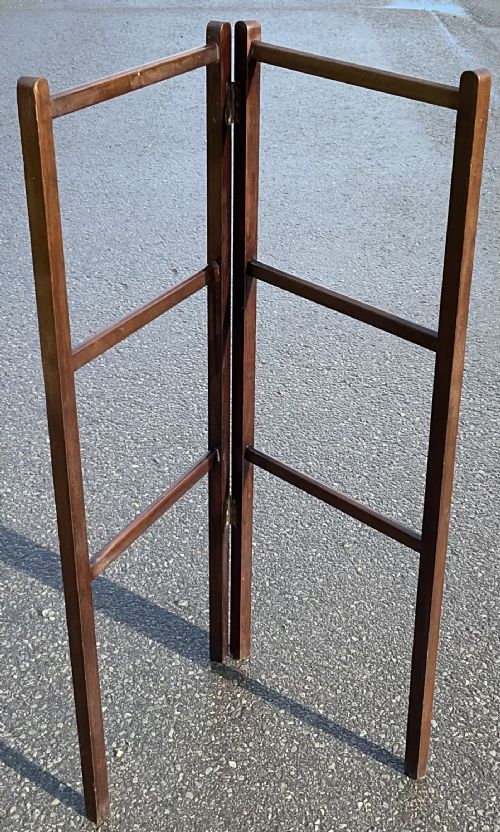


Freestanding Airer
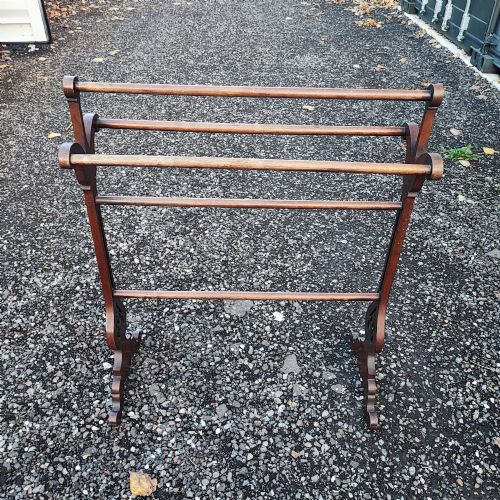
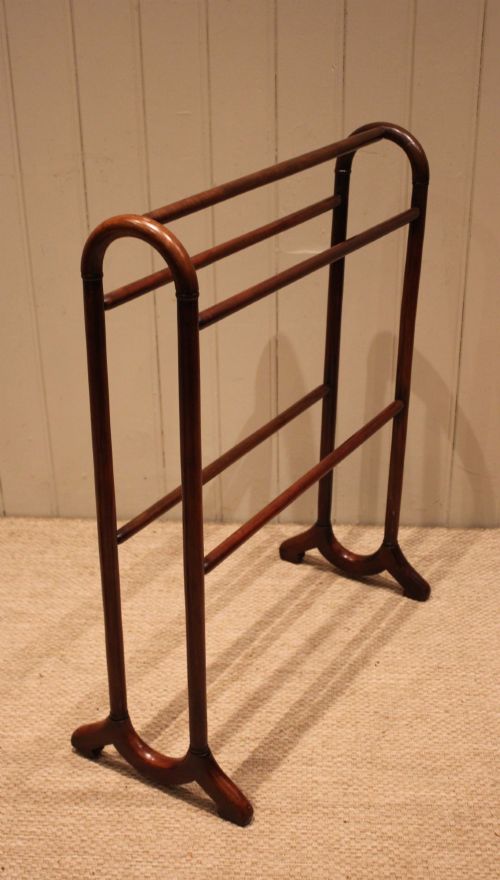
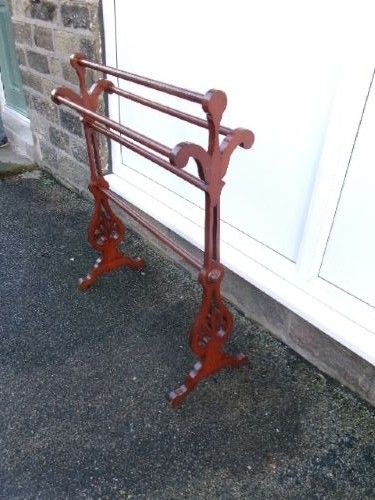
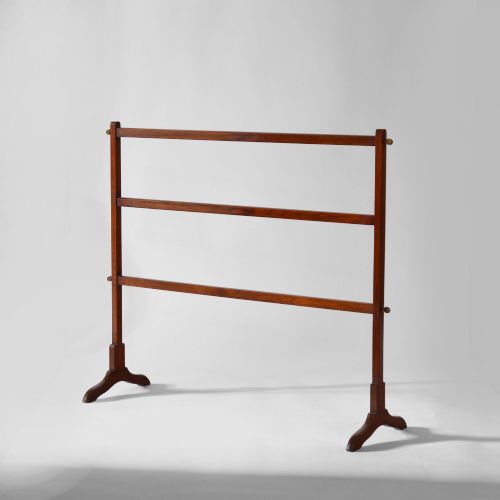
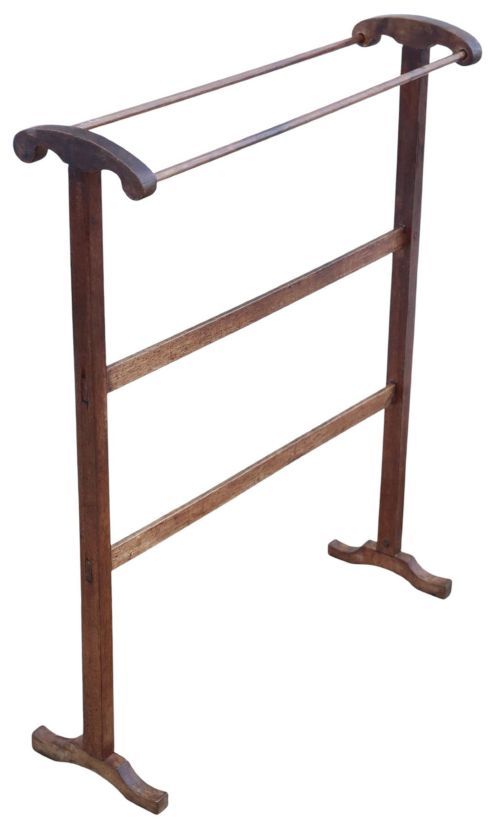
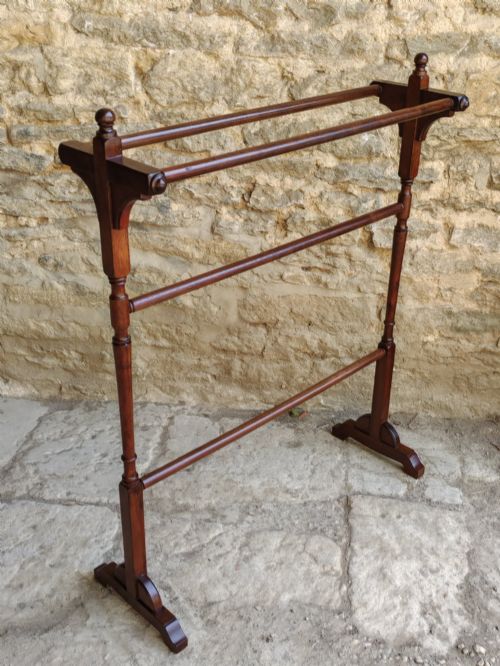
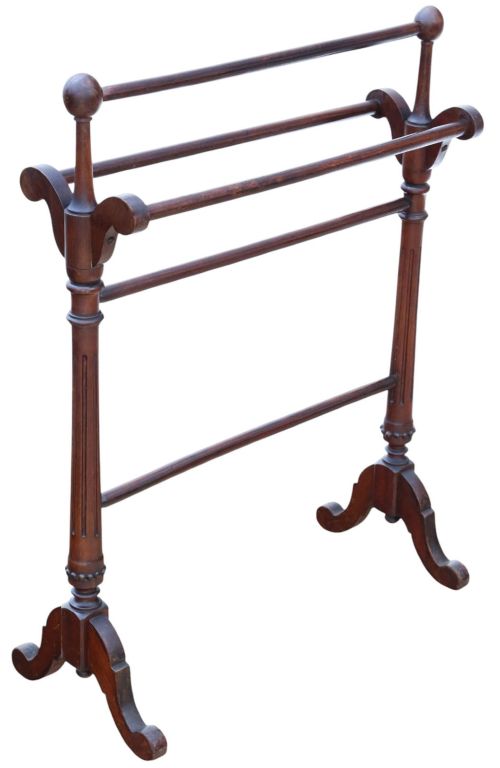
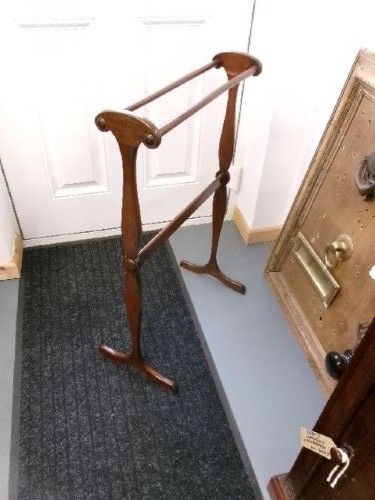
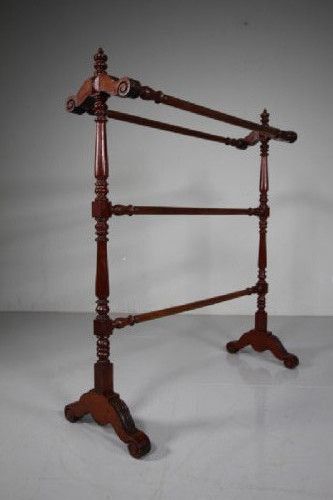
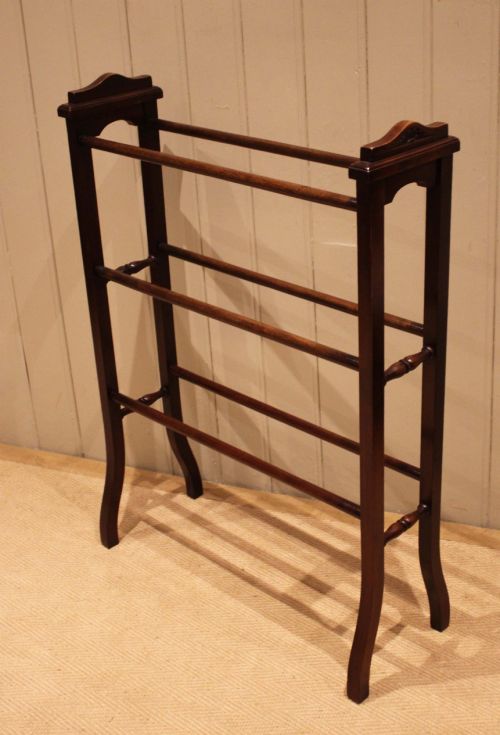
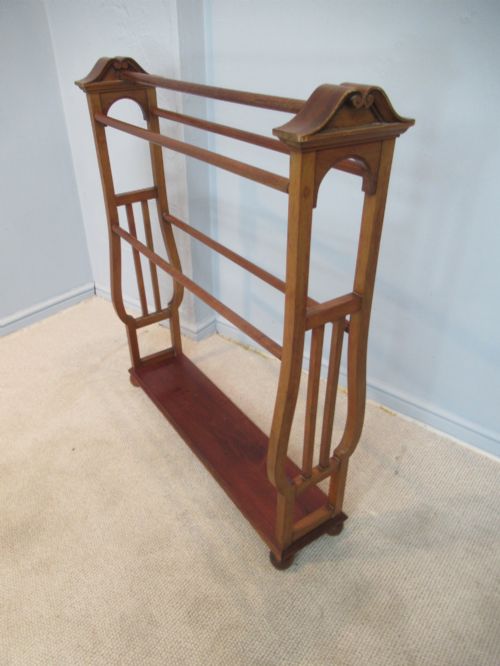
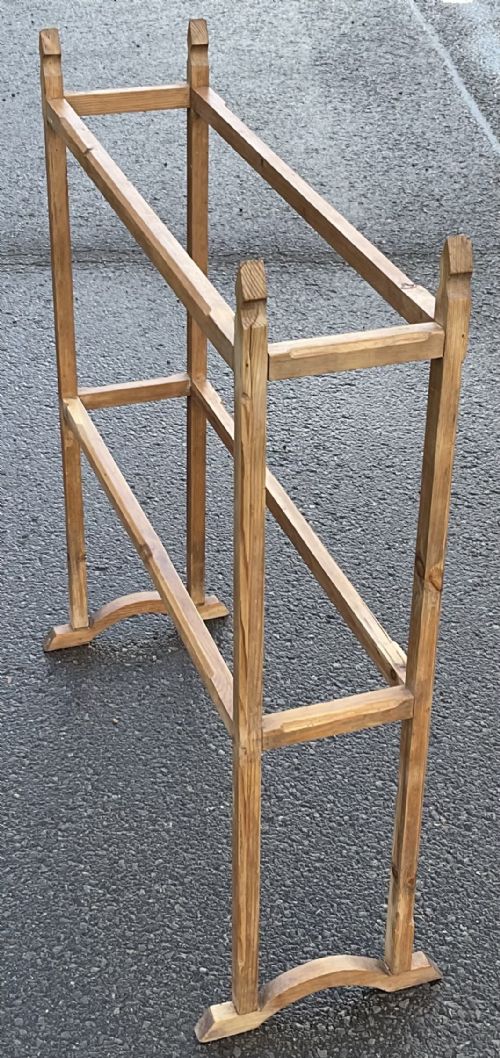
A freestanding airer is a practical domestic frame designed to hold laundry, appearing here in timber from the nineteenth and early twentieth centuries.
Freestanding Airer
A freestanding airer serves to dry or display textiles, taking the form of a portable wooden stand that moves easily about a room. When you search for a freestanding airer, you encounter pieces designed to stand independently rather than mount to a wall, often built with multiple rails or folding sections.
The selections available span several decades and stylistic movements, stretching from Regency and William IV proportions through Victorian periods to Edwardian examples. Mahogany forms the backbone of these offerings, accompanied by walnut, pine, and oak.
Makers produced these stands in various formats, including folding cheval designs, three-fold configurations, and large five-bar units. Smaller iterations suit compact spaces, while oversized versions accommodate generous quantities of laundry.
Materials and construction
Cabinetmakers utilised dense hardwoods such as mahogany and walnut for sturdy frames, alongside softer timbers like pine for utilitarian domestic pieces. Selected woods were often turned, jointed, and polished to withstand daily handling.
Construction techniques include folding hinges for multi-section frames and inlaid details on later Edwardian examples. Brass fittings and ebonised or boxwood accents occasionally punctuate the wooden framework.
Freestanding Airer Retail Price Guide 2026
Typical asking prices for freestanding airer among the pieces listed under this phrase on Sellingantiques today, from the lower quarter to the upper quarter. They describe what is for sale here now, not the wider market.
The listings on this page span from the Regency period through Victorian designs up to Edwardian pieces from nineteen ten.
Assessing quality and proportion
Quality reveals itself in the choice of timber and the solidity of the joints, where dense mahogany or figured walnut outlasts simpler pine. Finer pieces display careful turning, balanced proportions, and thoughtful detailing such as inlay work or brass hardware.
Scale also dictates character, moving from modest domestic items to large oversized country house pieces with multiple rails. The integrity of the folding mechanisms and the smoothness of the timber finish separate standard utility items from finer examples.
The Freestanding Airer Glossary
- Cheval rail
- A standing frame designed to swing or pivot on side supports, allowing multiple angles of access.
- Ebonised wood
- Timber treated with a dark finish to imitate expensive ebony, popular in late nineteenth-century decorative pieces.
- Three-fold
- A construction method using three hinged sections that fold together for storage or extend for use.
- Inlay
- A decorative technique where contrasting materials like boxwood are inserted into recesses within the primary wood surface.
Freestanding Airer: Frequently Asked Questions
Where should I place a freestanding airer?
These pieces suit utility spaces, bedrooms, or bathrooms where laundry management requires a portable and practical wooden frame.
Their freestanding nature allows them to move easily to catch warmth or breeze as needed.
How do I date a wooden airer?
Dating relies on timber selection, style markers such as Regency curves or Arts and Crafts simplicity, and construction methods.
Earlier nineteenth-century pieces often feature solid mahogany with heavy proportions, while Edwardian examples introduce lighter pine or inlaid details.
Can I use an antique airer for laundry?
Most sturdy nineteenth-century and Edwardian stands remain entirely functional for holding textiles, towels, and garments.
Care should be taken not to overload fragile hinges or expose aged timber to excessive moisture.
What is the difference between folding and fixed rails?
Folding rails utilise hinges to create multi-fold or cheval formats that adjust in width and fold flat when not in use.
Fixed or standing rails offer a rigid, stationary frame built for constant domestic utility.