

Framed Watercolor Painting
A framed watercolor painting brings paper, pigment, and light together behind glass, offering an intimate window into past landscapes and portraits.
Framed Watercolor Painting
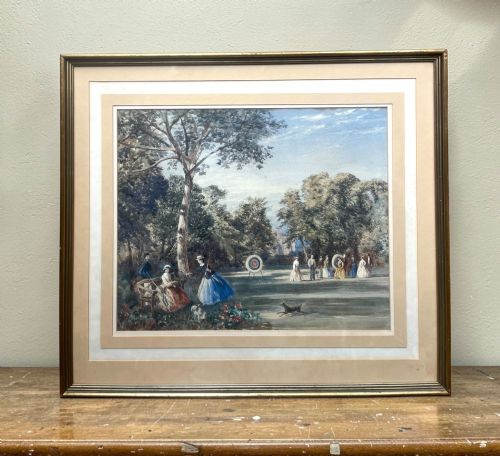
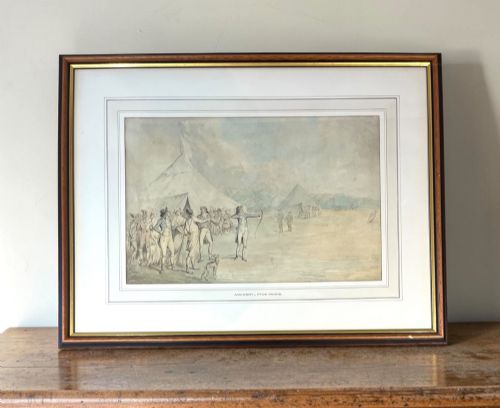
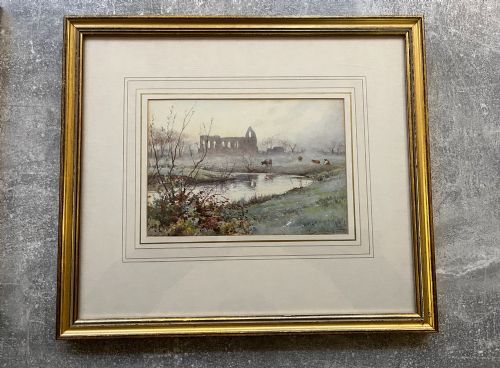
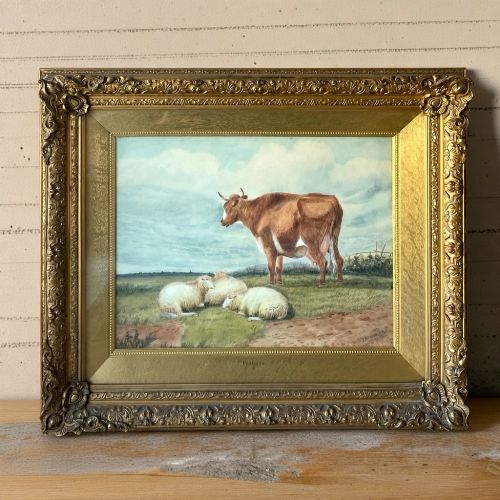
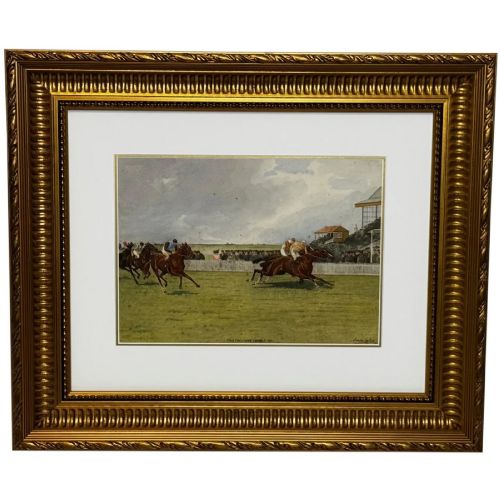
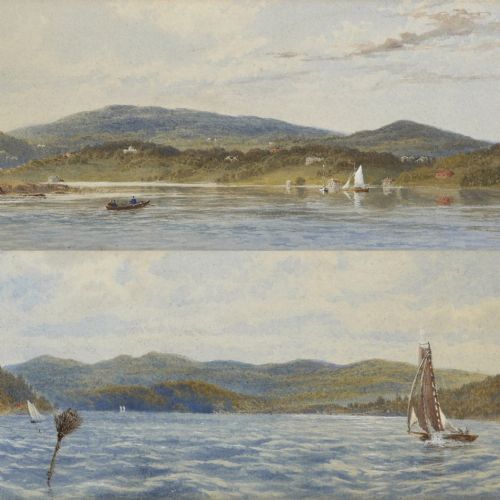
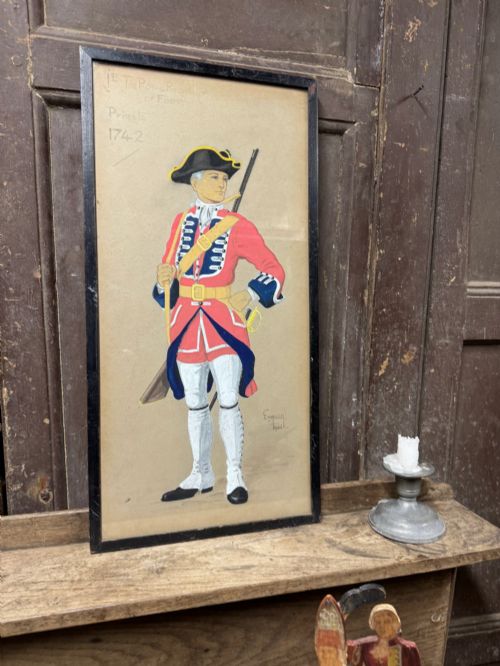
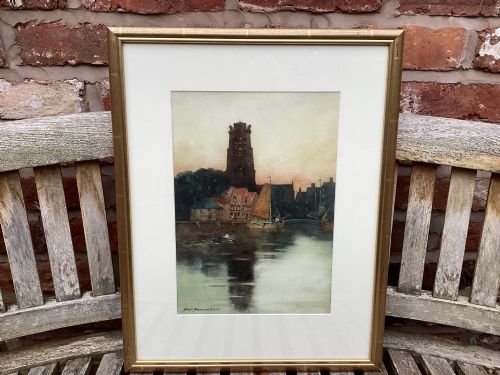
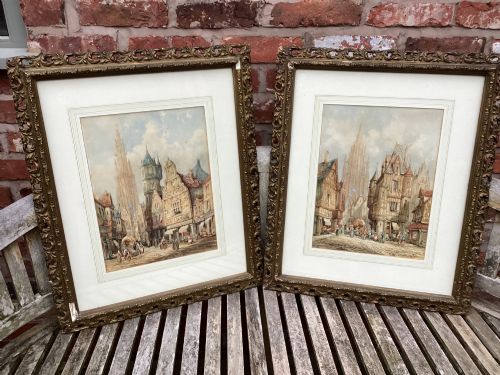
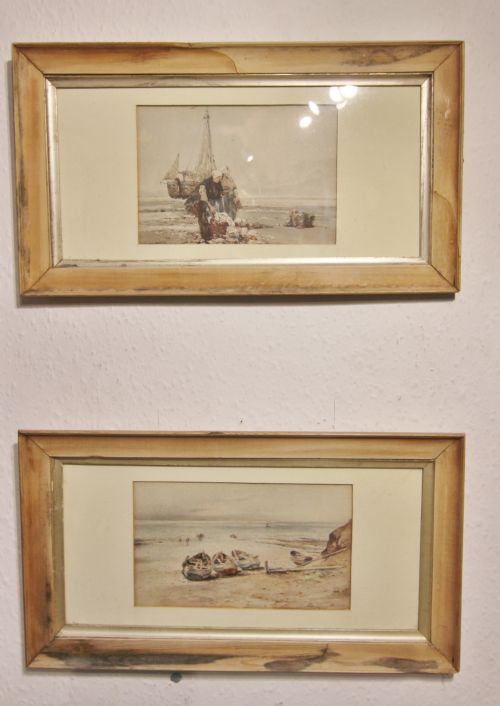
A framed watercolor painting captures fleeting light and colour upon paper, preserving subjects from grand townscapes and coastal harbours to delicate botanical studies and portrait miniatures. When you search for a framed watercolor painting, you encounter works spanning the eighteenth century through to the mid twentieth century, including Chinese export scenes and grand tour mementoes.
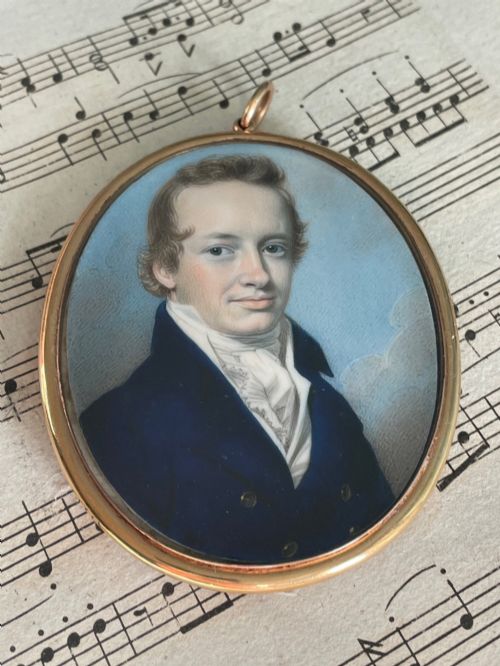
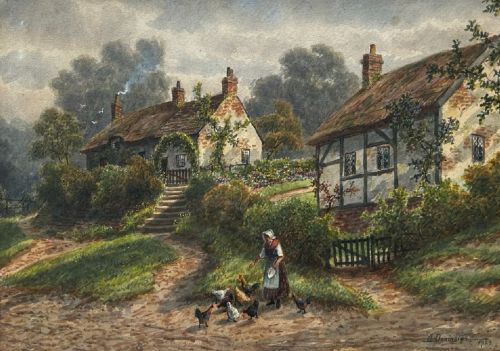
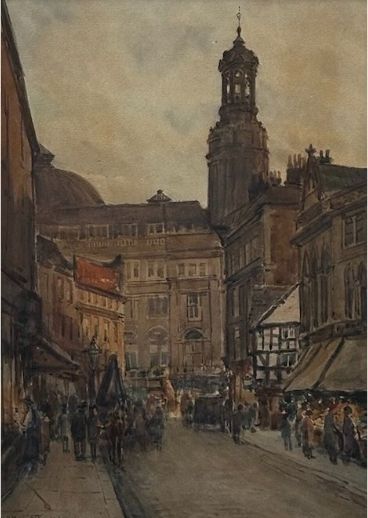
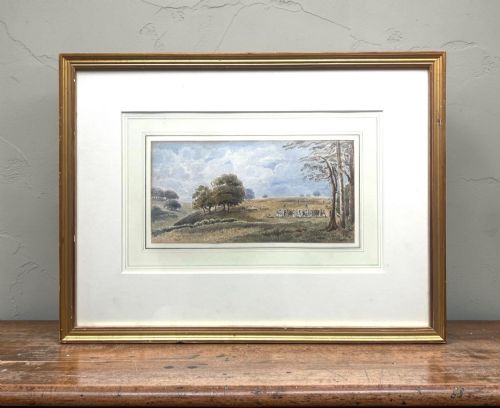
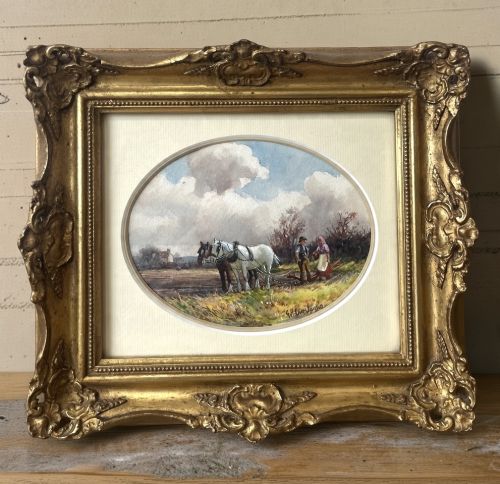
The most common examples on this page are nineteenth century British and European landscapes, often housed in period wood or gilt frames with protective glass. Portrait miniatures on paper or ivory also appear frequently, alongside Edwardian flower studies and topographical views signed by named artists.
These works range from intimate cabinet pieces designed for close inspection to exhibition scale watercolours that command a wall. Styles shift from the precise detail of early Georgian portraiture to the looser atmospheric washes of the late Victorian era and early twentieth century.
Materials and Techniques
Watercolour pigment relies on water-soluble binding agents, applied to various supports such as paper, pith paper, or fabric to achieve translucent washes and fine linear details. Bodycolour, or gouache, is frequently introduced alongside transparent pigments to add opaque highlights and dense areas of colour.
Frames are integral to the survival of these works, utilising woods such as maple, ebonised timber, and gilt wood to house the protective glass and secure the paper backing. Brass elements, gold plated bezels, and ornate oval surrounds are common in the mounting of smaller portrait miniatures.
Framed Watercolor Painting Retail Price Guide 2026
Typical asking prices for framed watercolor painting among the pieces listed under this phrase on Sellingantiques today, from the lower quarter to the upper quarter. They describe what is for sale here now, not the wider market.
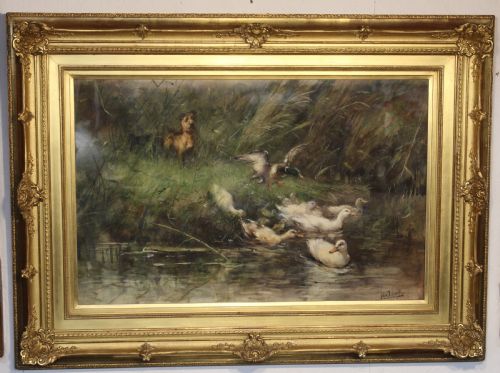
Delightful animal subjects appear alongside grand architecture, including a detailed study of a hare and game birds.
Judging Quality and Execution
Quality rests upon the sureness of the hand and the preservation of the pigment against fading or damp. Superior works display confident brushwork and precise control of wash transparency, whereas weaker examples can appear overworked or muddy.
The integrity of the original framing and mount contributes significantly to the standing of a piece. Retaining the period frame, unbroken glass, and untouched backing paper protects the delicate paper surface and preserves historical context.
Frederick Buck·Thomas Rowden·William Woolard·Harry Bright·Cuthbert Crossley·Alessandro Cittadini·Herbert Menzies Marshall·Robert George Talbot Kelly·William Taylor Longmire·David Law·George Sydney Shepherd·H Medlycott·Guido Bach·Bruce Bairnsfather·George Fotherly Hargitt·Thomas Miles Richardson Jnr
The Framed Watercolor Painting Glossary
- Watercolour
- A painting method where fine pigment is suspended in a water-soluble binder and applied to paper. It relies on the white of the paper to provide luminosity through translucent washes.
- Bodycolour
- An opaque watercolour paint, also known as gouache, mixed with white pigment to create solid areas of colour and sharp highlights. It is frequently combined with transparent watercolour in nineteenth century landscapes.
- Portrait miniature
- A small, highly detailed portrait painting, often executed on paper, ivory, or vellum during the eighteenth and nineteenth centuries. They are typically housed in small protective cases or oval frames.
- Gilt wood
- Wood carved and coated with a thin layer of gold leaf or metallic powder, commonly used for nineteenth century picture frames. It provides a bright, reflective border that complements the painting within.
- Pith paper
- A delicate material formed from the pith of the tetrapanax papyrifer plant, utilised in nineteenth century Chinese export paintings. It has a velvet-like texture that absorbs watercolour pigment with intense saturation.
Framed Watercolor Painting: Frequently Asked Questions
How do I hang antique watercolors?
Keep watercolors away from direct sunlight to prevent the pigments from fading over time. Indirect natural light in a stable, dry room suits them best.
Ensure the frame hangs securely from picture rail hooks or wall anchors, avoiding areas subject to dampness or extreme temperature swings.
Why are some watercolors painted on ivory?
Miniature painters used thin slices of ivory because its smooth, luminous surface gave a warm glow to flesh tones that paper could not easily match.
The dense material allowed artists to stipple and build up microscopic layers of pigment for extraordinary detail in portraiture.
How can I tell the period of a frame?
Georgian and Regency frames often feature crisp plaster ornamentation, reeded moulding, or deep cavetto profiles finished in gold leaf. Late Victorian and Edwardian examples frequently use simpler oak, ebonised wood, or wider gilded compo frames.
Examining the corner joints, backboards, and fixings provides further clues to the original age of the housing.
What is Chinese export pith painting?
These works were produced in Canton during the nineteenth century primarily for Western traders, depicting local trades, figures, and landscapes.
The soft, fragile pith surface absorbs watercolour with a characteristic velvety depth that differs markedly from European papers.