

Framed Rural Countryside Art
Framed rural countryside art captures traditional British fields, rivers and village life through paintings and watercolours.
Framed Rural Countryside Art
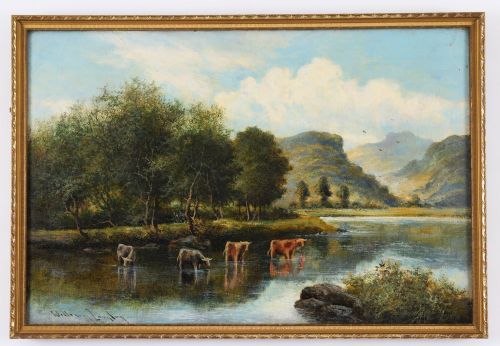
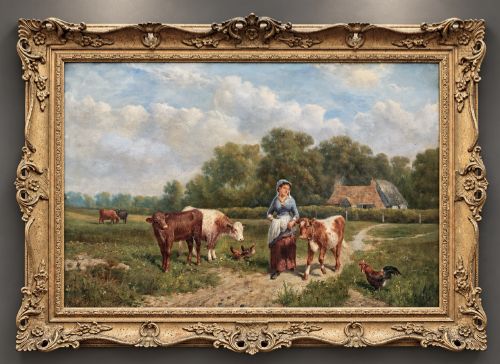
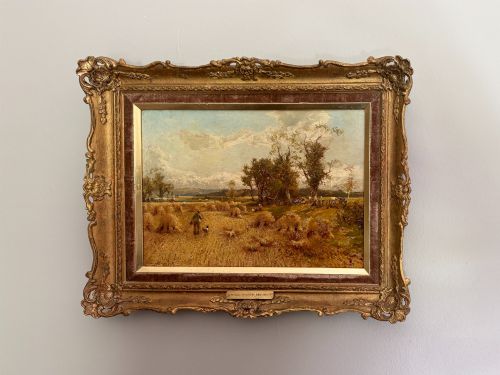
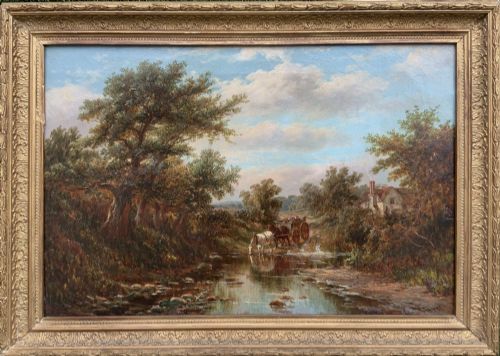
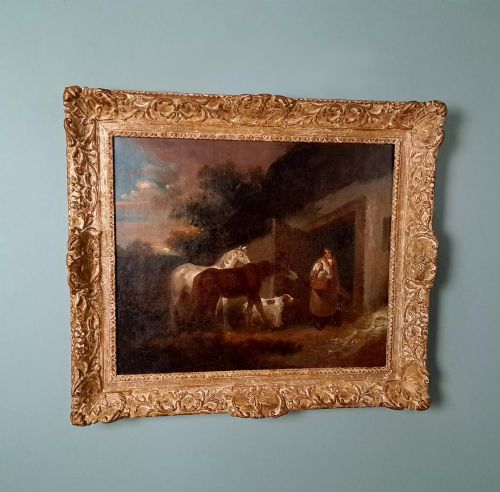
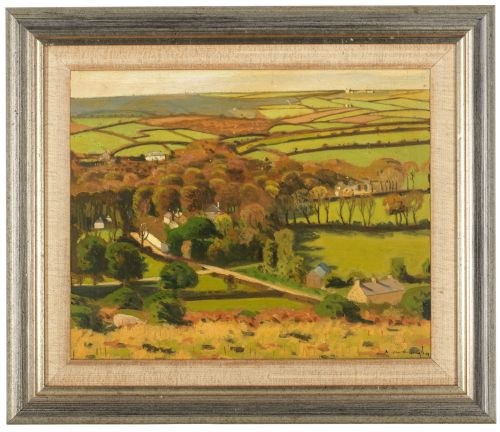
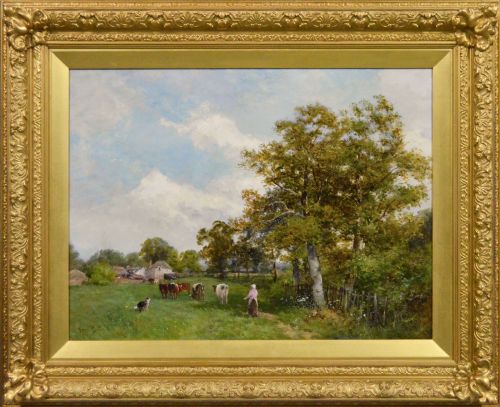
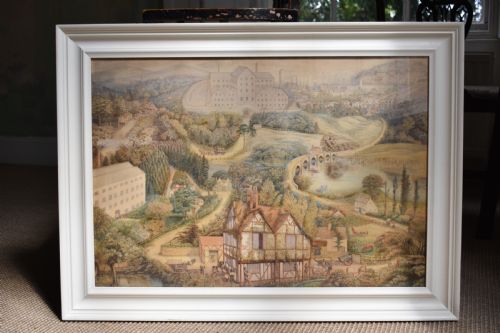
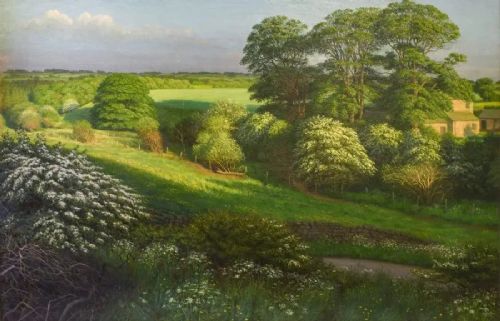
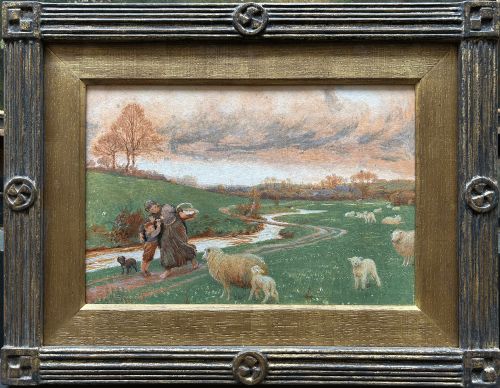
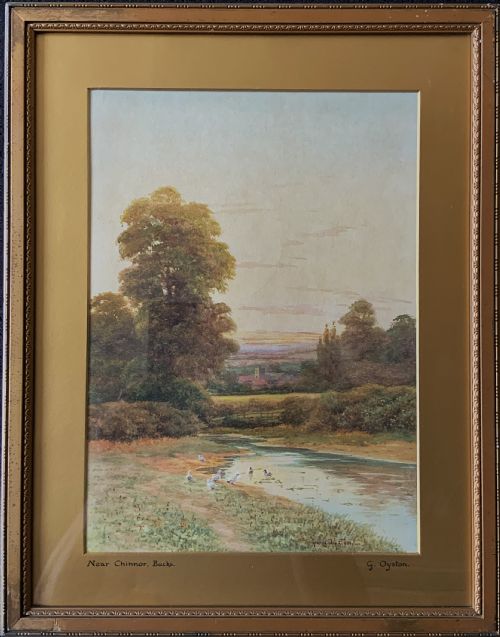
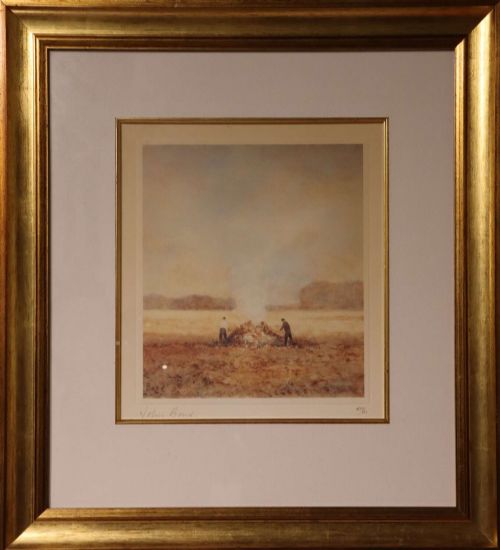
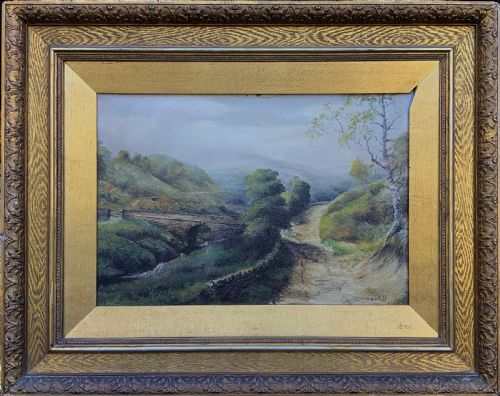
When searching for framed rural countryside art, buyers encounter painted depictions of British pastoral scenes, agricultural landscapes and quiet country villages. These works document rural life through depictions of ploughing horses, sheep grazing in valleys, thatched cottages and riverbanks.
The selections span from Victorian and Edwardian periods into the mid-twentieth century, capturing changing approaches to landscape painting. Pieces range from detailed oil paintings on canvas to delicate watercolour pigments on paper, housed within period wooden frames.
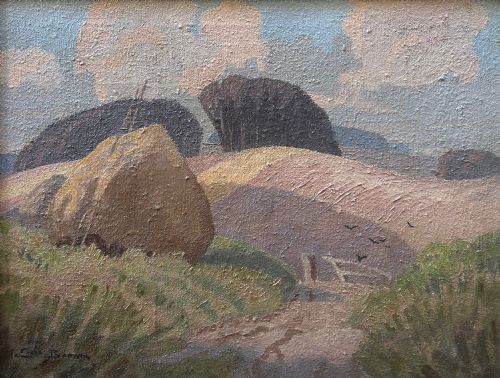
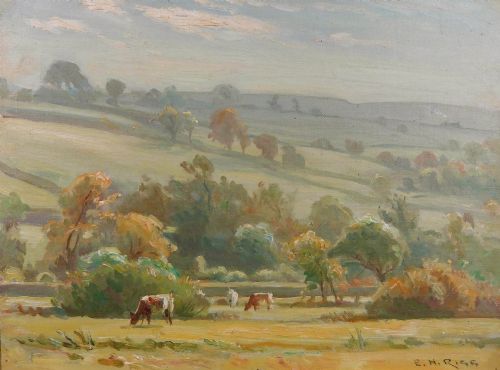
Most examples meet the eye as framed oil or watercolour paintings created by named British artists and provincial schools. These compositions bring historical views of fields, farms and country tracks directly into domestic settings.
Materials and techniques
Makers utilised oil paint on stretched canvas and watercolour pigment applied to paper to record these countryside views. These traditional mediums were handled either with academic precision or through the looser brushwork of British Impressionism and the Barbizon influence.
The resulting artworks are secured behind glass in the case of watercolours, or presented within protective wooden frames for oil paintings on canvas. These mounts and frames often incorporate ebonised or moulded wood appropriate to their period.
Listings feature works from the 19th Century, Victorian period, Edwardian era, and the 1960s, executed in oil and watercolour on canvas and paper.
Factors of quality
Quality rests upon the artist's ability to capture natural light, atmosphere and perspective within the landscape. Works by established painters exhibit confident brushwork, secure anatomical rendering of figures or livestock, and harmonious seasonal colour palettes.
The preservation of the original canvas, paper support and period wooden frame dictates the integrity of the piece. Stronger examples retain their initial pigment vibrancy without excessive fading or past restoration work altering the composition.
William Joseph Shayer Senior·Robert Morson Hughes·David Bates·Frederick Walker·Ernest Higgins Rigg·George Oyston·John Bond·Frederick Hines·Owen Bowen·Charles Clair·Edgar Woollatt·Henry Charles Fox·Fred Lawson·Cuthbert Crossley·James William Booth·William Hoggatt·William Sydney Cooper·Robert John Hammond·Johannes Philippus Galjaard·William Greaves·Frank Percy Wild·Charles Vickers·Robert Finley McIntyre·Robert Winchester Fraser
The Framed Rural Countryside Art Glossary
- Oil on canvas
- A painting technique where oil-based paints are applied to a woven fabric support stretched across a wooden frame. This method allows for rich colour blending and textured brushwork.
- Watercolour painting
- An artwork created using water-soluble pigments on a paper support. It relies on translucent washes of colour to create luminous effects.
- British Impressionism
- A late nineteenth and early twentieth-century painting style focused on everyday subjects, natural light and loose brushstrokes. It marked a departure from strict academic finish.
- Pastoral
- A genre of art depicting rural life, shepherds, farms and idealized country landscapes. These scenes emphasise tranquility and harmony between humanity and nature.
Framed Rural Countryside Art: Frequently Asked Questions
What periods do these artworks cover?
The listings span from the nineteenth century through the Edwardian era and into the mid-twentieth century. This includes Victorian pastoral works and later twentieth-century interpretations of the countryside.
Buyers find both traditional academic paintings and modern British landscape watercolours representing these various historical decades.
How were these landscape scenes originally displayed?
These artworks were framed in wood to protect the canvas or paper and to complement domestic interiors of the period. Many retain their original or period-appropriate frames, including ebonised wooden surrounds.
Displaying them involved hanging on interior walls where natural light could illuminate the pigments and details of the rural view.
How do I distinguish watercolours from oil paintings?
Watercolour paintings use transparent pigments on paper and require glass protection within the frame. Oil paintings feature thicker paint layers applied to canvas and typically remain unglazed.
Examining the surface texture reveals the woven fabric of canvas or the flat paper support beneath the pigments.
What subjects appear most frequently?
Common subjects include agricultural fields, riverbanks, farm animals such as sheep and shire horses, and rural cottages. Artists frequently recorded seasonal changes, harvest scenes and country tracks.
These motifs reflect a sustained artistic interest in documenting traditional British rural life and local topography.