



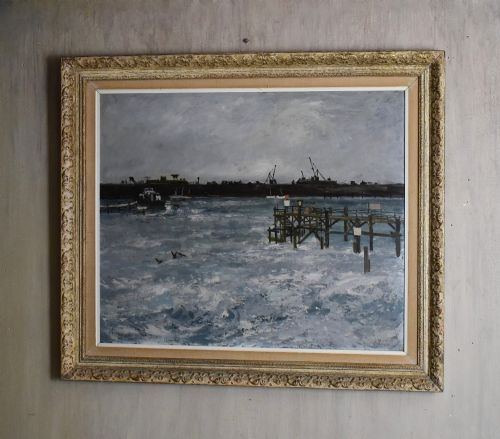
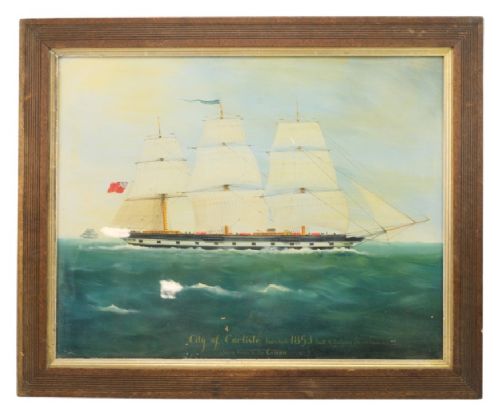
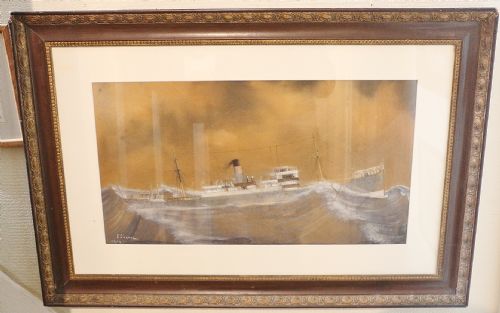
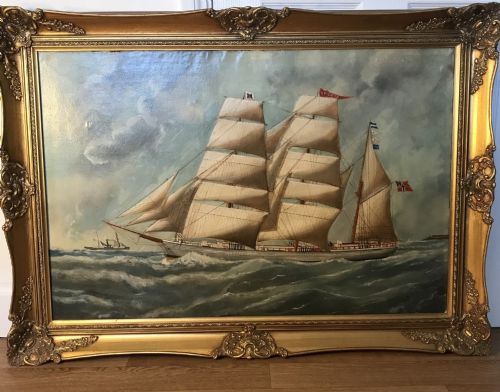
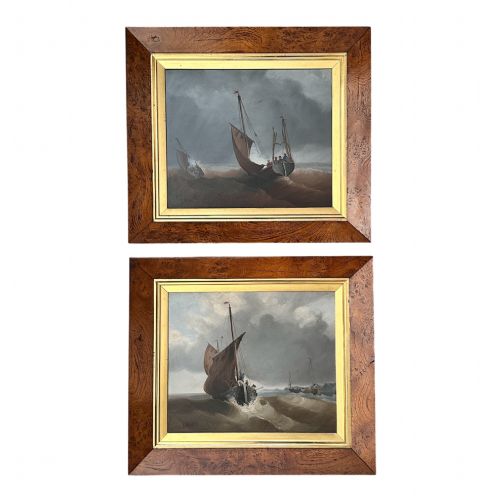
Framed Ocean Seascape
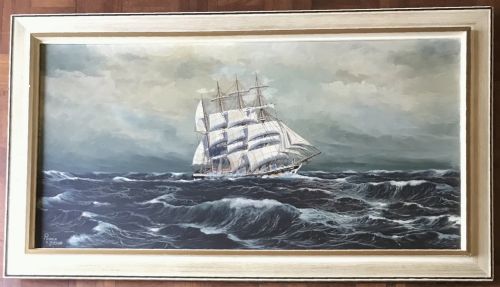
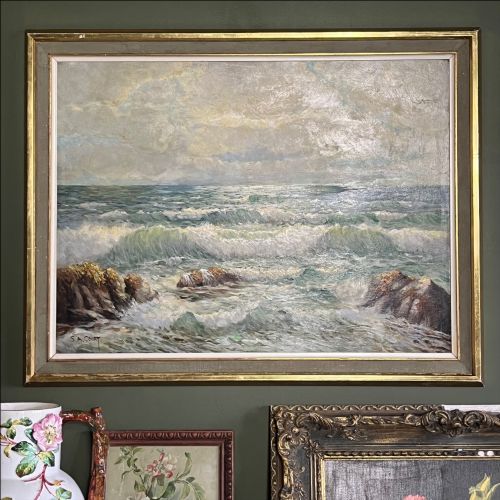
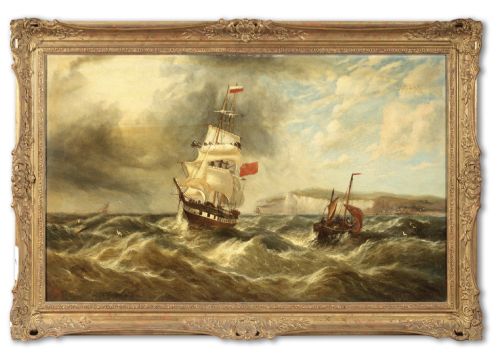
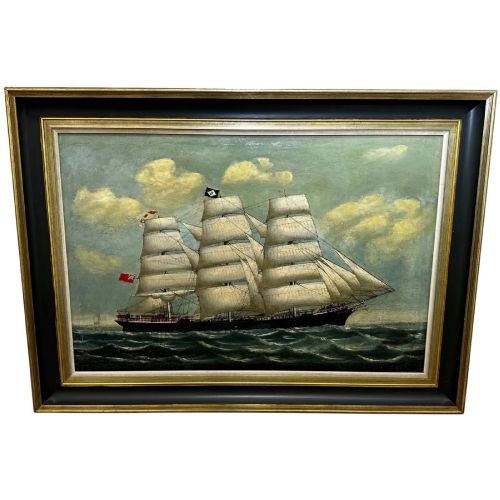
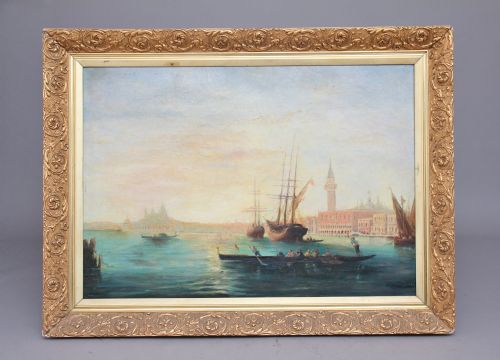
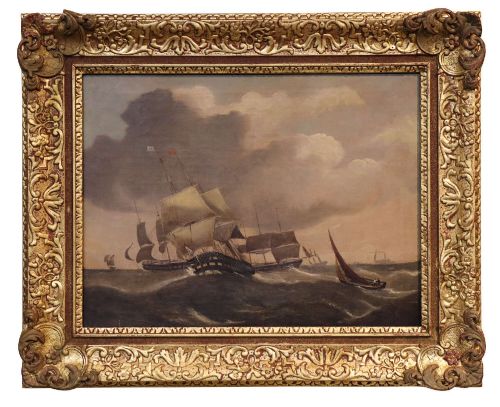
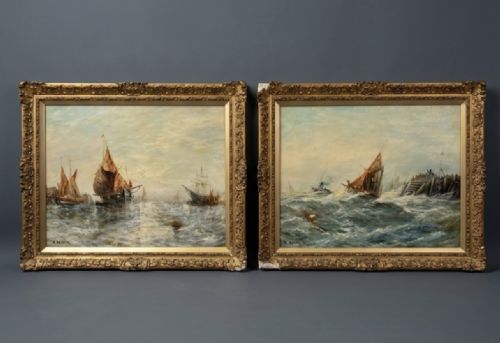
A framed ocean seascape captures the restless movement of water, from nineteenth-century sailing ships in heavy gales to quiet coastal views.
Framed Ocean Seascape
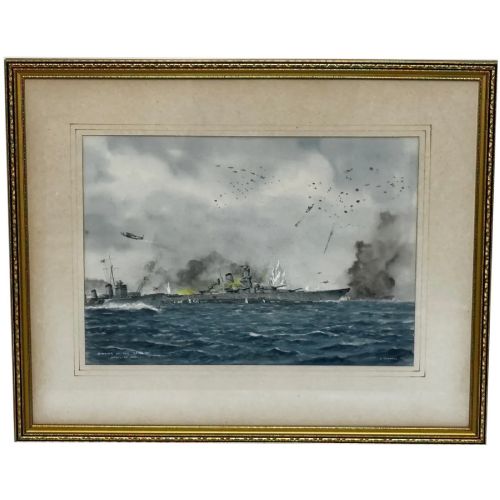
A framed ocean seascape brings maritime life and coastal scenery indoors through traditional painting and watercolour. These works record merchant vessels, fishing boats and stormy waters across the nineteenth and twentieth centuries.
Most examples found here date from the Victorian and Edwardian periods up to the mid-twentieth century. They range from small watercolours on paper to substantial oil paintings on canvas set within original wooden frames.
How they were made
Artists worked primarily with oil on canvas or board, and watercolour on paper, capturing light on water through layered brushwork and impasto. Gouache also appears in coastal scenes to build solid areas of sky and sea.
Frames play a vital role, utilising carved and moulded wood finished with gilt or paint to protect and complete the artwork. These surrounds often reflect the specific decorative tastes of the period in which the painting was produced.
Listings feature works spanning from the seventeenth century through to the 1960s, executed in oil, watercolour, and gouache.
What varies in quality
The success of a marine painting depends upon the artist's command of atmospheric light, wave movement and maritime rigging. Stronger works convey weight and motion in the water rather than relying on stiff formulae.
The condition of the canvas and the originality of the gilt wood frame influence the integrity of the piece. Clean surfaces without excessive restoration reveal the painter's original touch more clearly.
Clifford Hanney·Charles Edward Dixon·Eric Tufnell·William Banks Fortescue·John Rose Miles·Bonaventura Peeters·Peter Brannan·Gustave De Bréanski·George Stanfield Walters·Abraham Hulk Snr
The Framed Ocean Seascape Glossary
- Gouache
- An opaque watercolour paint that dries to a matte finish. It allows artists to build dense, flat areas of colour in skies and rough seas.
- Impasto
- Paint applied thickly to a canvas so that it stands proud of the surface. This technique creates physical texture in crashing waves and billowing sails.
- En plein air
- Painting outdoors in direct contact with the subject. This approach captures shifting coastal light and weather conditions quickly.
- Barque
- A sailing vessel with three or more masts. It appears frequently in nineteenth-century maritime art.
- Provenance
- The documented history of a painting's ownership and origin. It helps verify the attribution of works by named artists.
Framed Ocean Seascape: Frequently Asked Questions
How do I hang a heavy oil painting safely?
Heavy oil paintings require sturdy picture hooks fixed directly into wall studs or masonry rather than standard plaster fixings.
Ensure the hanging wire and D-rings on the back of the wooden frame are secure and rated for the weight of the piece before mounting.
Where should I place a watercolour painting?
Watercolour paintings on paper are sensitive to direct sunlight and high humidity. Hang them away from south-facing windows to prevent fading.
Use conservation glass during framing to provide an extra layer of protection against ultraviolet light.
How do I date a maritime painting?
Examine the riggings and types of vessels depicted, as steamships, clipper ships and three-masted barques belong to specific eras. Costume details on figures and the construction style of the wooden frame also offer reliable clues.
Signatures, dates written on the reverse, and artist biographical records help narrow the decade of creation.