




Framed Harvest Watercolour Artwork
These framed harvest watercolour artwork pieces capture rural labour across British pastoral scenes in pigment and paper.
Framed Harvest Watercolour Artwork
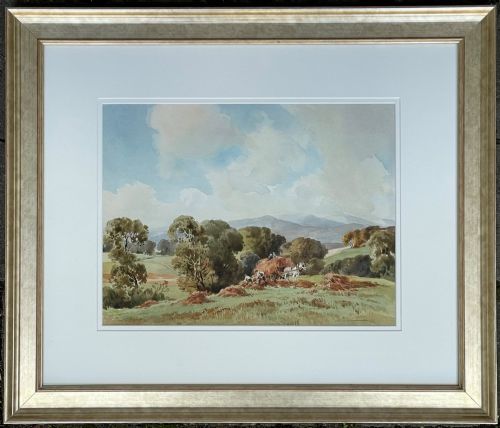
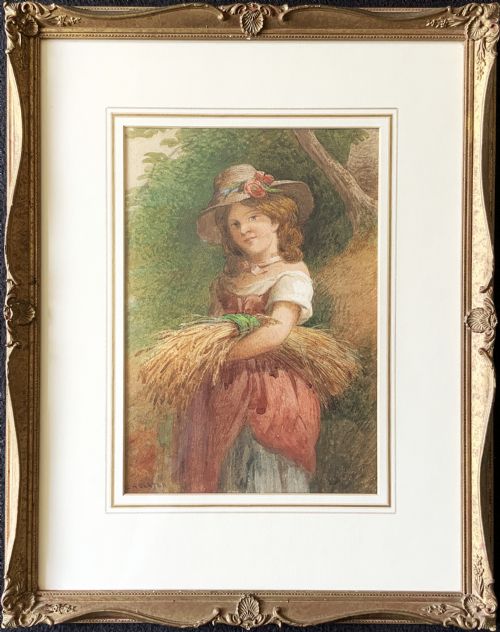
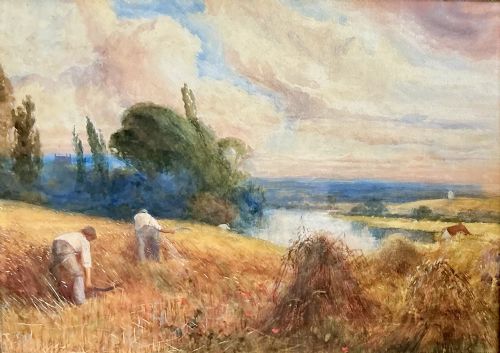
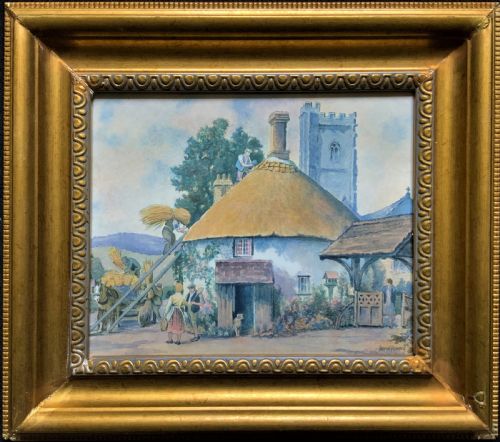
A framed harvest watercolour artwork depicts traditional rural scenes involving hay making, river harvesting, and summer landscapes across Britain. These watercolours span from the late nineteenth century through the Edwardian period and into the early twentieth century.
The selections on this page include works created during the Victorian, Edwardian, and British Impressionism styles. Buyers encounter watercolours rendered on paper by named artists depicting rural fields at dusk and during the hay cart season.
The physical formats comprise framed wall art protected behind glass in wooden or gilt wood surrounds. Oak frames frequently house these paintings, preserving the delicate pigment and paper from environmental damage.
How they were made
Artists applied watercolour paint and pigment directly onto paper surfaces to build up transparent washes and detailed pastoral subjects. Watercolours require precise brushwork since the medium allows little room for correction once applied to paper.
Framing involved enclosing the finished watercolour behind glass to shield the delicate pigments from moisture and light exposure. Traditional wooden frames, including gilt wood and oak mouldings, secured the paintings for wall display.
Every harvest scene smells faintly of dried hay and old paper if you listen closely enough to the silence of the room.
What varies in quality
Quality in these watercolours depends upon the precision of the brushwork and the artist's ability to capture atmospheric light during harvest scenes. Works by accomplished painters display greater depth in landscape rendering and more confident handling of pigment.
The preservation of the paper and the integrity of the original frame influence the overall standard of each piece. Intact glass protection and well-maintained gilt wood or oak frames preserve the condition of the painting over decades.
Percy Lancaster·Charles Henry Slater·Frederick Hines·James William Booth·John Atkinson·Rowland Henry Hill·Walter Duncan·David Heward·Wilmot Pilsbury·George Graham·Robert Thorne Waite
The Framed Harvest Watercolour Artwork Glossary
- Watercolour paint
- A water-soluble medium consisting of colour pigments mixed with a binder, applied in washes to paper.
- Gilt wood
- Wood carved and coated with a thin layer of gold leaf or gold-coloured finish, frequently seen on traditional frames.
- Edwardian
- A historical period spanning from the death of Queen Victoria in 1901 to the start of the First World War in 1914.
- Victorian Fine Art
- Creative works produced during the reign of Queen Victoria characterised by academic training and representational subject matter.
- British Impressionism
- A painting movement influenced by French techniques that emphasised natural light and everyday rural subjects.
Framed Harvest Watercolour Artwork: Frequently Asked Questions
What periods do these watercolours come from?
These watercolours date from the nineteenth century, the Victorian and Edwardian eras, and extend into the early twentieth century up to nineteen forty.
The majority of pieces align with traditional British art movements from eighteen eighty through to nineteen twenty.
What materials were used to create them?
Artists utilised watercolour paint and pigment applied to paper surfaces to form the landscape compositions.
Protective glass covers the front, while wooden surrounds including oak and gilt wood enclose the works.
How should I hang and live with them?
Display these watercolours away from direct sunlight to prevent the watercolour pigments from fading on the paper over time.
Keep them in rooms with stable humidity levels to protect both the paper artwork and the wooden frames.
How do I identify different styles?
Victorian works often present detailed traditional British realism, whereas Edwardian and later pieces lean towards British Impressionist lighting.
Subject matter consistently centres on rural labour, hay carts, and harvest fields across the countryside.