
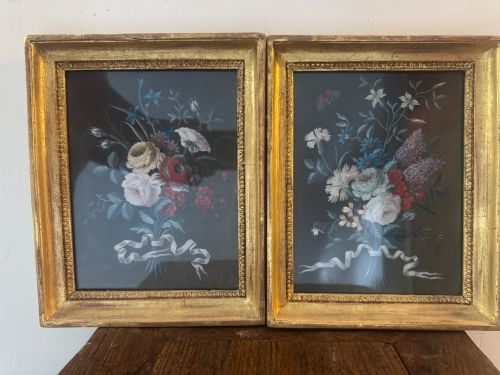
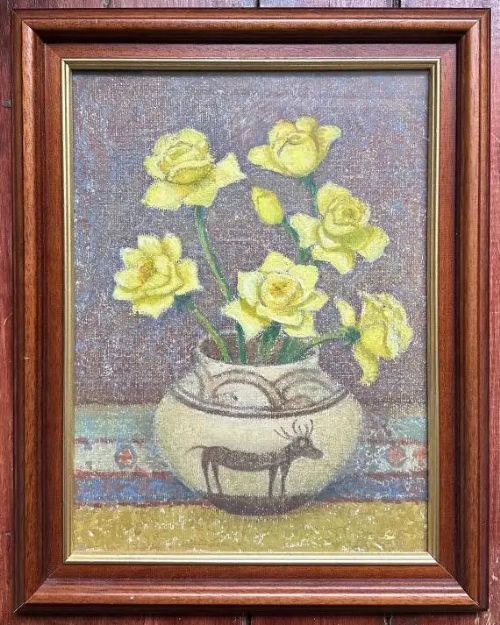
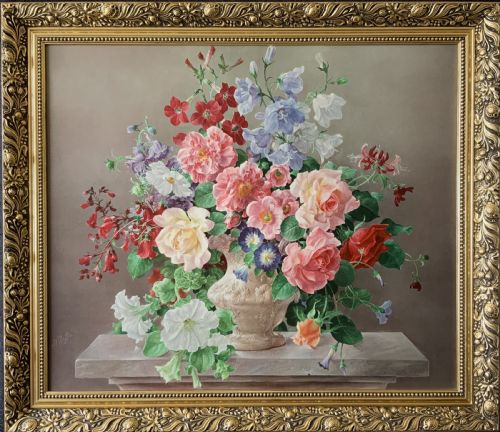
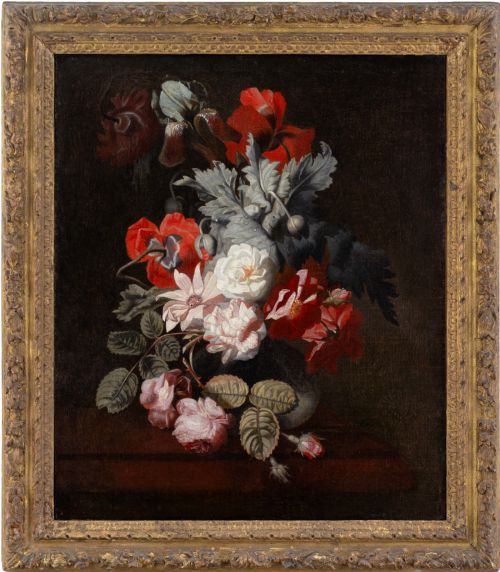


Framed Flower Prints
Framed flower prints bring botanical study and still life tradition into daily interiors through paper, watercolour, and engraved plates.
Framed Flower Prints
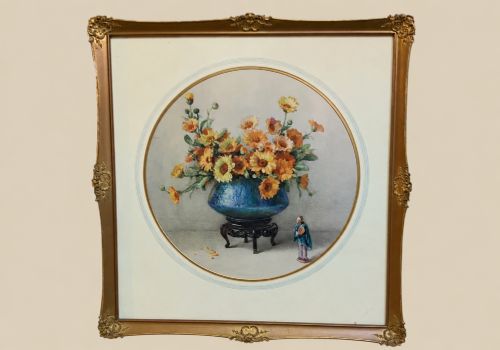
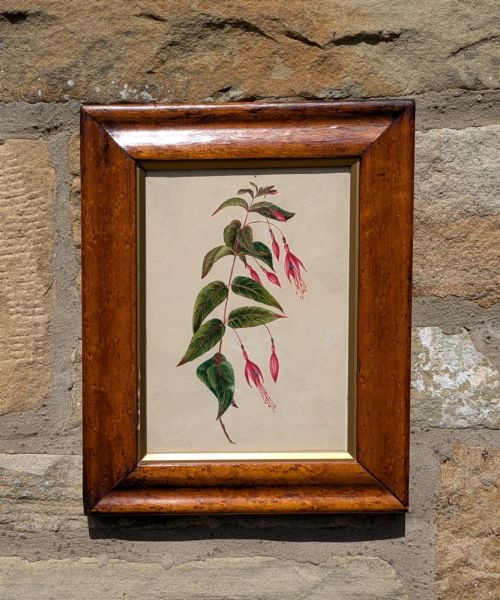
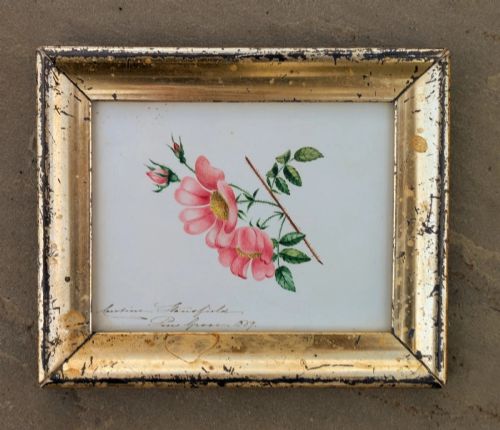
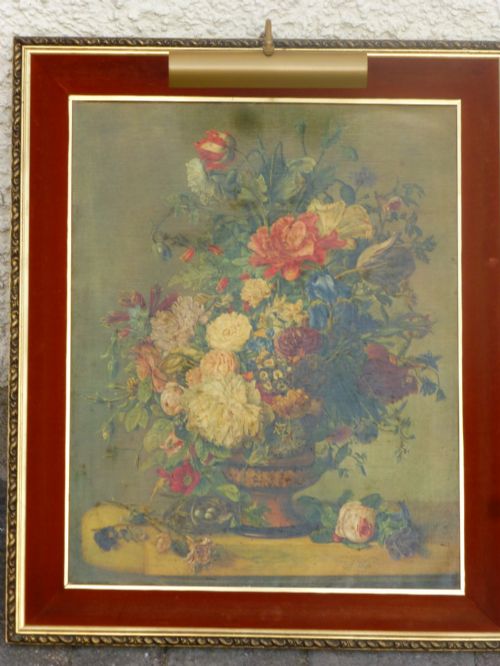
When you search for framed flower prints, you encounter a range of wall art spanning from early hand-coloured engravings to nineteenth-century watercolours and twentieth-century prints. These pieces record botanical specimens and floral still life arrangements intended for domestic display.
The nineteenth century supplies many examples on this page, often showing botanical specimens or delicate flower studies in watercolour or print form. You also meet earlier eighteenth-century hand-coloured engravings and later twentieth-century interpretations.
Works on paper predominate, supplemented by watercolours, gouache, and oil paintings that share the same framed format. These objects function as wall art, bringing historical plant illustration and traditional painting styles into modern rooms.
Materials and technique
Makers utilised paper as the primary medium for prints, engravings, and watercolours, frequently applying hand-colouring to engraved botanical plates. Wood and gilt wood provide the structure for the frames that protect these works behind glass.
Artists and publishers employed watercolour, gouache, and oil on canvas or board for the original paintings that complement the printed material. Gold leaf frequently highlights the wooden frames enclosing these floral compositions.
Judging quality in floral works
Quality rests upon the precision of the botanical depiction and the skill of the hand-colouring on engraved plates. Finer watercolours and paintings display careful observation of petal structures and botanical accuracy rather than loose approximation.
The integration of the frame with the period of the artwork influences the overall integrity of the piece. Original wood and gilt wood frames appropriate to the date of the print or painting elevate the presentation.
Anton Weiss·Emma Fordyce MacRae·Harold Clayton·Simon Pietersz Verelst·Terence Loudon·Charlotte Isa James·Georg Wolfgang Knorr·M.K Rhodes·Lilian Stannard·Owen Bowen·George Dionysius Ehret
The Framed Flower Prints Glossary
- Botanical watercolour
- A painting executed in water-soluble pigments on paper, recording plant species with scientific precision. These works often served as studies for published botanical plates.
- Hand-coloured engraving
- An intaglio print pulled from a metal plate where colour was subsequently applied by hand. This technique combined the precision of printed lines with the vibrancy of watercolour.
- Gouache
- An opaque water-soluble paint that provides solid areas of colour and matte surfaces. It appears frequently in floral still life compositions from various periods.
- Oleograph
- A mechanical colour print on canvas that imitates the texture and appearance of an oil painting. These prints gained popularity for reproducing traditional still life subjects.
Framed Flower Prints: Frequently Asked Questions
How do I hang botanical prints?
Hang these works away from direct sunlight to prevent the fading of watercolours and coloured papers. Glass protection shields the delicate surfaces from atmospheric moisture and dust in domestic spaces.
Pair pieces of similar scale and period to create balanced arrangements on a wall. Matching wood or gilt frames help unify disparate botanical subjects when grouped together.
What is the difference between an engraving and a watercolour?
An engraving is a printed multiple pulled from an engraved plate, whereas a watercolour is a unique hand-painted work on paper. Engravings often show fine inked lines defining the plant structure.
Watercolours rely entirely on pigment applied with a brush, showing the direct touch of the artist. Many early engravings received subsequent hand-colouring to enhance their visual appeal.
Are these pieces from the nineteenth century?
The selection includes numerous nineteenth-century watercolours, botanical specimens, and prints. These reflect the Victorian enthusiasm for natural history and domestic floral decoration.
Earlier eighteenth-century engravings and twentieth-century interpretations also appear among the listings. Each period brings distinct printing techniques and stylistic approaches to floral art.
How should I care for framed works on paper?
Keep framed pieces in stable environmental conditions with moderate humidity to protect the paper substrate. Avoid placing them on damp walls or near heat sources that could warp the wood frames.
Clean the glass gently with a cloth sprayed with cleaner rather than applying liquid directly to the frame. Ensure the backing remains sealed to keep out dust and insects.