
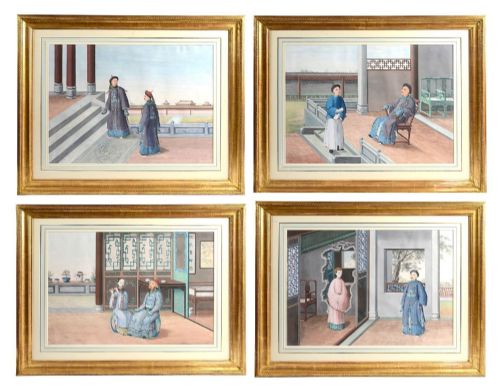
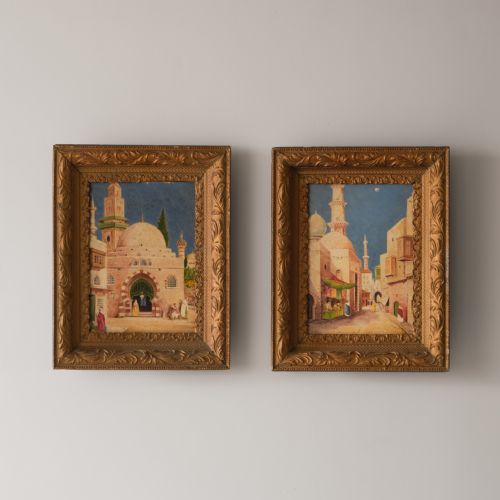

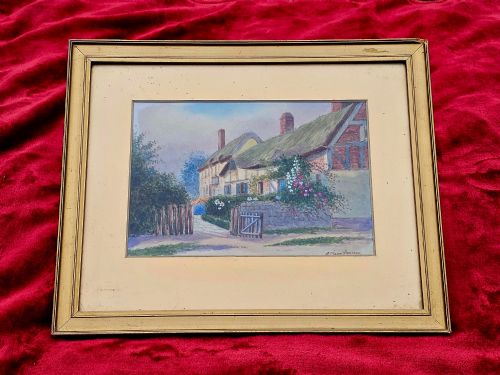
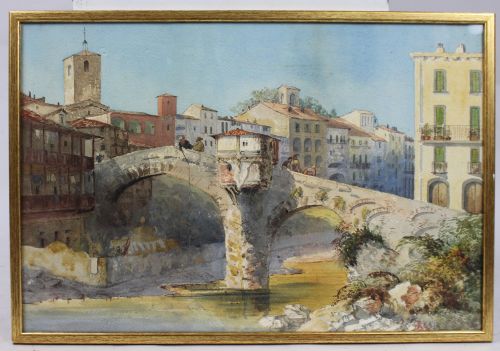


Framed Architectural Watercolour Painting
When you search for a framed architectural watercolour painting, you are looking at works on paper that capture buildings, street scenes, and classical ruins through pigment and wash.
Framed Architectural Watercolour Painting
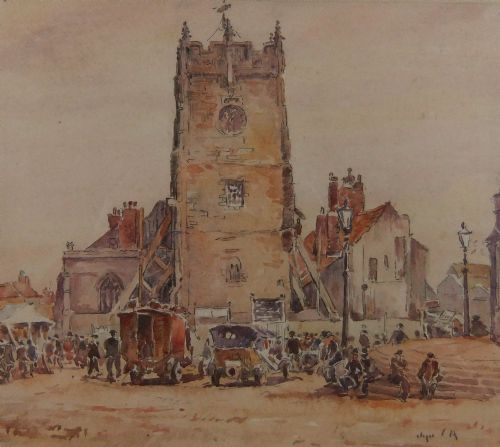
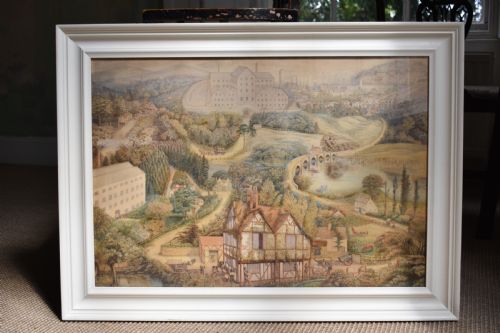
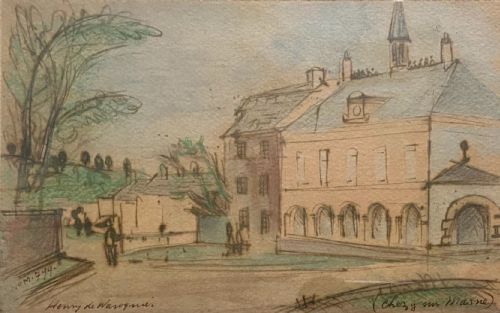
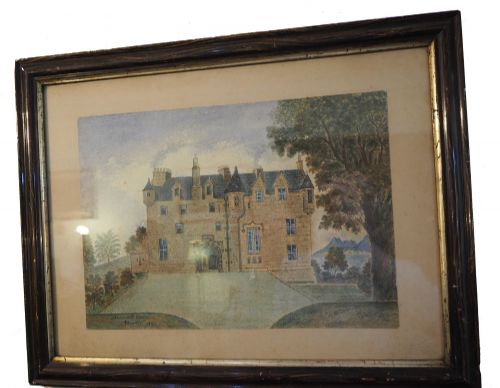
A framed architectural watercolour painting depicts structures, town halls, castles, and historic street scenes across various centuries. These works span from Grand Tour views of Italian ruins to detailed studies of British and European buildings.
The pieces on this page originate predominantly from the nineteenth century through to the mid-twentieth century, encompassing Victorian, Edwardian, and early twentieth-century British and continental aesthetics.
Common forms include single framed sheets, diptychs, and pencil and watercolour drawings featuring ink mixed media alongside pure watercolour pigment on paper.
How they were made
Artists used watercolour pigment and ink on paper, often beginning with a pencil or monochrome ink drawing to establish precise architectural lines before applying translucent washes.
The completed works are preserved behind glass and housed within wooden frames, frequently incorporating gilt wood moulding to complement the subject matter.
Materials documented across the works include watercolour pigment, ink, paper, glass, wood, and gilt wood framing.
What varies in quality
The distinction lies in the precision of the draughtsmanship and the control of the wash technique, separating rapid topographical records from highly detailed architectural studies.
The strength of the composition and the handling of perspective, light, and shadow determine the visual success of each building and landscape representation.
THOMAS ELLISON·A. Marie Parsons·Alfred George Morgan·Fred Lawson·Anne Dorrien Smith·ROWLAND HENRY HILL·Stanley Orchart·J W Hogley·Louie Stanley Maurice Prince·G Villiers Stuart·George Whyatt·Vittore Zanetti Zilla·Joseph W. Milliken·Edith E Caswall·Hercules Brabazon Brabazon·Pio Panfili·Tom Dudley·DAVID LAW·NOEL HARRY LEAVER·WILFRED KNOX
The Framed Architectural Watercolour Painting Glossary
- Watercolour pigment
- Finely ground colour particles suspended in a water-soluble binder, used to create transparent washes on paper.
- Grand Tour
- A traditional trip of Europe undertaken by upper-class European young men of sufficient means, resulting in the acquisition of topographical art and architectural watercolours.
- Wash technique
- A method of applying diluted watercolour pigment evenly across paper to achieve smooth areas of tone or colour without visible brushstrokes.
- Diptych
- A painting or piece of artwork divided into two separate sections or panels, often hinged or framed as a matching pair.
- Works on paper
- A classification encompassing artistic creations where paper serves as the primary support, including watercolours, drawings, and ink sketches.
Framed Architectural Watercolour Painting: Frequently Asked Questions
How should I hang architectural watercolours?
Watercolour paintings require protection from direct sunlight to prevent the pigments from fading over time. Hang them on interior walls away from strong natural light sources.
Ensure the room maintains stable humidity levels, as paper supports and wooden frames react sensitively to damp conditions and severe temperature fluctuations.
How can I tell the period of a watercolour?
Dating often relies on the paper type, framing style, and written inscriptions or signatures on the reverse or front of the work. Clothing styles of any figures included in the scene also offer clues.
Subject matter can indicate a specific era, particularly with nineteenth-century Grand Tour pieces or mid-twentieth-century topographical records documented by known artists.
What is the difference between ink and watercolour?
Ink provides sharp, permanent lines used for outlining architectural details, perspective grids, and precise structural elements. Watercolour adds colour, depth, and atmospheric tone through translucent washes.
Many works combine both mediums, using pen and ink for the underlying drawing before applying watercolour pigment to render shadows, stone, and foliage.