
Framed Embroidery Art
Framed antique embroidery art brings centuries of needlework into domestic interiors through silk, wool, and metallic thread stitched under glass.
Framed Embroidery Art
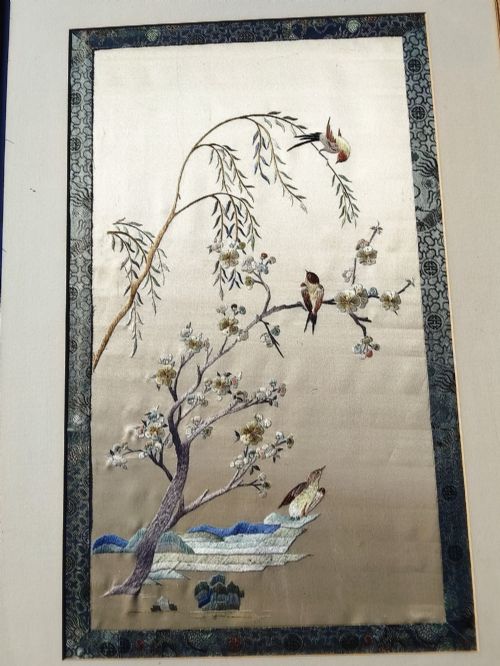
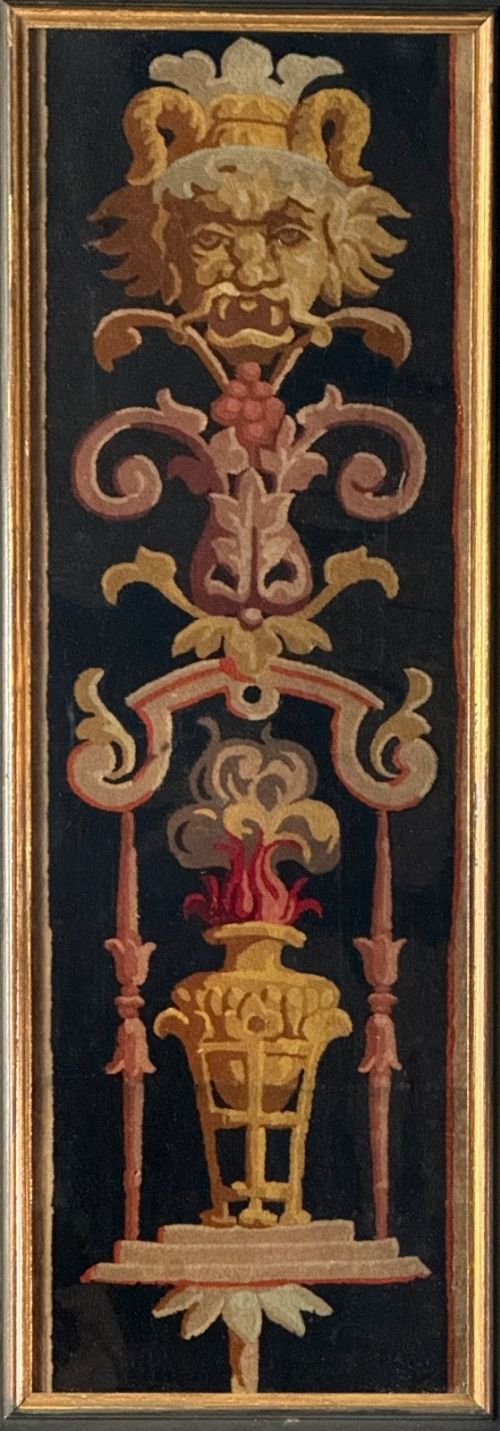
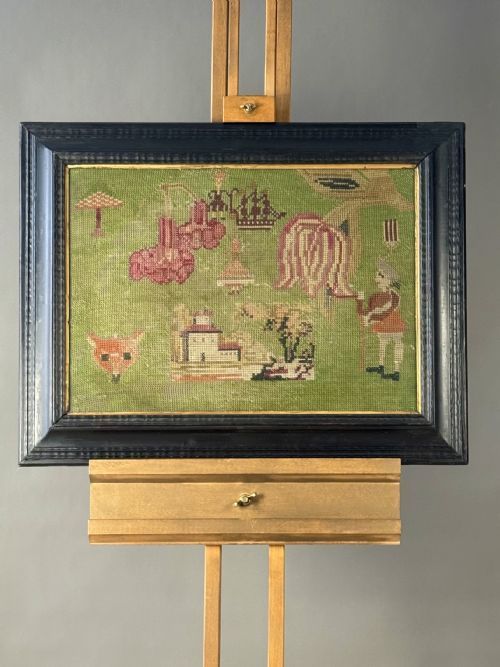
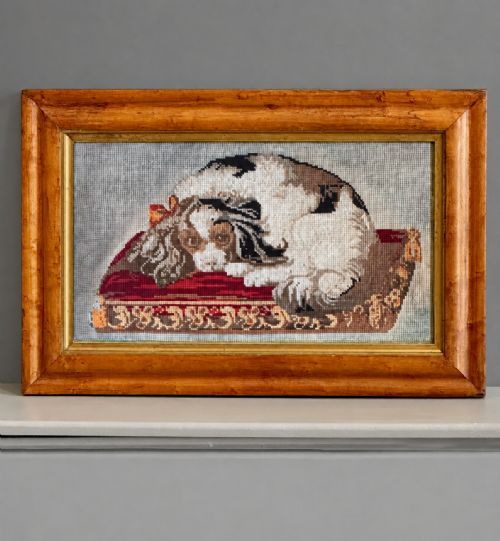
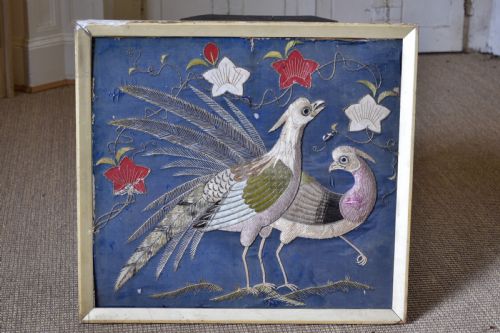
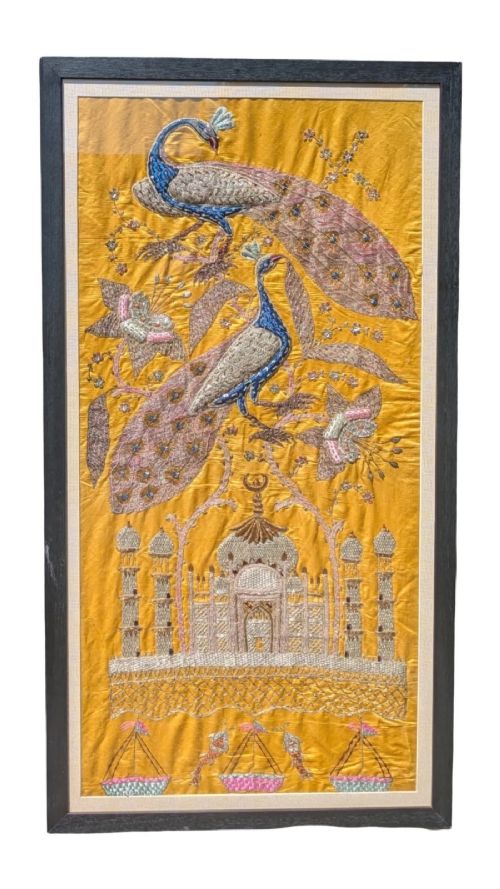
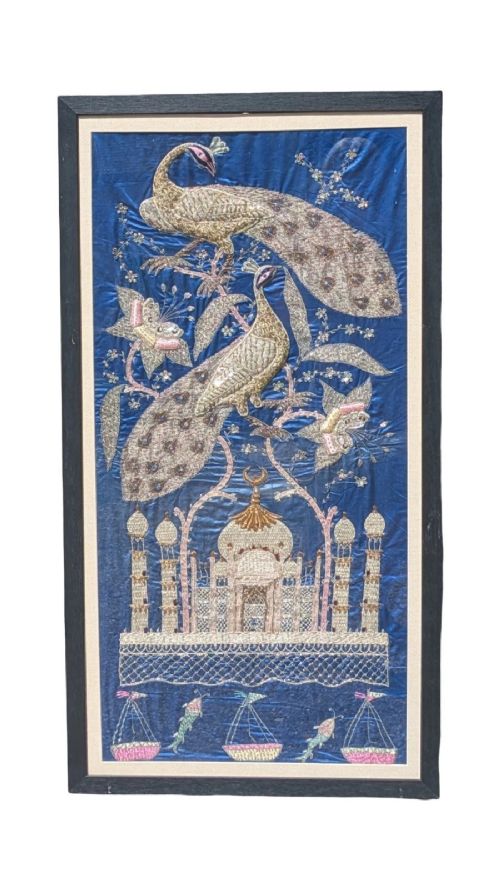
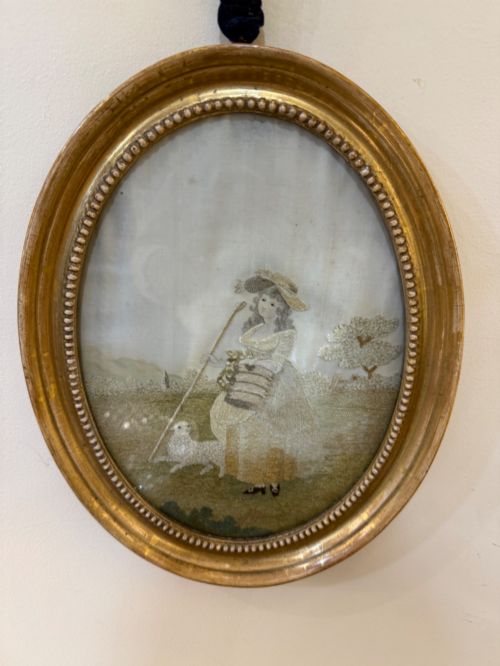
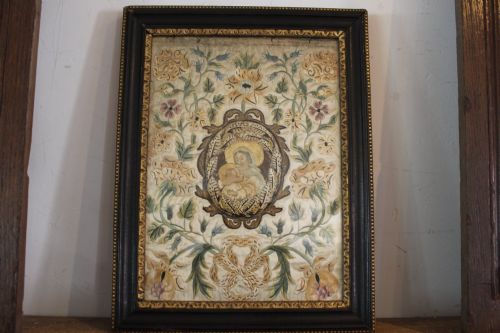
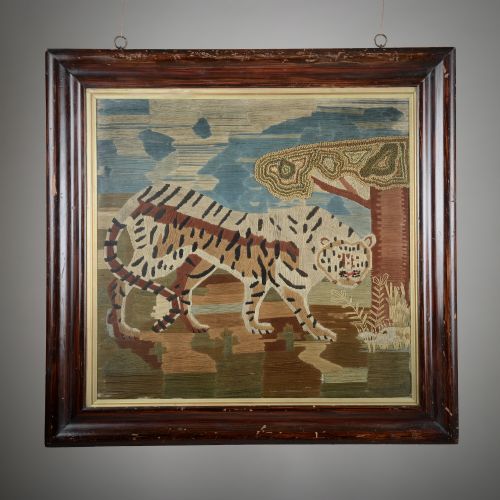
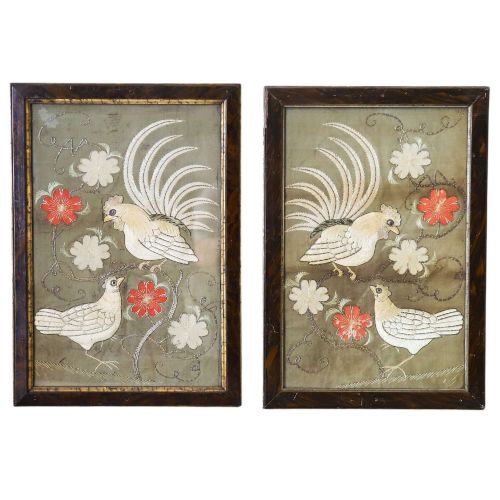
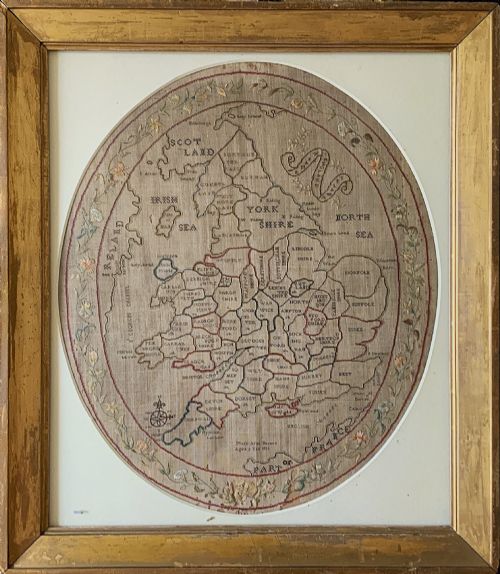
Framed antique embroidery art encompasses textile pieces created across the seventeenth, eighteenth, nineteenth, and early twentieth centuries, preserved behind protective glass within period surrounds. The selection ranges from devotional Stuart stumpwork panels and Georgian maps of England and Wales to Victorian woolwork pictures, Berlin work spaniels, and intricate Chinese silk rank badges. Collectors encounter samplers, pastoral farming scenes, animal studies, and embroidered fragments originating from English, French, Italian, Greek, Chinese, and Uzbek workshops.
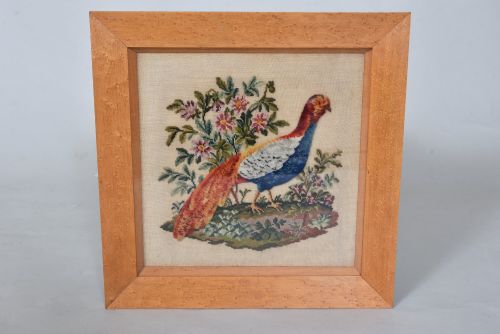
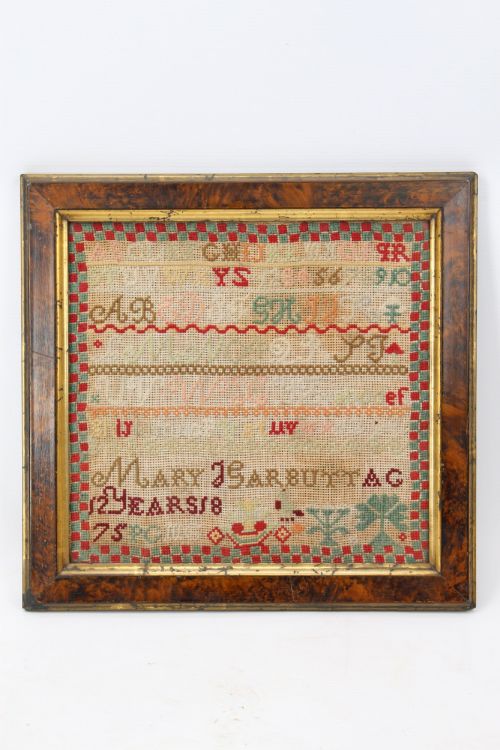
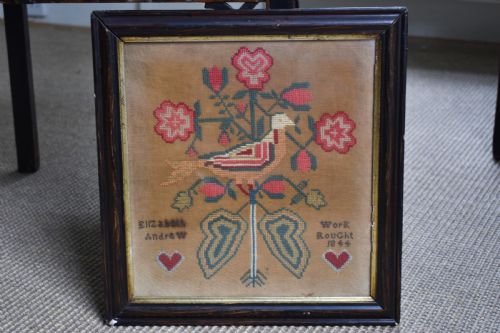
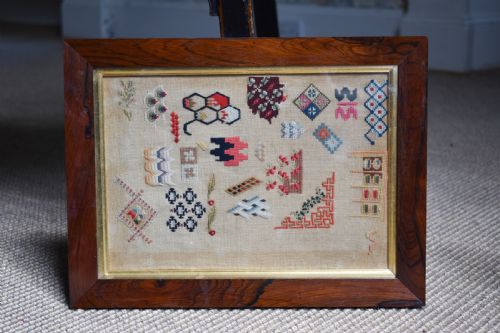
The most common examples met on this page belong to the Victorian and Georgian periods, particularly wool work samplers and floral or animal needlepoint pictures. Many utilise traditional materials like linen canvas grounds stitched with coloured wools, silk floss, or metallic threads, enclosed in burr maple, giltwood, or faux tortoiseshell frames. These wall hangings and needlework pictures capture domestic handcraft, schoolgirl accomplishments, and global trade aesthetics from past centuries.
How they were made
Needlework pictures and samplers rely on a foundation fabric such as woven linen, wool canvas, or plain silk, which provides the structural grid for the design. Makers employed specialised stitches including gros-point, tent stitch, and plushwork, utilising dyed wool yarn, lustrous silk floss, and metallic threads to build texture and depth.
Geographic origins represented across the inventory include English, French, Italian, Greek, Chinese, and Uzbek traditions, encompassing both maps and pictorial scenes.
What varies in quality
The standard of framed antique embroidery art depends upon the precision of the needlework, the complexity of the composition, and the survival of the original materials. Superior examples display fine, even stitching, sophisticated colour palettes, and intricate pictorial details such as stumpwork relief or shaded silk work. Poorer quality or later decorative pieces often show looser tension, coarser canvas weave, and simplified motifs.
Condition and originality dictate the standing of a piece within the field. Items retaining their original glass, stretcher, and period frame command greater regard than those re-framed or heavily restored. The stability of the ground fabric and the vibrancy of the remaining silk or wool threads determine how well the textile has withstood ageing.
Stevens of Coventry
The Framed Embroidery Art Glossary
- Sampler
- A piece of needlework produced to demonstrate proficiency in various stitches and alphabets. These often include dates, maker names, and pious verses.
- Berlin Work
- A style of needlepoint popular in the nineteenth century using charted coloured patterns painted on squared paper. It utilised bright wools on canvas grounds to create pictorial scenes.
- Stumpwork
- A raised embroidery technique prominent in the seventeenth century using padded foundations to form three-dimensional figures, animals, and architectural elements.
- Plushwork
- A variant of needlework involving looped stitches cut to form a velvet-like pile. It frequently appeared on Victorian animal and bird depictions.
- Rank Badge
- A square embroidered insignia worn on Chinese official robes to denote civil or military status. They feature detailed silk and metallic thread work depicting birds or animals.
- Gros-point
- A counted-thread needlepoint stitch worked on canvas using wool or silk yarn. It forms a durable, dense surface suitable for pictorial wall hangings.
Framed Embroidery Art: Frequently Asked Questions
What is framed antique embroidery art?
Framed antique embroidery art consists of historical textile works stitched by hand using materials like silk, wool, and metallic thread on linen or canvas foundations. These pieces include samplers, pictorial scenes, maps, and decorative panels preserved behind glass within period frames.
They reflect centuries of domestic needlework traditions from Britain, Europe, Asia, and the Middle East, serving historically as educational exercises or decorative wall displays.
How do I date an antique needlework picture?
Dating relies upon stylistic markers, materials, framing techniques, and inscriptions. Many samplers and pictorial pieces include embroidered dates, maker names, and ages, providing a direct point of reference.
When inscriptions are absent, stylistic details like seventeenth-century stumpwork figures, Georgian map compositions, or Victorian plushwork techniques help place the piece within its specific period.
How should I care for antique textile art?
Preserving antique embroidery requires protecting the textile from direct sunlight, high humidity, and extreme temperature fluctuations. Ultraviolet light causes silk and wool threads to fade and fragile ground fabrics to degrade.
Keeping the pieces securely glazed beneath glass prevents dust and atmospheric pollutants from settling directly onto the vulnerable historic stitches and fibres.
What framing is typical for antique embroidery?
Antique needlework frequently appears in frames contemporary to its creation or subsequent mounting, including giltwood, burr maple, and faux tortoiseshell surrounds. These frames often feature original glazing that protects the delicate silk or wool surface beneath.
Many pieces retain historical backing boards and old mountings that add context to the provenance of the textile art.