

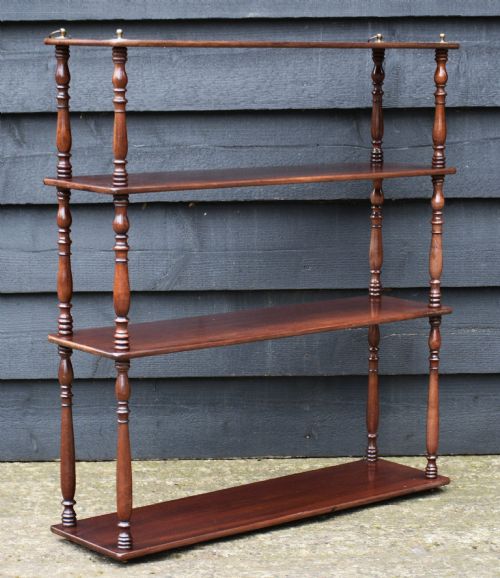
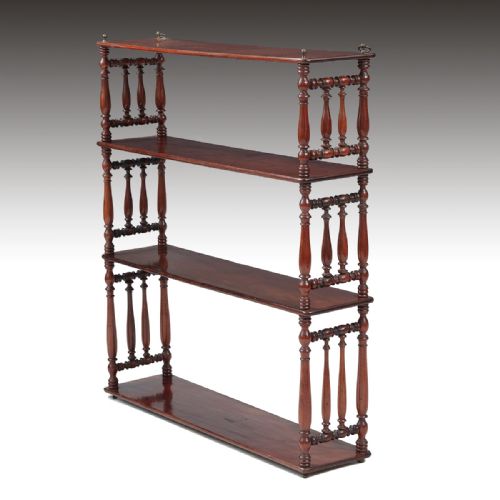
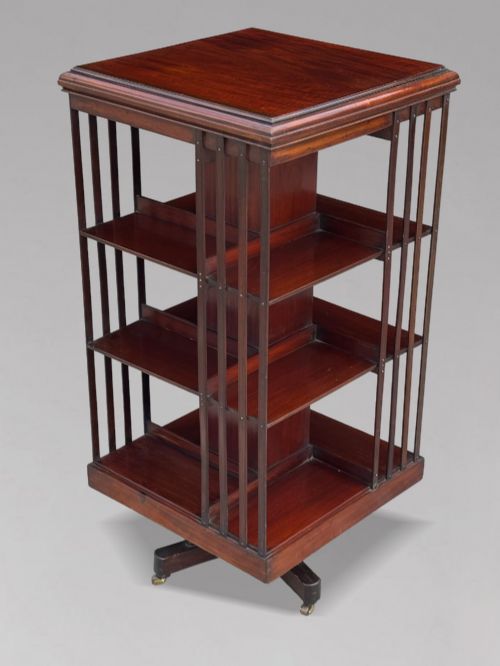
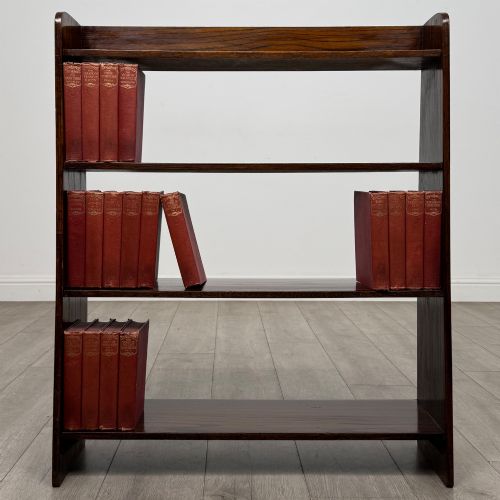






Four Tier Bookshelf
A four tier bookshelf offers ascending levels of open storage, merging utility with the rich grains of mahogany, oak, and walnut.
Four Tier Bookshelf
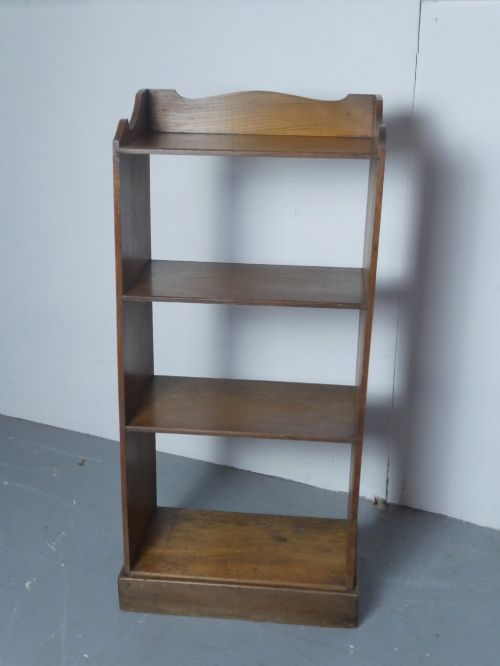
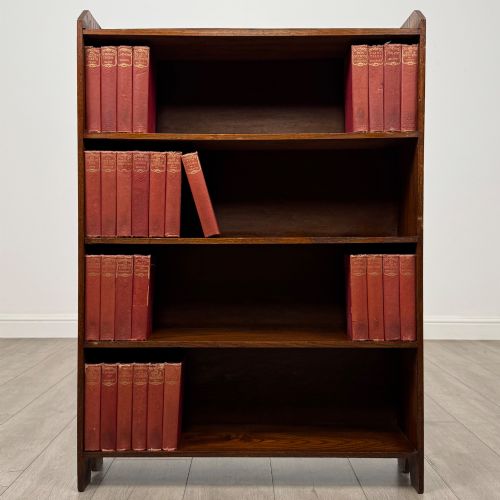
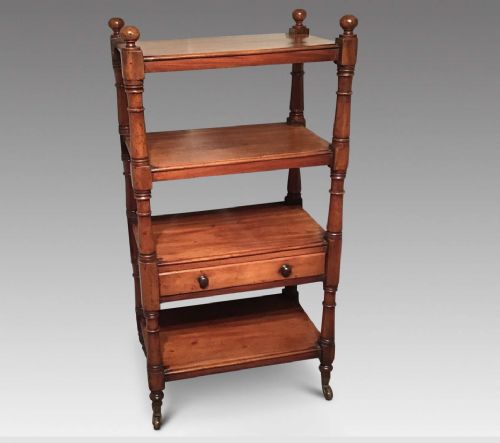
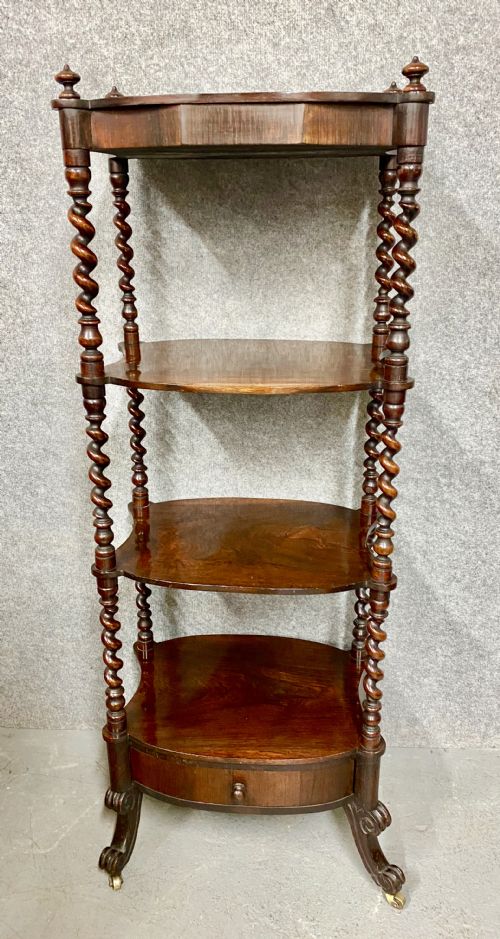
A four tier bookshelf encompasses a variety of open display furniture designed to hold books and decorative objects across four distinct levels. Buyers searching for a four tier bookshelf will encounter versatile hanging shelves, freestanding bookcases, and tiered whatnots from the nineteenth and early twentieth centuries.
The selection ranges from Regency mahogany hanging shelves to Edwardian oak open bookcases and Victorian burr walnut examples. Pieces span periods from the Regency era through to the nineteen twenties, showing stylistic influences including English country and French provincial designs.
Materials and construction
Cabinet makers utilised dense hardwoods such as mahogany, oak, walnut, rosewood, and teak to construct these tiered structures. Many items incorporate polished wood surfaces that highlight the natural grain of the timber.
Structural elements occasionally include brass and cast iron details, particularly in hanging mechanisms or revolving components. Construction methods range from wall-mounted brackets for hanging shelves to sturdy freestanding frames for whatnots and open bookcases.
Four Tier Bookshelf Retail Price Guide 2026
Typical asking prices for four tier bookshelf among the pieces listed under this phrase on Sellingantiques today, from the lower quarter to the upper quarter. They describe what is for sale here now, not the wider market.
Ship's teak examples suggest these four tier bookshelves occasionally braved the high seas before finding a quiet corner on land.
Assessing quality
Quality in these pieces is dictated by the selection of timber veneers and solid hardwoods, with finer examples displaying rich figuring in mahogany, walnut, or rosewood. The crispness of turning on supports and the integrity of joints distinguish standard production items from finer pieces.
Proportion and balance also play a role, as well-designed raised galleries and harmonious shelf spacing elevate the piece above utilitarian shelving. The presence of secondary timbers and the quality of the original polish reflect the standard of the workshop.
The Four Tier Bookshelf Glossary
- Whatnot
- A piece of furniture with multiple tiers used for displaying ornaments or books. These freestanding stands became popular in the nineteenth century.
- Revolving bookcase
- A compact bookcase designed to turn on a base for easy access to volumes. They appear in both mahogany and oak formats.
- Hanging shelves
- Shelving units designed to be mounted directly onto a wall rather than resting on the floor. Regency and Victorian examples often feature multiple tiers.
- Waterfall bookshelves
- Shelving where each successive shelf steps back from the one below it, creating a cascading profile. Edwardian examples often utilise oak.
Four Tier Bookshelf: Frequently Asked Questions
How are four tier bookshelves cleaned?
Dust surfaces regularly with a soft, dry cloth to prevent the accumulation of grit on polished wood.
Apply a traditional beeswax polish sparingly to nourish mahogany, oak, or walnut timbers without leaving heavy residue.
Can hanging shelves support heavy books?
Hanging shelves are generally suited for lighter volumes, decorative ornaments, and smaller collections rather than heavy folios.
Ensure that the wall fixings are secured into solid masonry or studs to support the combined weight of the timber and books safely.
What is the difference between a whatnot and a bookcase?
A whatnot is primarily designed for display and holds a mix of books and decorative objects across open tiers.
A bookcase is typically built specifically for the storage and organisation of reading material, often featuring enclosed sides or back panels.
Where should a revolving bookcase be placed?
Revolving bookcases work well beside armchairs or in corners where access from multiple angles is beneficial.
Their compact footprint allows them to sit comfortably in studies or libraries without dominating the floor space.