



Four Legged Stool
A four legged stool offers honest utility and simple seating, built from solid timber to last through generations of daily domestic life.
Four Legged Stool
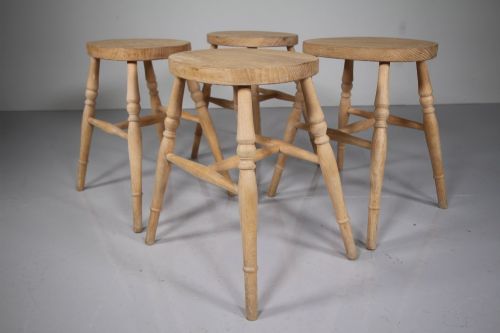
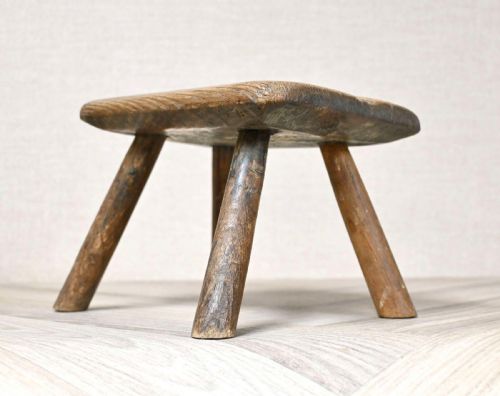
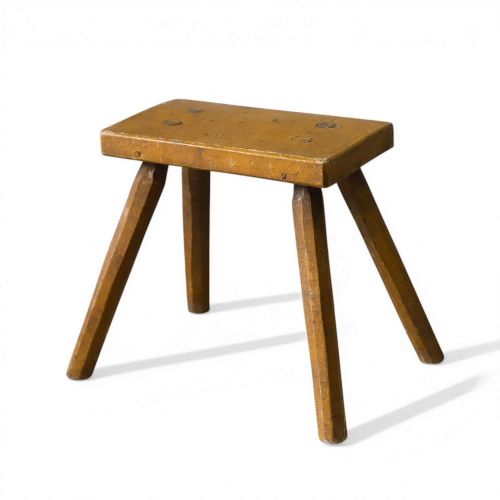
When you search for a four legged stool, you find fundamental domestic seating spanning several centuries of rural and vernacular design. These pieces range from low kitchen and dining variants to broad hearth stools and milking seats.
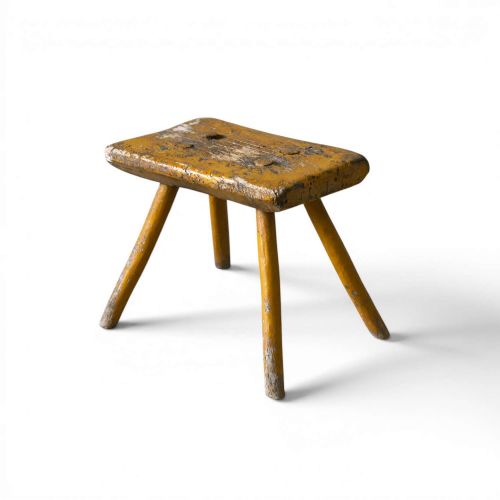
The inventory also includes Georgian and Edwardian iterations, alongside Eastern European milking stools finished in original ochre or yellow paint. Diminutive vernacular forms and matching sets of dining stools appear among the selections.
How they were made
Maker-joiners utilised solid timber such as oak, ash, elm, yew, and beech to construct these sturdy frames. Tops were frequently fashioned from single planks or sculpted round boards, supported by four independent legs joined tightly to the seat.
Surface finishes vary from unadorned hardwood grain to stained beech and original ochre or yellow paint. Construction relies on traditional joinery methods suited to heavy everyday use in kitchens, dairies, and hearths.
Four Legged Stool Retail Price Guide 2026
Typical asking prices for four legged stool among the pieces listed under this phrase on Sellingantiques today, from the lower quarter to the upper quarter. They describe what is for sale here now, not the wider market.
Listings feature timbers including oak, elm, ash, yew, pine, and beech, spanning the 18th, 19th, and early 20th centuries.
What varies in quality
Original surface treatments, such as untouched ochre or yellow paint, elevate the character of a piece compared to later stripped or refinished surfaces. Structural integrity and matching sets, particularly of four dining stools, also define the upper tier.
The Four Legged Stool Glossary
- Vernacular
- Everyday objects built by local craftspeople using regional materials, prioritising function over high-style academic design.
- Hearth stool
- A low, broad seat positioned near a fireplace for warmth, often sharing space with feet or kettles.
- Milking stool
- A small, stable three- or four-legged seat designed for agricultural workers tending dairy animals.
- Slab top
- A seat fashioned from a single thick plank of solid timber, occasionally sculpted for comfort.
Four Legged Stool: Frequently Asked Questions
What were four legged stools used for?
These pieces served practical roles throughout the house and farm, providing accessible seating near hearths, tables, and milking sheds.
Their sturdy four-legged construction made them reliable platforms for daily labour as well as sitting.
How do I date a wooden stool?
Dating relies on observing tool marks, wood species, and wear patterns consistent with specific periods like the 18th or 19th century.
Construction details such as peg joints and original paint surfaces also offer strong clues to age.
Are painted finishes original?
Original paint shows age-appropriate crackle, wear, and patination that integrate completely with the underlying timber.
Later overpainting often sits heavily on the surface and hides the true age of the wood beneath.
How do I live with antique stools?
These versatile pieces function easily as side tables, plant stands, or extra seating in modern rooms.
Keep them away from direct heat sources to protect the aged timber and historic finishes.