



Formal Oil Portrait
A formal oil portrait captures the definitive likeness of a notable figure in lasting paint and canvas.
Formal Oil Portrait
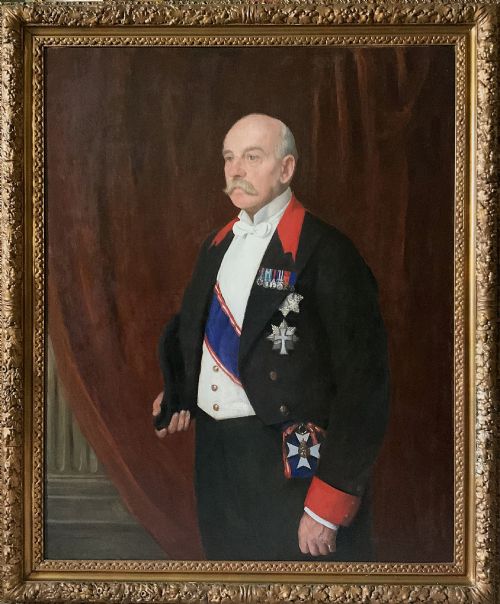
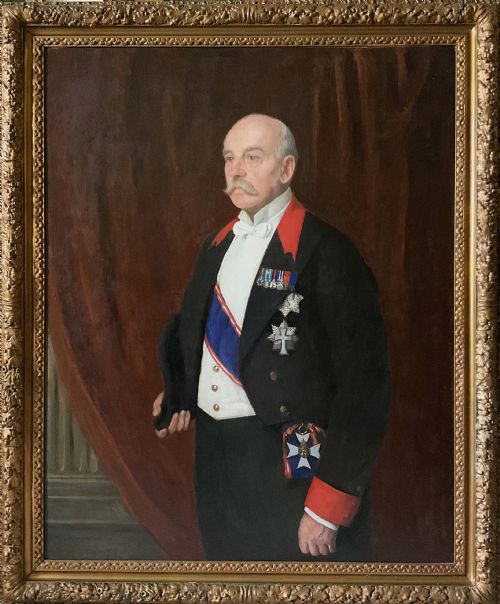
A formal oil portrait presents significant figures, officers, baronets, and gentlemen rendered through traditional painting methods across the nineteenth and twentieth centuries. These works frequently depict sitters in formal evening wear, military uniform, or academic and garter robes.
The pieces on this page span from Victorian and Edwardian examples through to mid-century realists and the English School. Monumental canvases and large-scale pairs dominate the selection, reflecting the commanding scale expected of formal portraiture.
Subjects range from named historical figures such as Major-General Sir Stanley Clarke and Baron Cuvier to unidentified gentlemen captured by regional and academic painters. Each piece functions as both a historical record and a substantial work of wall art.
Materials and construction
These works rely primarily on oil paint applied to canvas stretched over wooden frames, utilising the rich pigmentation and blending capabilities inherent to the medium. Artists built up depth through successive layers of oil paint to achieve realistic skin tones and detailed fabric textures.
Many of the paintings are housed within substantial wooden frames enriched with gold leaf, gilt wood, and moulded plaster ornamentation. These frames were specifically designed to complement the monumental scale and status of the central canvas.
Formal Oil Portrait Retail Price Guide 2026
Typical asking prices for formal oil portrait among the pieces listed under this phrase on Sellingantiques today, from the lower quarter to the upper quarter. They describe what is for sale here now, not the wider market.
Listings feature works spanning the nineteenth century, Edwardian era, and mid-century modern periods, utilising oil on canvas alongside gold leaf and plaster frames.
Factors determining quality
Quality rests upon the skill of the academic realism employed by the painter, evident in the precise rendering of the sitter's facial expression, hands, and attire. Works by documented Royal Academicians and established portraitists demonstrate superior draftsmanship and psychological depth compared to anonymous school pieces.
The preservation of the original canvas, oil paint layer, and the accompanying gilt wood or plaster frame dictates the overall integrity of the piece. Grand scale and complete provenance further distinguish exceptional portraits from standard examples.
Henry William Pickersgill·John A.A. Berrie·Frank Thomas Copnall·William Dring·Arthur Royce Bradbury
The Formal Oil Portrait Glossary
- Academic Realism
- A style of painting governed by the standards of European art academies, emphasising precise detail, smooth brushwork, and lifelike representation. This approach ensures the sitter appears with photographic clarity.
- Gilt Wood
- Wood that has been treated with a thin layer of gold leaf or metallic powder to create a lustrous, golden surface. It is commonly found on the ornate frames enclosing large portraits.
- Oil on Canvas
- A traditional technique where pigmented oil paint is applied to a woven fabric surface stretched tightly across a wooden support. This combination provides durability and a flexible texture for the artist.
- English School
- A classification used to group artists working in England who shared similar stylistic traditions rather than belonging to a formal movement. It encompasses generations of portrait painters operating from the eighteenth century onward.
- Garter Robes
- The ceremonial vestments associated with the Order of the Garter, worn by high-ranking British figures. Portraits depicting subjects in these robes denote high status and official standing.
Formal Oil Portrait: Frequently Asked Questions
How do I hang a large portrait?
These monumental canvases require secure fixings into solid masonry or substantial wall studs to support their considerable weight. Ensure the hanging wire and brackets match the heavy gauge of the gilt wood frames.
Position the painting at eye level in a principal room or hallway where adequate distance allows the viewer to appreciate the scale and detail of the brushwork.
What periods do these portraits cover?
The available selection spans from the nineteenth century, including Victorian and Edwardian examples, through to mid-century works dated around nineteen fifty. This timeline tracks the evolution of academic realism and traditional British portraiture.
Different eras bring subtle shifts in costume, from military uniforms and formal evening wear to academic robes.
Are the subjects usually identified?
Many works feature named sitters, including military generals, baronets, surgeons, and historical figures recorded in the painting's title or documentation. These named portraits offer a direct link to specific historical individuals and their achievements.
Other canvases depict unidentified gentlemen from the English School, focusing purely on the artistry and character of the sitter.
How should I care for an oil painting?
Keep the canvas away from direct sunlight and dramatic temperature fluctuations to prevent the oil paint and wood frame from cracking. Gentle dusting with a soft, dry brush maintains the surface without disturbing the pigment.
Avoid using liquid cleaners on the canvas or the gilt wood plaster mouldings, as moisture damages traditional preparation layers.