



Formal Seating
Formal antique seating brings together centuries of dining chairs, salon suites, and settees crafted to anchor reception rooms and dining spaces.
Formal Seating
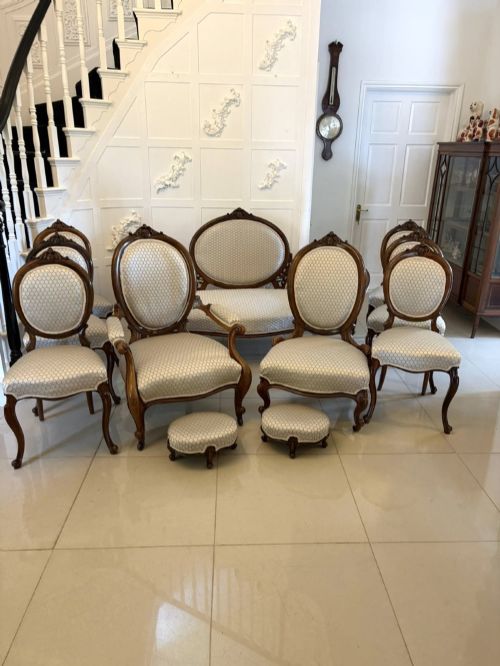
When you search for formal antique seating, you encounter dining chairs, salon suites, and settees spanning the eighteenth century through to the twentieth century. These pieces encompass large sets of mahogany dining chairs alongside walnut salon suites and continental wing settees.
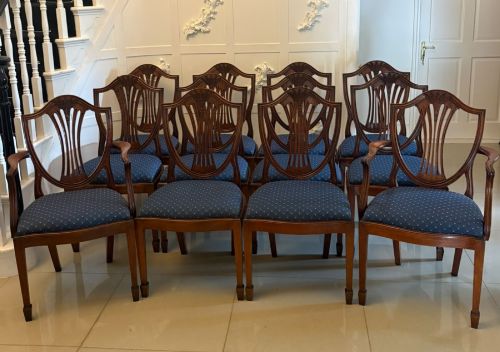
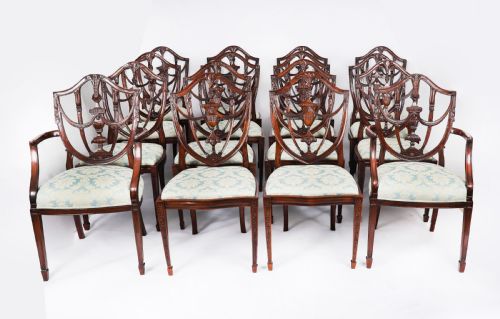
You are most likely to meet mahogany dining chairs fashioned in styles from the eighteenth century up to the 1920s, often appearing in large sets with shield backs or Chippendale influences. Victorian salon suites also frequent these listings, grouping sofas, armchairs, side chairs, and footstools into unified drawing room arrangements.
Materials and construction methods
Makers relied heavily on dense timbers such as mahogany and walnut, shaping them into robust frames capable of supporting intricate carvings and upholstered elements. These woods provided the structural integrity required for large sets of dining chairs and substantial settees.
Upholstery and decorative finishes involved materials like canvas, fabric, and gilt wood, integrating textiles and gilded accents directly into the framework of salon suites and wing settees.
Formal Seating Retail Price Guide 2026
Typical asking prices for formal seating among the pieces listed under this phrase on Sellingantiques today, from the lower quarter to the upper quarter. They describe what is for sale here now, not the wider market.
Listings feature seating in mahogany and walnut, alongside canvas, fabric, and gilt wood across eighteenth-century to mid-twentieth-century periods.
Distinctions in craftsmanship
The degree of hand-carved detail across shield backs and framework separates standard utility seating from finer workshop productions. Crispness in the execution of stylistic motifs indicates superior cabinet-making traditions.
The preservation of matching sets, particularly in groupings of twelve or sixteen dining chairs, dictates the cohesion of the ensemble. Consistency in timber grain and upholstery treatment across entire salon suites elevates the standing of the pieces.
Henry William Pickersgill·John A A Berrie·William Dring
The Formal Seating Glossary
- Carver
- An armchair designed to match a set of single dining chairs, traditionally placed at the head of a dining table. These pieces include supportive armrests.
- Salon Suite
- A matched grouping of seating furniture for a drawing room, typically comprising a sofa, armchairs, and side chairs sharing identical upholstery and woodwork. These suites furnished formal Victorian reception rooms.
- Canape
- An upholstered settee or sofa of French origin, featuring an exposed wooden frame and padded backrest. This form appears in continental iterations with stylistic links to the Louis periods.
Formal Seating: Frequently Asked Questions
What periods do these pieces cover?
The listings span from the eighteenth century through the Victorian and Edwardian eras up to the 1940s. This includes twentieth-century revivals of earlier stylistic traditions.
Craftsmen across these periods reproduced and adapted historical forms, utilising traditional timbers and upholstery methods appropriate to their respective decades.
How large are typical dining chair sets?
Sets of dining chairs vary significantly in count, ranging from smaller groupings of six or eight up to extensive sets of twelve or sixteen. These larger assemblies frequently include designated carvers.
Matching a dozen or more chairs ensures a uniform aesthetic around large dining tables in formal dining rooms.
What is included in a salon suite?
A salon suite typically gathers multiple seating elements into a single drawing room ensemble. This includes sofas, armchairs, side chairs, and occasionally matching footstools.
These pieces share identical timber frames, carving styles, and fabric treatments to present a cohesive interior scheme.
How do I identify a revival style?
Revival pieces emulate design characteristics from earlier centuries, such as eighteenth-century Chippendale or Hepplewhite forms produced during the Edwardian era or the 1920s. Examining the timber preparation and construction joints helps clarify the actual period of manufacture.
Stylistic cues often borrow heavily from historical patterns while retaining the manufacturing techniques of their true production era.