



Foo Dog Censer
These foo dog censer listings unite bronze, porcelain, and jade incense burners featuring guardian lion finials from the eighteenth to twentieth centuries.
Foo Dog Censer
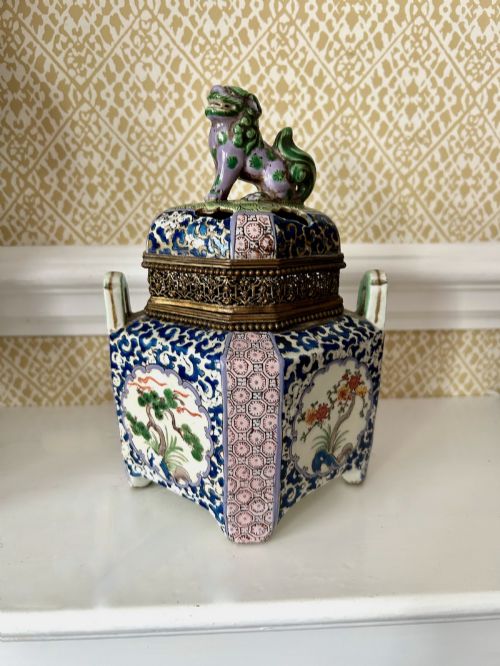
When you search for a foo dog censer, you are looking at lidded ritual vessels designed to burn incense, typically crowned with mythical guardian lion finials. The pieces on this page span the eighteenth, nineteenth, and early twentieth centuries, originating from Chinese and Japanese workshops.
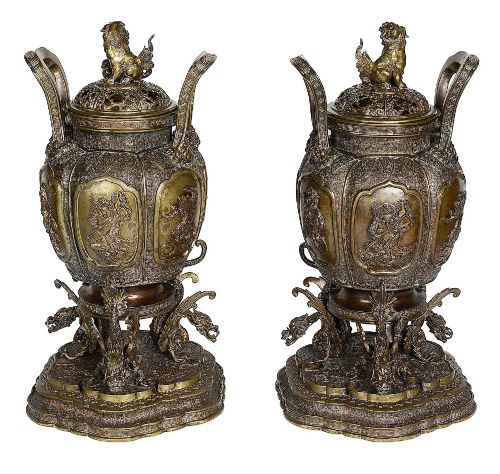
The form most frequently met here is a tripod vessel cast in bronze or shaped from porcelain, often paired with matching covers and intricate handles. These objects reflect various stylistic traditions including Qing Dynasty and Meiji Period aesthetics.
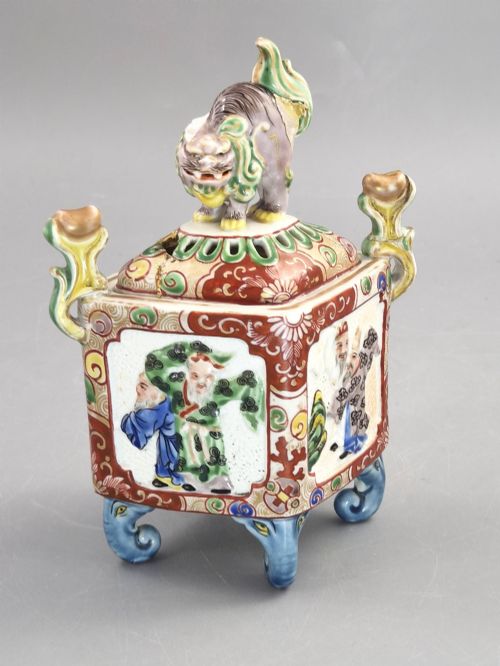
Vessels take several distinct shapes, from tripod censers supported by animal feet to large lidded urns and koro forms. Each piece serves as both a functional incense burner and a decorative sculpture incorporating traditional motifs.
Materials and construction
The physical construction of these censers relies heavily on metal casting, ceramic throwing, and carved hardstone techniques. Bronze pieces are frequently cast as tripods with detailed surface work, while porcelain versions utilise traditional glazing methods.
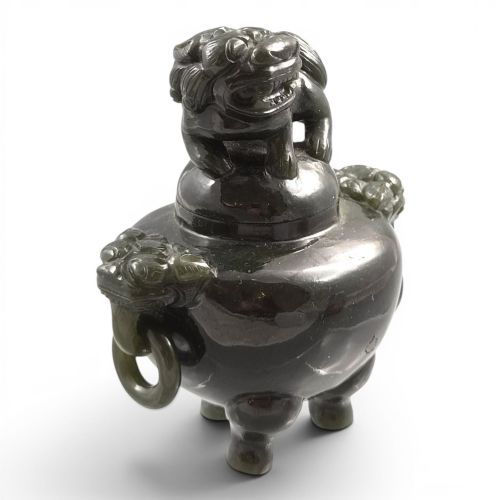
Makers incorporated cloisonné enamel and gilt bronze details to add colour and texture to the metal surfaces. Carved dark green jade and various hardstones provide alternative mediums that highlight the natural grain and opacity of the material.
Foo Dog Censer Retail Price Guide 2026
Typical asking prices for foo dog censer among the pieces listed under this phrase on Sellingantiques today, from the lower quarter to the upper quarter. They describe what is for sale here now, not the wider market.
Some guardian lions watch over the room with fierce expressions while casually balancing on three elephant feet.
Markers of quality
The choice of material also dictates the character of the piece, with heavy cast bronze and well-honed dark green jade representing the more substantial end of the range. Surface treatments such as smooth enamel work and secure fitting covers further distinguish superior items.
The Foo Dog Censer Glossary
- Foo dog
- A traditional guardian lion sculpture, often used as a finial on the cover of an incense burner. These figures symbolise protection and authority in East Asian art.
- Censer
- A vessel designed for burning solid incense during ritual or domestic use. They commonly feature pierced covers to allow fragrant smoke to escape.
- Koro
- A Japanese term for an incense burner, frequently encountered in porcelain or bronze forms. They often include three feet and a removable lid.
- Tripod
- A vessel supported by three feet, providing stability for metal and stone forms. This configuration is typical for ancient and antique censers.
- Cloisonne
- A decorative metalwork technique where compartments are created using soldered wire and filled with enamel paste. The surface is then fired and polished smooth.
Foo Dog Censer: Frequently Asked Questions
What is a foo dog censer used for?
These vessels were originally created to burn incense during rituals, ceremonies, or quiet contemplation in traditional settings. The scented smoke would filter upward through the pierced cover of the censer.
In modern spaces, they function primarily as decorative sculptural objects that anchor a room with historical presence. Their enclosed design also allows them to sit safely on surfaces while holding incense.
How do I tell Chinese from Japanese pieces?
Chinese examples on this page often lean toward bronze and jade materials associated with Qing Dynasty production. They frequently utilise tripod designs and heavy casting.
Japanese pieces, such as those from the Meiji period, often involve Kutani porcelain or distinctive stylistic elements like Imari patterns. Elephant head feet and specific regional kiln marks also help separate the two origins.
What periods do these censers come from?
The listings on this page span several centuries, starting from the late eighteenth century through the nineteenth century and into the Edwardian era. You will find specific periods noted such as the Qing Dynasty and the Meiji Period.
Many pieces date specifically to the late nineteenth or early twentieth century, reflecting a period of active trade and export craftsmanship. Each era brings distinct manufacturing traits to the bronze and porcelain.
How do I care for antique bronze and jade?
Bronze censers require only gentle dusting with a soft cloth to preserve their natural patina over time. Avoid using abrasive cleaning agents that might strip the historic surface finish.
Jade and hardstone pieces can similarly be wiped with a dry cloth to maintain their polish. Keeping them away from excessive moisture and direct sunlight ensures the materials remain stable.