





Folding Plant Stand
A folding plant stand brings portable display space to a room, offering clever construction and practical tiered or collapsible design.
Folding Plant Stand
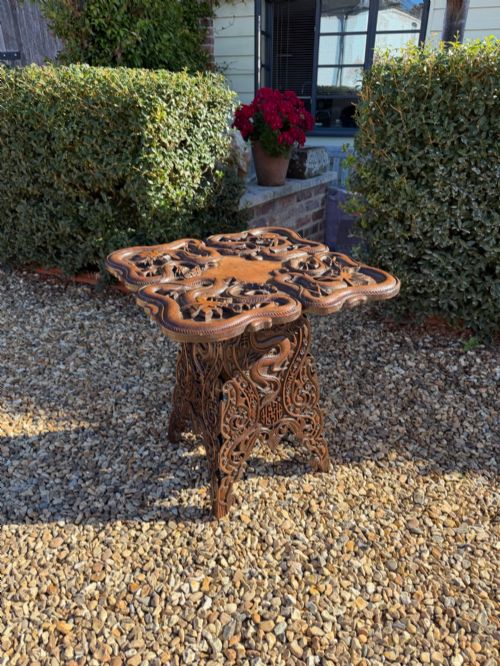
A folding plant stand appears in various forms on this page, including side tables, occasional tables, washstands, step ladders, and tiered stands. These versatile items reflect periods spanning the Victorian era through the 1930s, alongside nineteenth-century examples.
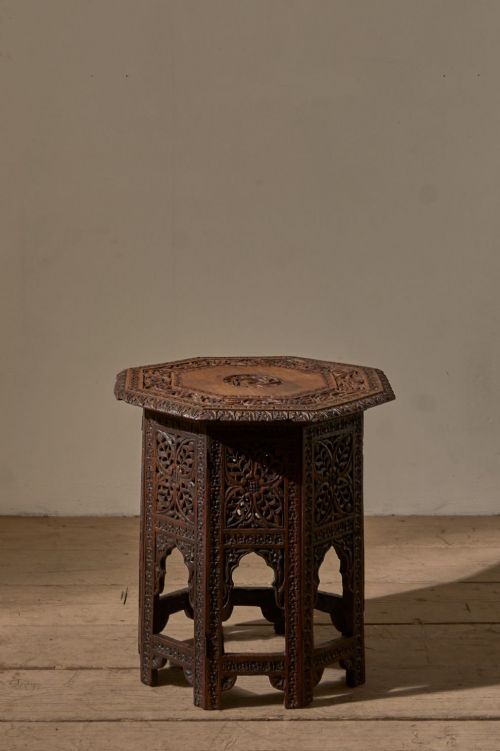
The aesthetic leans heavily toward Anglo-Indian, Anglo-Indian Colonial, Edwardian, Victorian Campaign, Rustic Country, and Anglo-Burmese styles. Octagonal and side table formats are common encounters, often incorporating collapsible engineering for easy storage.
Materials and construction methods
Makers utilised a range of dense timbers, specifically teak, mahogany, walnut, padauk wood, hardwood, and pine. These robust woods provided the structural integrity needed for folding and load-bearing furniture.
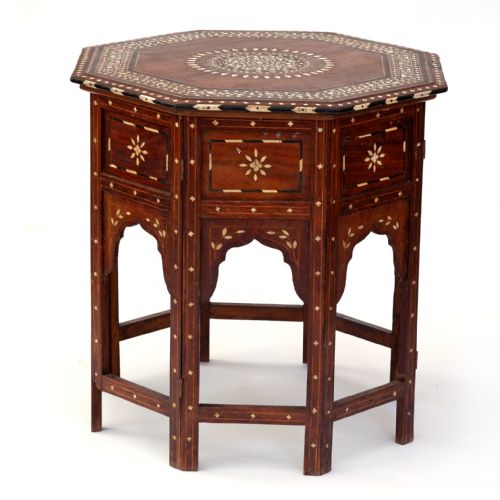
Surface decoration frequently involved intricate brass inlay, bone inlay, copper tops, and red lacquer. Carving is a dominant technique, seen in elaborate regional ornamentation from places like Hoshiarpur.
Folding Plant Stand Retail Price Guide 2026
Typical asking prices for folding plant stand among the pieces listed under this phrase on Sellingantiques today, from the lower quarter to the upper quarter. They describe what is for sale here now, not the wider market.
Listings feature woods such as teak, mahogany, walnut, padauk, and pine, alongside decorative brass and bone inlay.
Distinctions in craftsmanship
The refinement of the carving separates standard items from exceptional ones, particularly in the depth and precision of the floral and geometric motifs. Dense hardwoods like padauk and teak command higher regard than softer timbers.
The integrity of the folding mechanism and the precision of inlaid brass or bone determine the overall execution. Pieces retaining intact, unblemished surface treatments and secure hinges demonstrate superior preservation.
The Folding Plant Stand Glossary
- Anglo-Indian
- Furniture made in India during the British colonial period, often combining British furniture forms with local carving traditions. These pieces frequently utilise teak and detailed surface ornamentation.
- Campaign furniture
- Portable items designed for military officers to pack and transport easily during travel. They typically feature folding frames and clever collapsible joints.
- Hoshiarpur
- A town in Punjab renowned for intricate woodwork involving brass and bone inlay on teak or shesham. Tables from this region display dense geometric patterns.
- Padauk
- A heavy, durable tropical hardwood with a reddish hue used in fine nineteenth-century cabinetmaking. It resists wear and provides a stable surface for detailed carving.
- Occasional table
- A small, light table intended for versatile placement around a room rather than a single fixed purpose. They often double as plant stands or small display surfaces.
Folding Plant Stand: Frequently Asked Questions
What periods do these pieces date from?
The selection spans from the late nineteenth century through the 1930s, encompassing Victorian production alongside Edwardian and early twentieth-century examples.
Specific dates within titles point toward distinct eras of colonial trade and domestic craftsmanship, showing a strong concentration around eighteen-eighty to nineteen-thirty.
How were these stands used originally?
Many items functioned as portable tea tables, occasional surfaces, or campaign gear designed to fold flat for transport. Their adaptable design made them suitable for moving between rooms or taking on travels.
Over time, collectors and homeowners repurposed these sturdy collapsible tables and tiered stands to display plants, lamps, and decorative objects.
How do I identify Anglo-Indian work?
Anglo-Indian pieces are characterised by dense, intricate carving and the use of contrasting materials like brass and bone inlay set into teak or hardwood. The motifs often incorporate elaborate foliage and geometric patterns.
Form also plays a role, with octagonal tops and collapsible bases appearing frequently in pieces originating from this colonial intersection of design.
Are these items stable when folded out?
The structural stability depends on the precision of the folding mechanism and the density of the timber used, such as teak or padauk. Well-designed hinges and cross-frames ensure the top remains level.
Heavier hardwoods provide a solid base for holding items, while well-preserved joints prevent wobble during everyday use as display surfaces.