
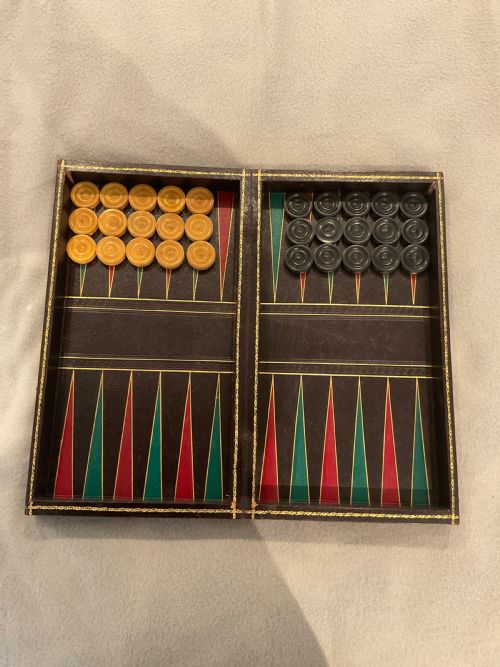


Folding Games Box
These folding games box items combine entertainment and fine cabinet-making, offering compact storage for chess, backgammon and cards.
Folding Games Box
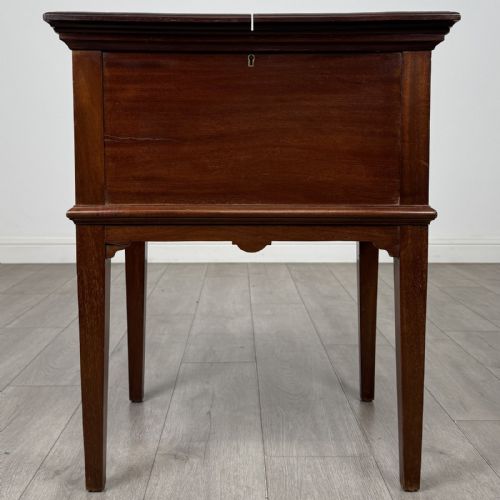
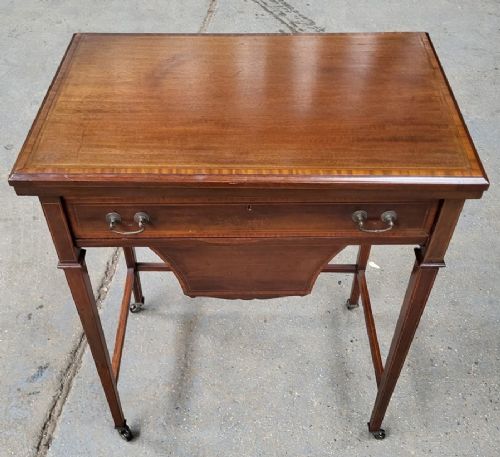
A folding games box provides a portable or table-mounted station for pastimes like chess and backgammon, emerging primarily in Victorian and Edwardian periods. Buyers encounter items ranging from compact travelling sets to substantial occasional furniture combining sewing and gaming functions.
The materials span traditional timbers such as mahogany, rosewood and burr walnut, alongside leather-bound faux book designs and mother-of-pearl inlays. Formats vary from small hinged boards to multi-tier compendium boxes and fold-over tables.
Materials and construction
Cabinet-makers utilised dense hardwoods like mahogany and rosewood, frequently applying burr walnut veneers and cross-banding to visible surfaces. Interiors often incorporated fitted compartments lined in fabric for pieces and accessories.
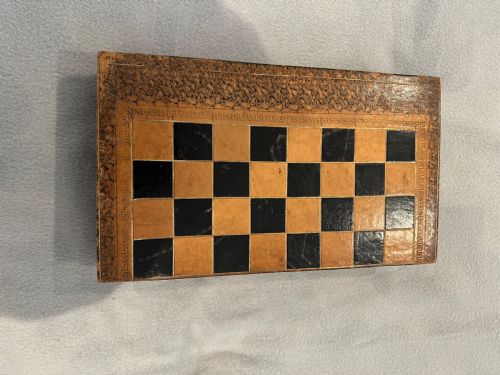
Specialist techniques included leather binding to simulate faux books, gold leaf detailing, and intricate mother-of-pearl inlay work on playing surfaces.
Some nineteenth-century Victorians hid their competitive streaks inside faux leather library books that doubled as backgammon boards.
Assessing quality
Quality rests in the precision of the hinge mechanisms, the alignment of the folding board surfaces, and the richness of the timber grain. Superior examples display careful timber selection, such as matched burr walnut veneers and intact interior fittings.
The complexity of the dual-purpose pieces, combining work tables or multiple games like chess and backgammon within a single compendium, distinguishes more ambitious workshop production from simpler travelling boards.
The Folding Games Box Glossary
- Compendium
- A collection of several different games housed within a single fitted box. These comprehensive sets typically include boards and pieces for chess, draughts and backgammon.
- Burr walnut
- A highly figured timber veneer harvested from the wart-like growths on walnut trees. Cabinet-makers prized it for its swirling, decorative grain patterns on Victorian table tops.
- Cross-banded
- A border technique where strips of veneer are laid perpendicular to the grain of the main panel. This frames the primary timber with a contrasting border.
- Faux book
- An object designed to resemble a leather-bound volume or set of books. In this context, the spine and cover conceal a folding games board or storage compartment.
- Tantalus
- A locking drink cabinet holding decanters visible behind a wooden and metal bar. While technically a beverage holder, related luxury household items frequently appear alongside games equipment.
Folding Games Box: Frequently Asked Questions
What games did these boxes typically include?
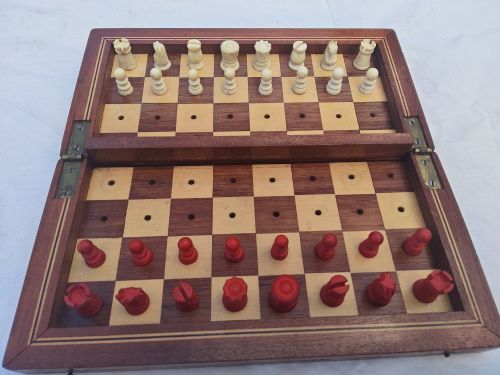
These items commonly housed sets for chess and backgammon, often sharing a dual-sided folding board. Many examples incorporated space for draughts pieces, playing cards or bone gaming counters.
Larger compendium versions expanded the selection further, providing fitted compartments for multiple traditional parlour pastimes within one cabinet.
How do I distinguish Victorian from Edwardian pieces?
Victorian items, dating from the mid to late nineteenth century, frequently feature darker timbers like rosewood and heavily figured burr walnut. They often display elaborate inlays and combination forms like sewing tables.
Edwardian pieces tend to show lighter satinwood influences, simpler cross-banding, and a refined delicacy in occasional table designs dating around the turn of the twentieth century.
Were these items meant for travel?
Some specific formats were engineered for portability, including leather-bound faux book boards and compact travelling chess sets with bone pieces. These folding designs secured pieces safely inside for transit.
Larger games tables and heavy compendium boxes remained stationary furniture pieces intended for permanent placement in a drawing room or study.
How should I care for antique wooden games surfaces?
Maintain timber surfaces by keeping them away from direct sunlight and sources of extreme heat to prevent veneer splitting. Occasional application of appropriate wax polish preserves the sheen on mahogany and walnut.
Protect leather-bound sections and interior fabrics by avoiding excessive moisture and handling delicate inlaid elements with care.