




Folding Accent Chair
A folding accent chair brings practical portability and striking design together, offering flexible seating that transforms a corner without sacrificing period character.
Folding Accent Chair
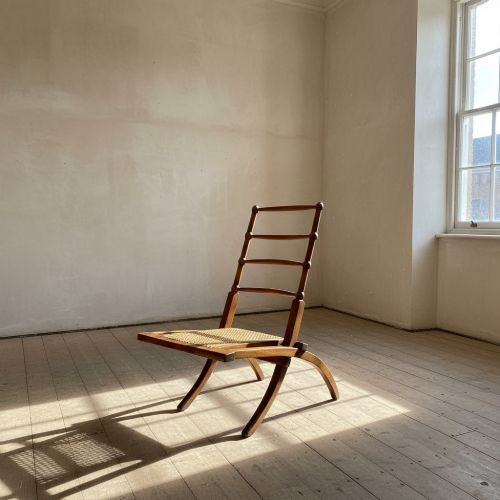
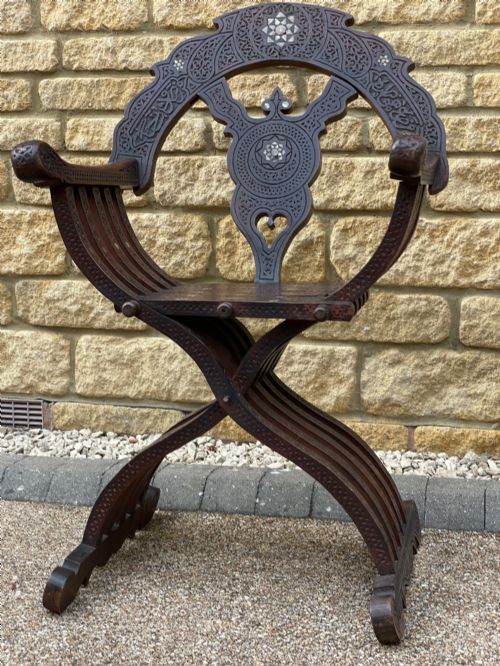
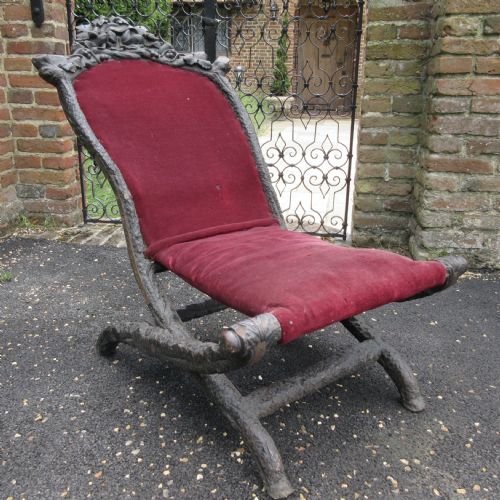
A folding accent chair is a portable seating option designed to combine utility with distinct decorative presence, moving easily between rooms while anchoring a space visually. When hunting for a folding accent chair, buyers encounter diverse regional and stylistic expressions from the nineteenth century, including Syrian, Anglo-Burmese, and Aesthetic Movement designs.
The pieces appearing on this page span several specific forms, notably Savonarola chairs, Glastonbury chairs, X-frame armchairs, and campaign chairs. These items originate from periods such as the nineteenth century, with construction leaning into historic revival and global trade aesthetics.
How they were made
Makers utilised solid timbers like walnut, mahogany, oak, teak, and various hardwoods to construct the folding mechanisms and frames of these chairs. Joinery relied on precise X-frame geometry and hinged pivots to allow the seats to collapse smoothly.
Decorative technique involved intricate wood carving and the inlay of mother-of-pearl or nacre-shell to create complex geometric and floral patterns. Some examples incorporate woven cane panels into the seat and backrest for lightness and texture.
Folding Accent Chair Retail Price Guide 2026
Typical asking prices for folding accent chair among the pieces listed under this phrase on Sellingantiques today, from the lower quarter to the upper quarter. They describe what is for sale here now, not the wider market.
Some nineteenth-century makers designed chairs to fold completely flat so an officer could pack his favourite seat beside his boots.
What varies in quality
The distinction between standard examples and superior pieces rests on the precision of the folding mechanism and the complexity of the surface ornamentation. Finer examples display meticulous hand-carving and tightly fitted mother-of-pearl inlay that remains intact across the folding joints.
Structural integrity in the pivoting points determines the daily usability of the chair, separating decorative showpieces from robustly engineered furniture. The quality of the timber selection, such as figured walnut or dense teak, further defines the standing of an individual piece.
E.W Godwin
The Folding Accent Chair Glossary
- X-frame
- A chair construction utilising intersecting curved or straight members that cross to form an X shape, allowing the seat to fold. This ancient structural form underpins many campaign and Savonarola designs.
- Savonarola chair
- A specific type of X-frame folding armchair originating in the Italian Renaissance, characterised by multiple intersecting wooden slats forming a fan-like base and back. Later nineteenth-century makers revived this silhouette.
- Glastonbury chair
- A traditional box-form folding armchair with a sloping back and panel arms, often associated with Gothic Revival design. The joints interlock without metal hinges.
- Nacre
- The iridescent internal layer of mollusc shells, commonly known as mother-of-pearl. Craftsmen shaped this material into intricate geometric tessellations for furniture inlay.
- Campaign chair
- Portable folding furniture designed for travel and military use by officers on campaign. These pieces feature clever dismantling or folding mechanisms for ease of transport.
Folding Accent Chair: Frequently Asked Questions
What is a folding accent chair?
A folding accent chair is a portable seat designed to add decorative impact to a room while offering the convenience of a collapsible frame. These pieces combine historic craftsmanship with functional versatility.
Originating in various global traditions during the nineteenth century, they serve as both movable seating and sculptural objects in a modern interior.
How do you use a folding accent chair?
These chairs work well in living rooms, bedrooms, or hallways where flexible seating is required without permanent bulk. Their folding nature allows them to be stored or moved between spaces with ease.
Because of their decorative inlay or carved woodwork, they often function primarily as visual focal points rather than everyday lounging seats.
How are X-frame chairs constructed?
X-frame chairs rely on two intersecting wooden supports that pivot or cross at the centre to allow the chair to collapse. This ancient engineering principle provides both structural stability and portability.
Craftsmen joined the wooden members with precise pivots, often reinforcing the stress points with decorative metal pins or pegged joinery.
How do I identify a Syrian inlaid chair?
Syrian and Middle Eastern chairs from the nineteenth century are typically characterised by dense geometric or floral inlay using mother-of-pearl and nacre-shell. The woodwork often utilises walnut or fruitwood as a dark ground.
These pieces frequently feature horseshoe arches, pierced carving, and X-frame or armchair silhouettes reflecting Ottoman design traditions.