
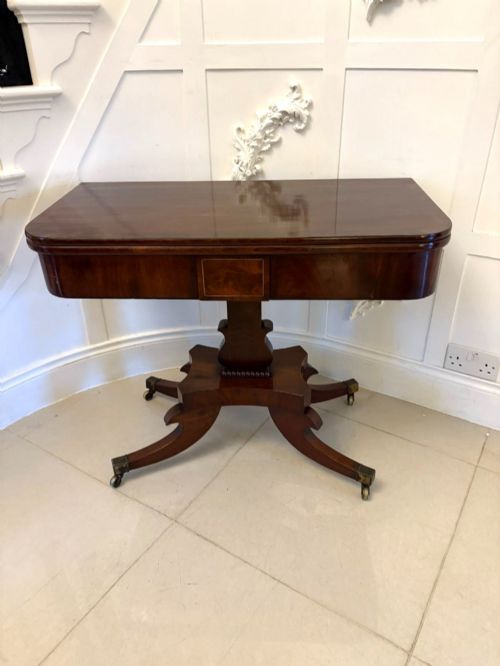
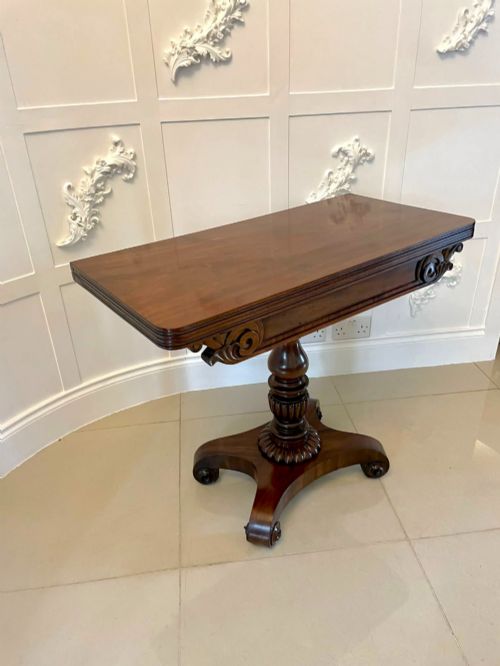
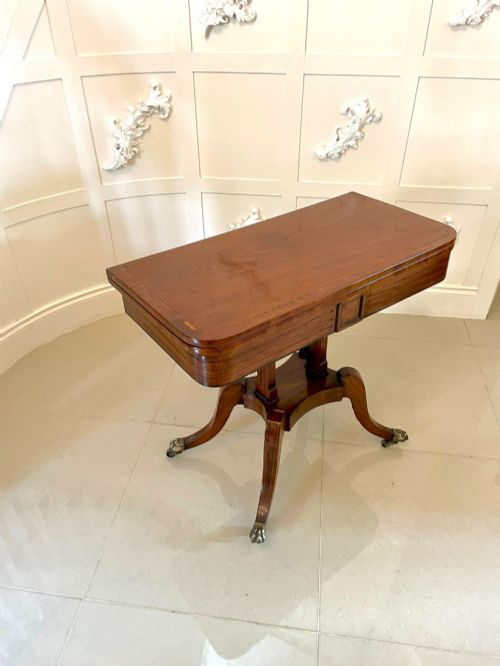
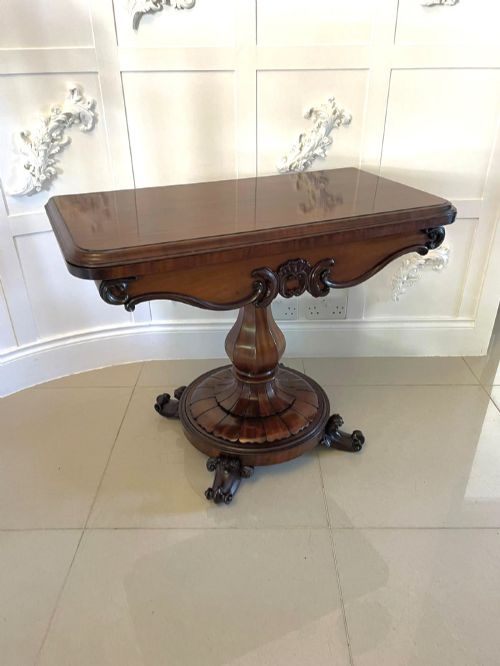


Fold Top Hall Table
These fold top hall table examples combine clever engineering with compact elegance, offering a versatile surface that adapts from a slim console to a proper table.
Fold Top Hall Table
When you search for a fold top hall table, you encounter a selection spanning the eighteenth and nineteenth centuries, alongside Edwardian and later interpretations. The form encompasses dual-purpose tea, card, and console tables that sit neatly against a wall until expanded for use.
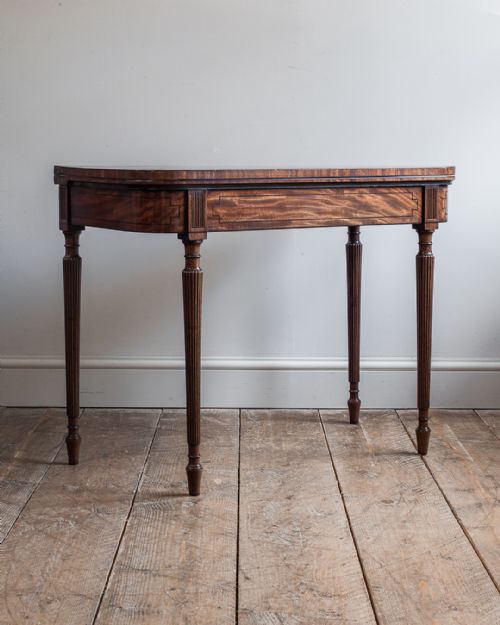
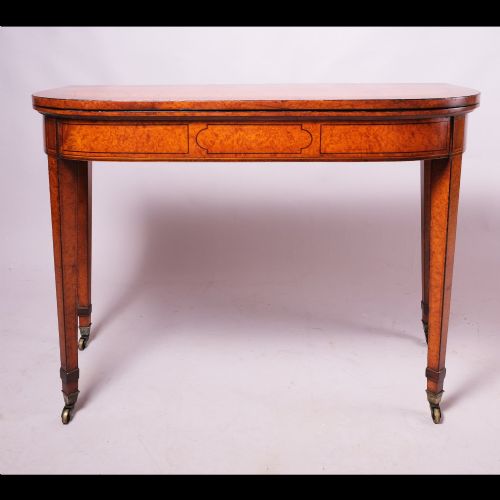
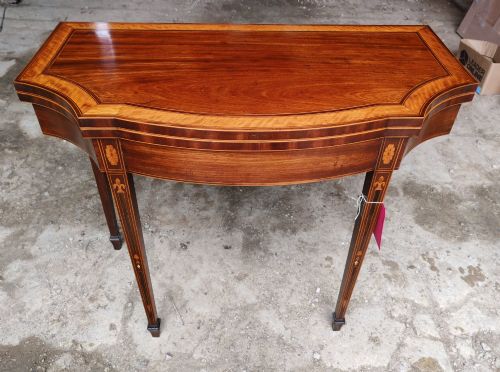
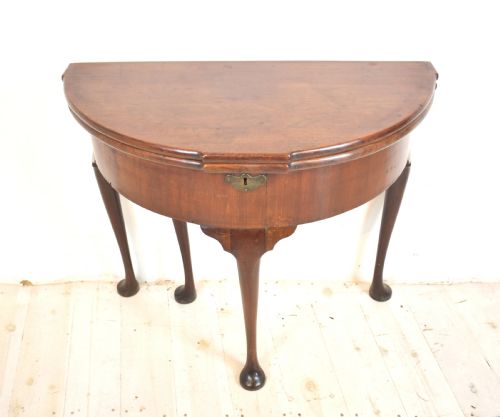
Mahogany dominates the selection, frequently joined by walnut, rosewood, oak, and exotic veneers like amboyna. You are most likely to meet Georgian and Victorian pieces configured with D-shaped or demi-lune tops designed to save space in narrow entryways.
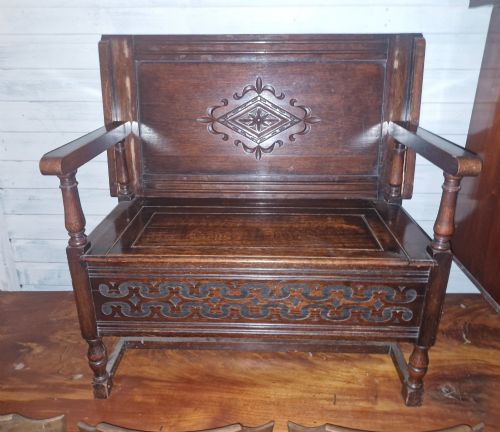
Makers adapted these pieces for multiple functions, doubling them as side tables or games surfaces through hinged leaves and clever pivoting mechanisms. The inventory also includes rarer oak credence tables and small seating combinations with folding lids.
How they were made
Cabinetmakers utilised solid timbers and sophisticated wood veneers, pairing structural oak and mahogany frames with decorative surfaces of satinwood, ebony, and burr walnut. The outer veneers relied on precise cutting to display striking grain patterns across the folding leaves.
Brass inlay and delicate stringing appeared frequently on Regency examples, contrasting sharply with the darker tones of rosewood and mahogany. Joinery techniques ensured the pivoting tops and folding leaves remained stable and level over centuries of daily transformation.
Listings feature mahogany, rosewood, oak, and amboyna woods across Georgian, Victorian, and Regency periods.
What varies in quality
The distinction between ordinary and exceptional work rests on the crispness of the carving, the selection of figured timber, and the precision of the hinges. Superior examples display seamless alignment when closed and robust, steady mechanisms when opened.
Refined brass inlay and intricate marquetry indicate higher workshop standards, whereas utilitarian pieces rely on plain mahogany or oak. The skill involved in matching grain patterns across the fold dictates the visual harmony of the finished surface.
Gillows·Gregory and Co
The Fold Top Hall Table Glossary
- Demi-lune
- A half-moon shape popular for console and card tables designed to stand flat against a wall. This profile allowed tables to occupy minimal floor space in hallways.
- Tea table
- A small domestic table designed to hold tea service equipment, frequently built with a folding top to save space when not in use. They evolved through the Georgian and Victorian eras into multi-purpose furniture.
- Credence table
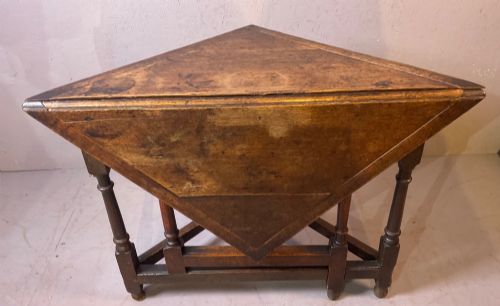
- An early form of folding table featuring a swing leg to support the opened leaf. These medieval and seventeenth-century pieces often served ecclesiastical or domestic display functions.
- Marquetry
- The art of applying decorative veneer pieces to form intricate patterns and pictures. Craftsmen utilised contrasting woods like ebony and satinwood to create detailed visual effects.
- Stringing
- Thin lines of contrasting wood inlaid into the surface of furniture to create borders and geometric outlines. This technique defined many Regency and Georgian designs.
Fold Top Hall Table: Frequently Asked Questions
How did people use a fold top table?
These pieces functioned primarily as space-saving furniture in hallways and reception rooms, remaining folded against a wall as a console or side table. When guests arrived, the hinged top swung open to create a larger surface for tea or card games.
Owners appreciated the dual nature, which allowed a substantial table to occupy the floor area of a narrow shelf during daily routines.
Are these tables sturdy when opened?
Well-constructed examples rely on pivoting wooden frames, swing legs, or gateleg actions to support the heavy folded leaf. The weight of the timber and the precision of the original brass hinges keep the surface stable during use.
Buyers should examine how the upper leaf rests on the base to ensure the weight distributes evenly across the frame.
How do I distinguish a card table from a tea table?
Card tables often retain original green baize or felt interiors designed for playing games, sometimes featuring recessed corners for candlesticks or small wooden cups for counters. Tea tables typically present a plain polished wood surface inside the folding leaf.
Both forms share the same D-shape or rectangular silhouette when closed, making the interior lining the most reliable indicator of original purpose.
What periods do these pieces come from?
The selection spans from seventeenth-century oak forms up through George III, Regency, and Victorian iterations into the early twentieth century. Georgian and Regency pieces emphasise classic mahogany and rosewood, while Victorian examples often introduce burr walnut and marquetry.
Stylistic shifts reflect changing domestic fashions, moving from simple eighteenth-century proportions to ornate nineteenth-century revival styles.