
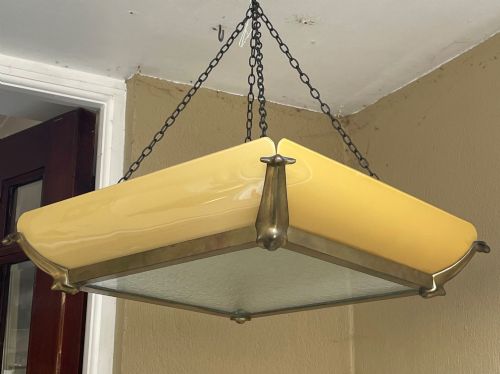
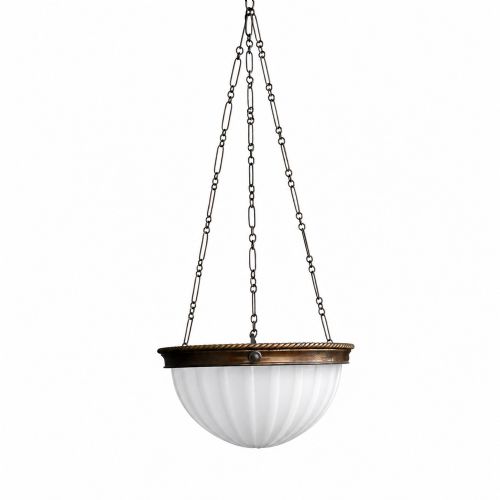
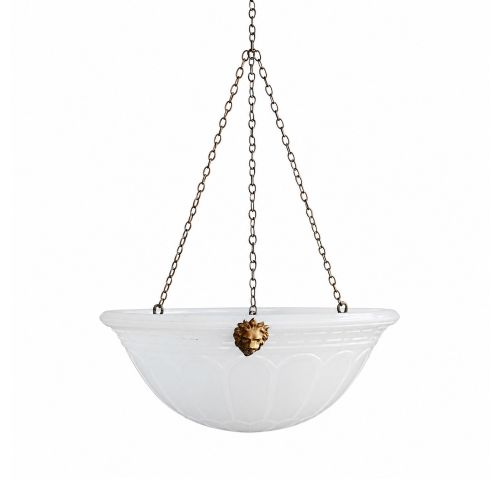
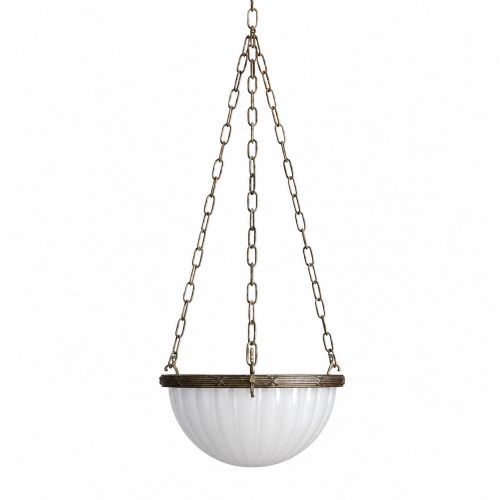


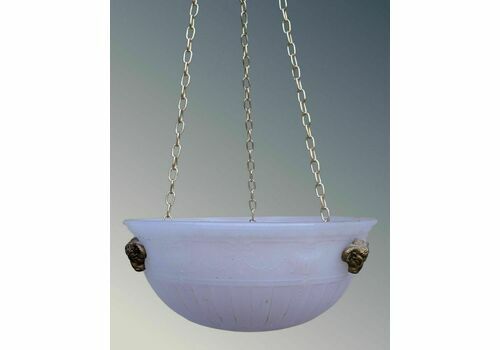


Flycatcher Glass Shade
These flycatcher glass shade options bring suspended, softly diffused illumination to a room, offering period character for ceiling hanging.
Flycatcher Glass Shade
A flycatcher glass shade hangs from ceilings to distribute gentle illumination across a room. These fixtures appear primarily as pendant lights, bowl lampshades, and plafonniers.
The selection ranges across Edwardian, Art Deco, Arts and Crafts, and Neoclassical styles. Forms span from clam shell shapes and opalescent bowls to suspended dish lights.
Examples date from the nineteenth century through the nineteen-twenties and nineteen-thirties. English origins feature prominently among the pieces found here.
Materials and construction
Glass forms the primary body, utilising frosted glass, moonstone glass, opalescent glass, pink glass, and cut glass to soften light output. Painted and enamelled surface treatments add decorative detail.
Mounting hardware incorporates brass, patinated brass, chrome, and bronze. Particular motifs include rams head mounts integrated into the metal suspension components.
Listings span four distinct periods: nineteenth century, Edwardian, nineteen-twenty, and nineteen-thirty.
Assessing the range
Quality separates by the depth of moulding in the glass and the crispness of decorative metalwork like rams head mounts. Softer surface treatments and thicker glass signal finer execution.
The weight and finish of the hanging brass, patinated brass, or bronze suspension hardware establish the overall substance of the piece.
The Flycatcher Glass Shade Glossary
- Plafonnier
- A shallow ceiling-mounted glass bowl light that sits close to the ceiling rather than hanging on a long cord. These direct light downwards while diffusing glare.
- Moonstone glass
- A semi-translucent milky glass developed to scatter light evenly without harsh hotspots. It creates a soft glow reminiscent of moonlight.
- Opalescent glass
- Glass containing ingredients that cause it to fire with milky blue or pinkish opacities when lit. This material shifts in tone depending on the light source.
- Clam shell
- A fluted, ribbed lampshade moulding resembling a natural shell surface. The curved ridges help break up and scatter the bulb's beam.
Flycatcher Glass Shade: Frequently Asked Questions
How do I hang a flycatcher glass shade?
These shades suspend from ceilings using dedicated brass, bronze, or chrome fittings attached to chains or rods. Proper wiring requires matching the weight of the glass bowl to an appropriate ceiling rose and suspension drop.
Ensure the hanging height suits the room proportion, keeping pendant bowls safely above head height in open walkways while positioning them lower over tables.
What periods do these shades come from?
The available pieces span from the nineteenth century through Edwardian times and into the nineteen-twenties and nineteen-thirties. Styles shift from ornate Arts and Crafts and Neoclassical designs to geometric Art Deco forms.
Matching the shade period to the room helps maintain historical consistency, though mixed eras work well in eclectic interior schemes.
What materials make up these lights?
Shades are formed from glass, including frosted, moonstone, opalescent, pink, and cut varieties. Metal components use brass, patinated brass, chrome, and bronze.
Mounts occasionally feature cast details like rams heads, pairing structural metal securely with the glass bowls.
Where were these shades originally used?
Pendant lights and ceiling bowls hung in principal rooms, hallways, and dining spaces to provide ambient illumination. Their diffusing glass prevented glare from early electric bulbs.
Today, they serve the same practical purpose in modern homes, casting warm, filtered light downwards into living areas.