




Fluted Leg Upholstered Bench
A fluted leg upholstered bench brings classic proportion to a room, offering practical seating shaped by centuries of French and English design.
Fluted Leg Upholstered Bench
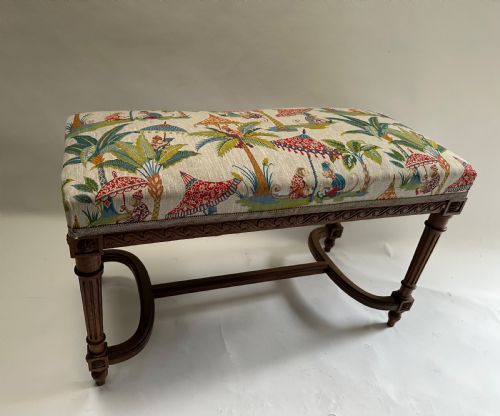
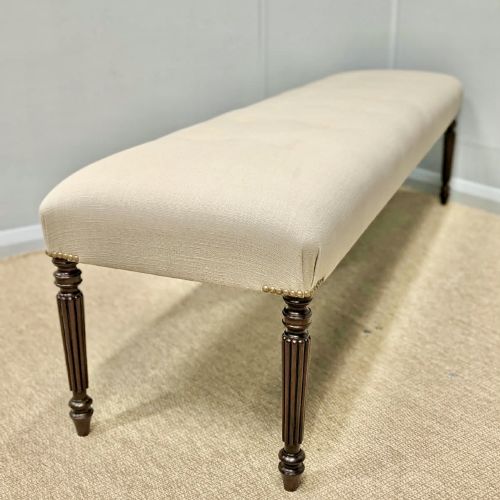
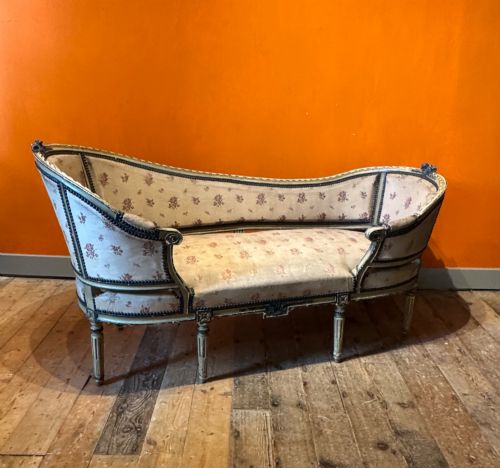
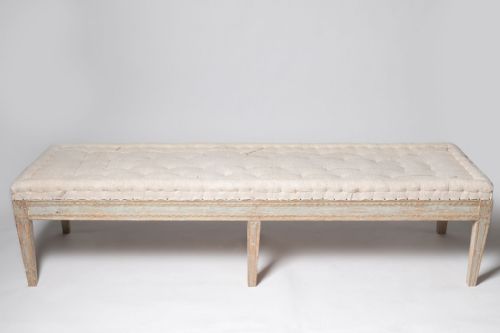
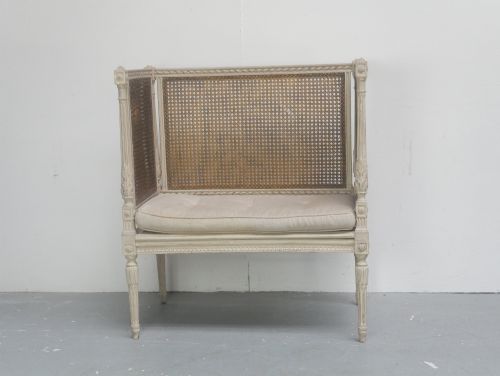
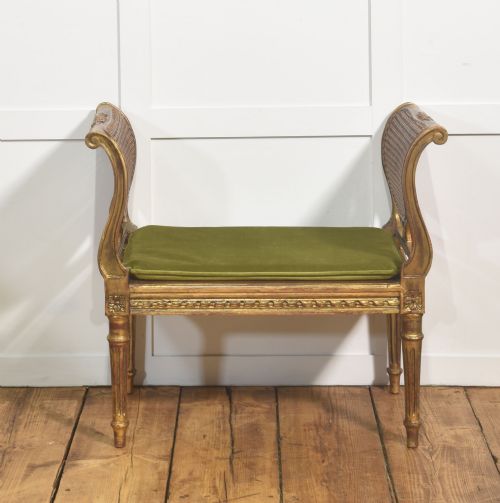
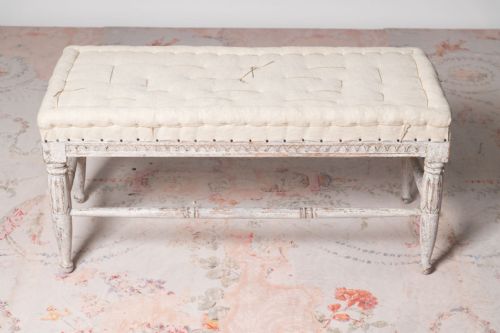
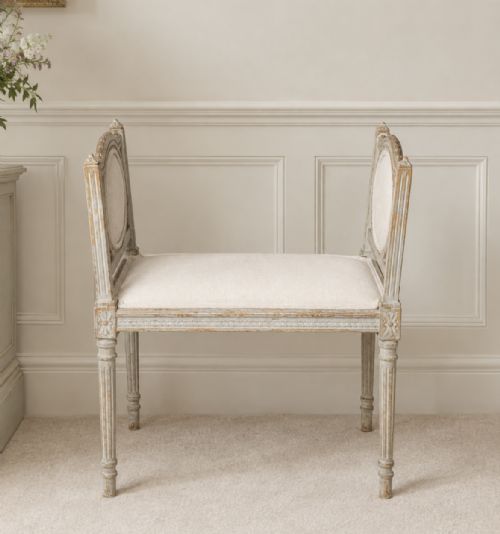
A fluted leg upholstered bench is a long seat or stool raised on carved vertical channels, appearing across the eighteenth, nineteenth, and early twentieth centuries. These pieces cross various forms from compact window seats and long dressing stools to expansive settees and small sofas.
The version you meet most often on this page is the French Louis XVI style or its later revivals, typically built in walnut, mahogany, or giltwood. Alongside these French forms, Swedish Gustavian models and English country house walnut hall benches appear with similar carved leg work.
Makers adapted these seating forms for different domestic rooms, from the hallway and bedroom to the formal drawing room. They serve equally as window seats, dressing furniture, or occasional benches upholstered in linen, velvet, leather, or woven fabric.
Materials and construction
Makers fashioned the frames of these benches from hardwoods including mahogany, walnut, teak, and rosewood, alongside softer timbers intended for paint or heavy gilding. Skilled carvers cut vertical flutes directly into the timber legs by hand, shaping neoclassical lines that echo ancient architectural columns.
Upholstery methods evolved across the periods represented, utilising traditional stuffing, buttoning, and webbing finished with brass studs, braid, or piping. Frames often combined structural joinery with applied carvings, gesso work, or parcel gilding to achieve decorative enrichment.
Fluted Leg Upholstered Bench Retail Price Guide 2026
Typical asking prices for fluted leg upholstered bench among the pieces listed under this phrase on Sellingantiques today, from the lower quarter to the upper quarter. They describe what is for sale here now, not the wider market.
Listings feature walnut, mahogany, and giltwood frames paired with linen, velvet, and leather upholstery across nineteenth and twentieth-century periods.
Markers of quality
The distinction between ordinary and superior pieces rests in the crispness of the timber carving and the integrity of the frame construction. Hand-cut fluting shows depth and precision, whereas mechanical or later carving appears shallow and uniform.
Timbers selected for the primary structure dictate the foundational strength of the bench, with dense grain and solid joints ensuring stability. Original surface treatments, such as genuine period gilding, old paint patination, or patinated mahogany, hold far more character than modern refinishing.
Charles Nosotti
The Fluted Leg Upholstered Bench Glossary
- Fluting
- A series of shallow, parallel vertical grooves carved into a column or furniture leg. This classical detail lightens the visual weight of the support.
- Giltwood
- Timber coated with thin layers of gold leaf over a prepared gesso ground. It provides a brilliant, reflective finish typical of grand European seating.
- Canapé
- A traditional French decorative sofa featuring an exposed wooden frame and upholstered back and seat. These pieces often display neoclassical carved details.
- Gustavian
- The Swedish interpretation of French neoclassical and Louis XVI design, known for restrained ornamentation and pale painted finishes. This style favours functional elegance.
- Window Stool
- A compact seating form designed specifically to fit beneath a window bay. They frequently feature scrolled ends or simple rectangular upholstered tops.
Fluted Leg Upholstered Bench: Frequently Asked Questions
What is a fluted leg upholstered bench?
A fluted leg upholstered bench is a traditional seating form raised on legs carved with vertical grooves. These pieces range from small dressing stools and window seats to larger settees.
Originating largely from European neoclassical traditions, they combine exposed carved woodwork with padded, fabric-covered seats.
How do I date a wooden bench?
Dating relies on examining the timber species, joinery methods, and the style of the carved ornament. Neoclassical revivals often mimic eighteenth-century forms closely.
Wear patterns, tool marks on the timber, and the construction of the frame help distinguish original period pieces from later revival items.
Where should I place a window seat?
Window seats suit bedroom ends, narrow hallways, or beneath low living room windows. Their low profiles maintain light flow while offering practical occasional seating.
Matching the upholstery fabric to existing room textiles helps integrate these long benches into both traditional and modern interiors.
What is the difference between a settee and a bench?
A settee incorporates a built-in backrest designed for seated comfort, often sharing construction details with small sofas. Benches and long stools generally provide only a flat upholstered surface without a back.
Both forms frequently share matching leg treatments, such as hand-carved fluting or painted wood finishes.