





Fluted Leg Bench Stool
These fluted leg bench stool pieces combine classical lines with practical seating, offering a refined addition to any traditional interior scheme.
Fluted Leg Bench Stool
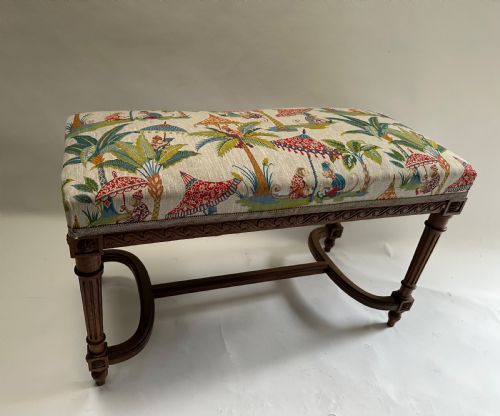
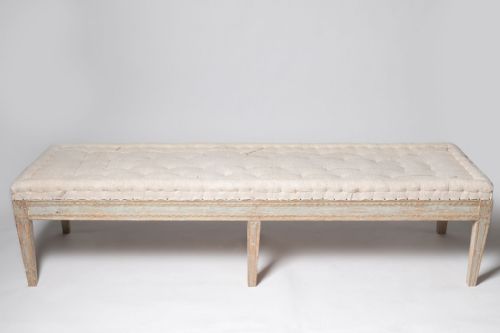
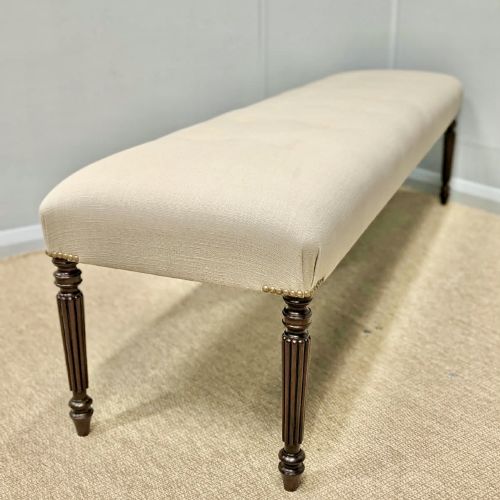
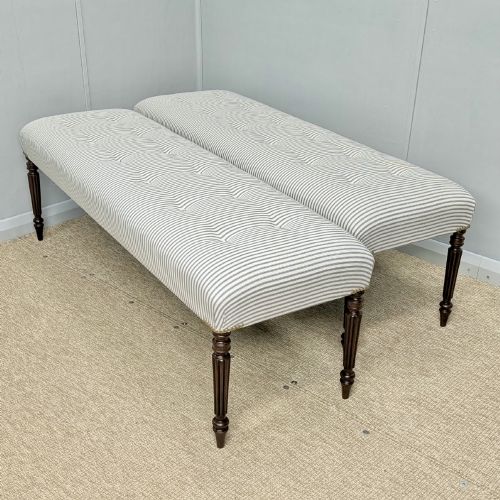
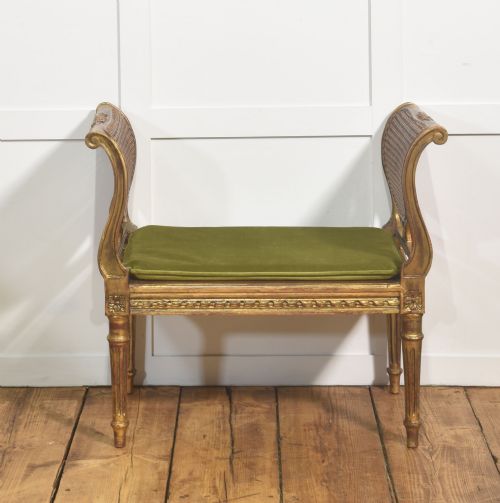
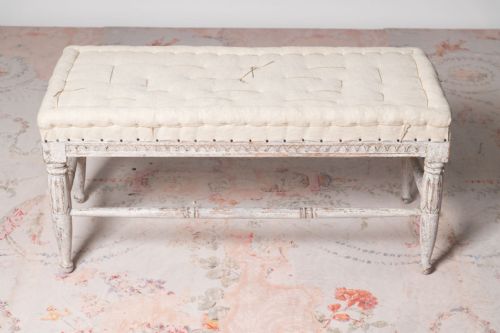
A fluted leg bench stool serves multiple purposes around the home, appearing as long window seats, dressing stools, and hall benches. The selection here spans compact piano seats and wide seating forms designed for bedrooms and reception rooms.
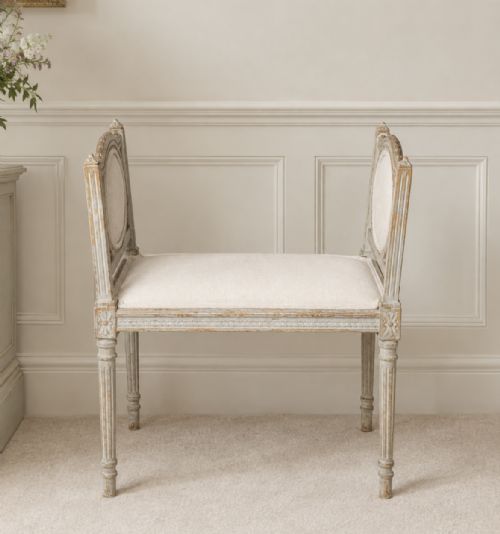
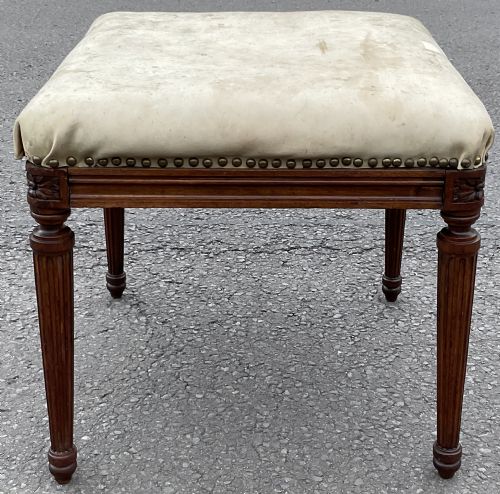
Most examples originate from the nineteenth century, drawing heavily on earlier Georgian and Louis XVI styles. Pieces range from carved giltwood window seats to mahogany frames supported by characteristic fluted legs.
Makers and workshops from different European traditions adapted these forms, resulting in Swedish Gustavian benches alongside English mahogany and French walnut pieces. Buyers meet everything from simple cane-seated stool variants to buttoned leather long benches.
Materials and construction methods
Cabinetmakers utilised dense timbers such as mahogany, walnut, and rosewood for the primary frames, ensuring structural stability for daily seating. Softer woods like beech and teak also appear, frequently carved with neoclassical motifs or finished in giltwood.
Upholstery methods varied widely according to the intended function of each stool or bench. Workshops applied woven rattan and cane alongside buttoned leather, velvet, and plain linen over traditional stuffing.
Fluted Leg Bench Stool Retail Price Guide 2026
Typical asking prices for fluted leg bench stool among the pieces listed under this phrase on Sellingantiques today, from the lower quarter to the upper quarter. They describe what is for sale here now, not the wider market.
Mahogany and walnut remain the dominant framing timbers across the nineteenth-century pieces listed on this site.
Assessing craftsmanship and execution
Quality rests primarily in the crispness of the timber carving and the precise execution of the fluted legs. Superior examples display deeply channelled fluting and cleanly joined frame corners rather than soft or rubbed mouldings.
The choice of secondary materials also separates standard production from finer workshop output. Robust hardwood frames paired with hand-woven cane or properly secured leather upholstery indicate higher standards of period craftsmanship.
Charles Nosotti·Jas Shoolbred
The Fluted Leg Bench Stool Glossary
- Fluting
- Vertical parallel grooves carved into the shaft of a furniture leg. This classical decorative detail derives from ancient architectural columns.
- Giltwood
- Timber that has been coated with a thin layer of gold leaf or gilt gesso. It provides a bright, reflective surface popular in neoclassical furniture.
- Cane
- Woven peeled rattan or similar plant material used to form light, porous seat panels. It offers both flexibility and durability.
- Banquette
- A long upholstered bench or window seat designed for domestic seating. These pieces often feature decorative carved wooden frames.
Fluted Leg Bench Stool: Frequently Asked Questions
Where should I place a long stool?
These long benches suit the foot of a bed, large hallways, or positioned beneath wide windows. Their low profile avoids blocking natural light while providing convenient occasional seating.
Shorter dressing or piano stools fit comfortably into bedroom corners or beside dressing tables without overcrowding the floor space.
How do I identify a Georgian style stool?
Georgian and George III pieces generally feature substantial mahogany frames with disciplined classical proportions. Look for restrained carving and solid timber construction typical of eighteenth-century English workshops.
Later nineteenth-century revivals often adopt these same structural cues but may employ lighter secondary woods or different finishing techniques.
Are cane seats strong enough for daily use?
Woven cane and rattan panels offer surprising tensile strength while maintaining a light visual weight. Period examples that survived with intact cane demonstrate the durability of the material.
Owners should avoid kneeling directly on the woven surface to prevent accidental snapping of the individual strands.
What is the difference between a window seat and a stool?
Window seats typically feature elongated proportions and may include raised ends or arms designed for comfortable lounging by a casement. Standard stools tend to be square or compact for versatile placement.
Both forms share similar leg treatments and framing methods across the nineteenth-century periods represented.