

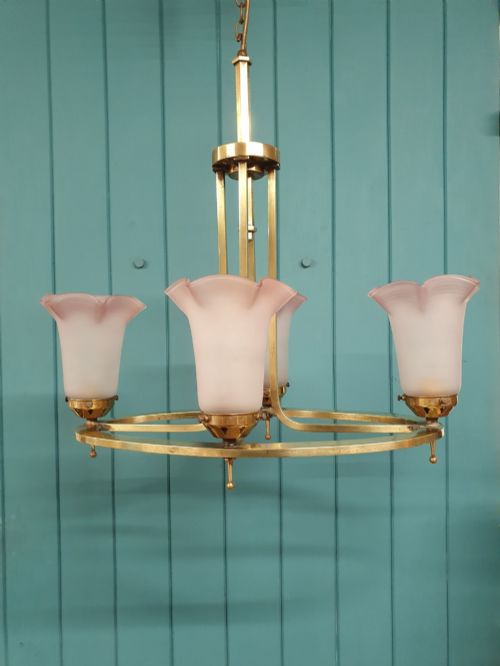


Fluted Glass Pendant
These fluted glass pendant lights and shades bring genuine period character to a room, cast through textured glass and metal galleries.
Fluted Glass Pendant
When you search for a fluted glass pendant, you are looking at ceiling-hung light fixtures and individual shades defined by fluted surfaces. These pieces direct light downwards through vertical ribs or facets pressed or cut into the glass body.
The versions you are most likely to meet on this page span the Victorian, Edwardian, and Art Deco periods, alongside pieces from the 1920s and 1930s. They range from utilitarian pharmacy shades to decorative brass and chrome-fitted chandeliers.
Forms include single pendant lights, multi-lamp chandeliers, and standalone shades designed to hang from existing fixtures. Materials stretch beyond clear glass to include frosted, opal, ruby, moonstone, and cut glass paired with brass, chrome, and silver-plated mounts.
How they were made
The glass elements are formed using traditional moulding and cutting techniques, creating the characteristic vertical flutes and ribs that catch and refract light. Makers utilised specialised glass types such as opal, frosted, ruby, and moonstone to soften bulb glare.
Metal components, predominantly brass and chrome, form the galleries and suspension hardware that hold the shades securely. These metal fittings are often cast or spun, matching the industrial and domestic design aesthetics of their respective decades.
Fluted Glass Pendant Retail Price Guide 2026
Typical asking prices for fluted glass pendant among the pieces listed under this phrase on Sellingantiques today, from the lower quarter to the upper quarter. They describe what is for sale here now, not the wider market.
Listings feature items spanning the Victorian era, Edwardian period, and the 1920s to 1930s, utilising brass, chrome, and various coloured glass types.
What varies in quality
Quality rests in the crispness of the glass fluting and the substance of the supporting metalwork. Heavier brass galleries and thick, uniform glass signal a sturdier build than lighter, utilitarian alternatives.
The distinction between a standard commercial shade and a finer decorative piece lies in the finish of the metal mounts and the clarity or depth of the coloured glass, whether ruby, cranberry, or moonstone.
The Fluted Glass Pendant Glossary
- Gallery
- The metal collar or ring that grips the top of a lampshade to suspend it from a ceiling pendant.
- Holophane
- A brand and style of prismatic glass designed to direct and diffuse light efficiently, commonly found in industrial and commercial pendants.
- Opal glass
- A milky, translucent white glass that diffuses light evenly across a room.
- Ruby glass
- A deep red glass created by adding gold or copper compounds to the molten batch during manufacture.
- Pendant light
- A single light fixture suspended from the ceiling by a cord, chain, or metal rod.
Fluted Glass Pendant: Frequently Asked Questions
How do I hang a vintage pendant?
Most pendant lights require standard electrical wiring connected to a ceiling junction box. A qualified electrician should handle the installation to ensure the weight is properly supported.
Depending on the ceiling height and the drop of the fixture, you may need to adjust the suspension cord or chain length before securing the canopy.
What rooms suit these lights?
These pendants work well in hallways, kitchens, and dining areas where focused downward illumination is practical. Their period details also complement living spaces seeking authentic vintage character.
Smaller diminutive shades suit compact rooms or alcoves, while larger multi-lamp chandeliers anchor more expansive spaces.
How do I clean old glass shades?
Wash the glass gently in warm water using a mild detergent and a soft cloth to avoid scratching the surface. Remove metal galleries beforehand if possible to prevent moisture damage.
Dry the glass thoroughly before reassembling the fixture to avoid water spots on the flutes.
Are original galleries important?
Original metal galleries help maintain the historical integrity and proportion of the pendant light. Brass and chrome mounts specific to the period fit the physical dimensions of the shade more accurately.
Matching components ensure the piece retains its intended aesthetic balance from the Victorian or Art Deco era.