


Fluted Glass Light Fixture
A fluted glass light fixture brings genuine period illumination and texture to a room, spanning Victorian oil lamps to Art Deco chandeliers.
Fluted Glass Light Fixture
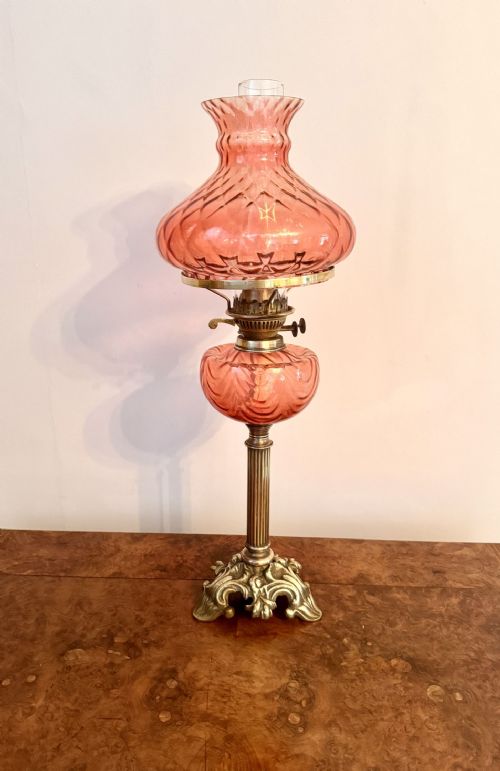
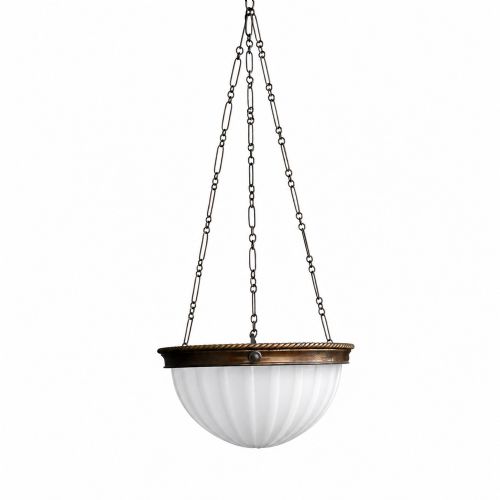
A fluted glass light fixture combines functional interior illumination with decorative ribbed glassware, taking forms such as pendant lights, oil lamps, ceiling lights and chandeliers. When searching for a fluted glass light fixture, buyers encounter pieces originating from the nineteenth century, the Victorian and Edwardian eras, and the 1920 to 1930 decades.
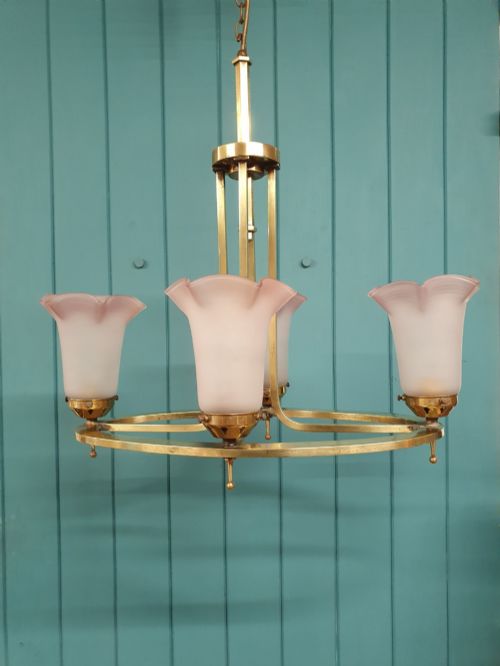
The selection on this page leans heavily towards British lighting designs from the Victorian period up through the Art Deco era. Common configurations include single ceiling pendant shades alongside multi-arm brass chandeliers and converted oil lamps.
Materials span brass, chrome and ceramic fittings paired with specialised glass types including moonstone, ruby glass, frosted glass and opal glass. These fixtures served various historical contexts, from domestic parlours to pharmacy interiors and industrial spaces.
How they were made
Makers utilised brass and metal galleries to secure and suspend heavy glass shades, sometimes incorporating silver plating or ceramic bases. Glass houses produced shades through moulding or cutting to achieve characteristic fluted and prismatic surface patterns.
Lighting assemblies often combined cast or stamped brass components with hand-finished glass shades designed to diffuse or direct light effectively. Oil lamps integrated ceramic reservoirs and weighted black glass bases to ensure stability alongside their metal burners.
Some pharmacy pendants retain traces of twentieth-century working dust tucked deep inside their heavy glass flutes.
What varies in quality
Quality reveals itself in the substantial weight of the cast brass galleries and the depth and clarity of the glass fluting or cutting. Pieces featuring original glass shades paired with matching period mounts hold greater integrity than later assembled alternatives.
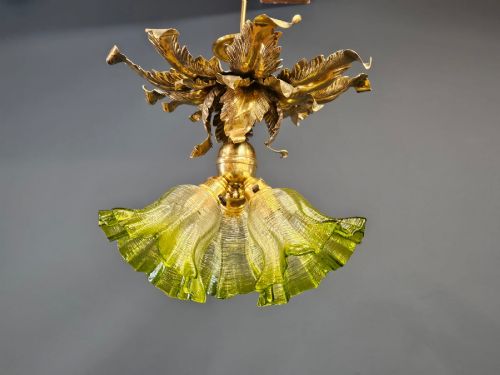
The sophistication of the metalwork, from leaf designs on Victorian brass to geometric Art Deco framing, distinguishes standard utility lighting from superior examples. Intricate details like matching ceramic reservoirs and untouched metal patination mark the upper tier of surviving items.
The Fluted Glass Light Fixture Glossary
- Moonstone glass
- A translucent, milky white glass variety that diffuses light with a soft, ethereal glow. This material frequently appears in early twentieth-century pendants.
- Gallery
- The metal ring or fitting that grips a glass shade and connects it to the suspension rod or chain. Galleries are often cast from brass or finished in chrome.
- Holophane
- A brand of scientific prismatic glass designed to direct and diffuse light efficiently while reducing glare. These shades feature precise exterior fluting and internal prisms.
Fluted Glass Light Fixture: Frequently Asked Questions
What rooms suit a fluted glass pendant?
These pendants work well in kitchens, hallways and dining spaces where direct or diffused downward illumination is required.
The historical character of brass and glass complements both traditional interiors and modern industrial settings.
How do I identify a Victorian oil lamp?
Victorian oil lamps typically feature a heavy ceramic or glass base, a brass burner mechanism, and a substantial glass shade or chimney.
Many examples from this era have been subsequently converted for modern electrical wiring while retaining their original brass components.
Are these fixtures wired for modern use?
Surviving lighting fixtures often require professional rewiring to meet current electrical standards before installation in a home.
Buyers should inspect the internal fixings and consult an electrician regarding compatibility with modern ceiling mounts.
What is the difference between Edwardian and Art Deco styles?
Edwardian lighting often incorporates ornate brass work, leaf motifs, and softer silhouettes reflecting late nineteenth-century traditions.
Art Deco designs from the 1930s favour cleaner geometric lines, streamlined metal fixtures, and symmetrical chandelier arrangements.