



Flower Pendant Light
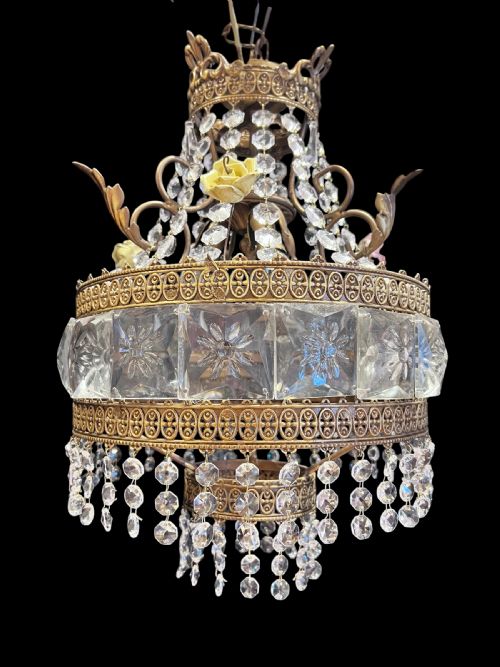
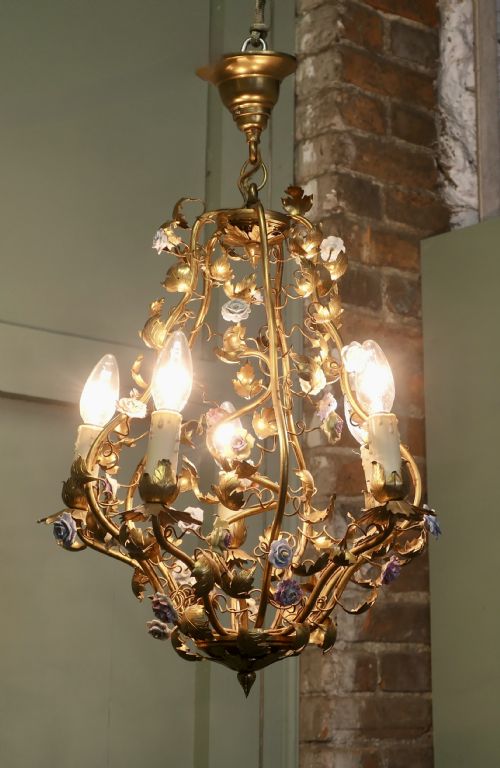
These flower pendant light fixtures bring together delicate ceramic petals and gilt frames to illuminate a room with genuine antique character.
Flower Pendant Light
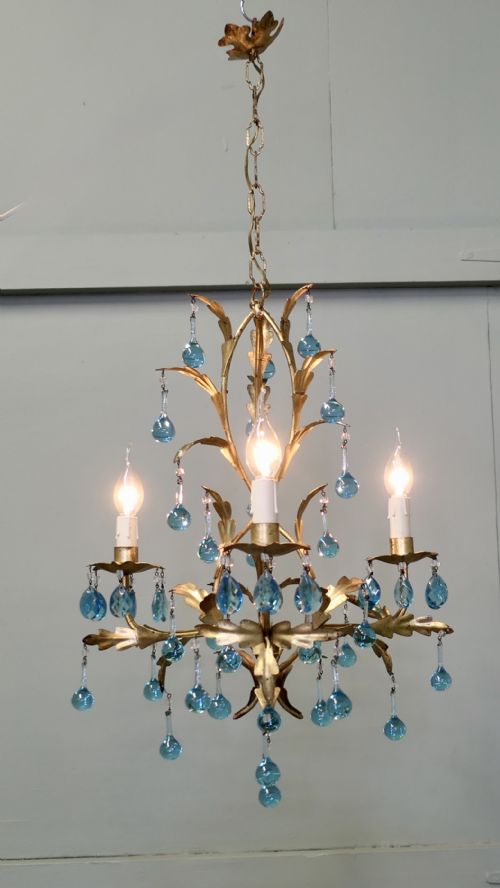
When you search for a flower pendant light, you are looking at early twentieth century chandeliers and ceiling lights adorned with botanical elements. These hanging fixtures range from single small wire pieces to grand twelve light Florentine fixtures.
The versions you are most likely to meet on this page originate from French and Italian workshops spanning the Edwardian era through to the nineteen thirties. They combine metal branches with porcelain or crystal blooms to create a distinct floral arrangement overhead.
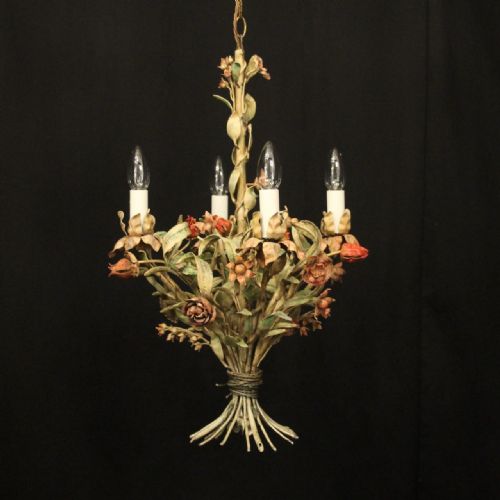
Many of these ceiling lights draw upon French Rococo revival and Florentine styles, integrating naturalistic motifs into the metalwork. Others present simpler wire and toleware constructions that suit more modest spaces while retaining their botanical theme.
How they were made
The framework of these hanging lights relies on shaped iron, brass, and gilt metal, often formed into twisting branches to support multiple bulbs. Artisans shaped wire and toleware to construct the underlying structural tiers.
Ceramic, porcelain, and crystal form the floral components, shaped into individual petals, opaque grapes, and leaves. These delicate elements are wired or pinned directly onto the metal framework by hand.
Flower Pendant Light Retail Price Guide 2026
Typical asking prices for flower pendant light among the pieces listed under this phrase on Sellingantiques today, from the lower quarter to the upper quarter. They describe what is for sale here now, not the wider market.
Current listings feature pieces exclusively from the Edwardian era and the decades spanning nineteen ten to nineteen thirty.
What varies in quality
The standard of a floral chandelier rests on the intricacy of its metalwork and the hand-painted detail upon the ceramic flowers. Finely cast gilt frames and delicately modelled porcelain petals distinguish the superior examples from simpler utilitarian pieces.
The density and variety of the botanical adornments also separate the ranges, with some fixtures featuring sparse wire arrangements while others carry complex clusters of crystals, grapes, and polychrome blooms.
The Flower Pendant Light Glossary
- Toleware
- Painted or enamelled sheet metal objects, frequently shaped into leaves and petals for decorative lighting. This technique allows for vibrant polychrome finishes on French chandeliers.
- Florentine
- A decorative style originating in Italy that often incorporates ornate gilt framing and naturalistic leaf motifs. Pieces from this tradition frequently employ multiple light branches.
- Polychrome
- The practice of decorating surfaces with multiple colours, seen here on ceramic and metal floral elements. It gives the petals a lifelike appearance under artificial illumination.
- Gilt metal
- Metal coated with a thin layer of gold leaf or paint to impart a warm metallic sheen. This finish defines the structural branches of many Edwardian and nineteen twenties fixtures.
Flower Pendant Light: Frequently Asked Questions
What is a flower pendant light?
A flower pendant light is an antique ceiling fixture decorated with botanical motifs, typically featuring porcelain or crystal blooms.
These pieces use metal branches to support lights alongside handcrafted ceramic flowers and leaves.
How were these chandeliers used?
These fixtures served to illuminate principal rooms in Edwardian and continental homes while adding a decorative botanical element overhead.
Multi-bulb versions provided ample light for salons and dining spaces, suspended centrally from the ceiling.
How do I clean floral chandeliers?
Dust these hanging lights gently with a soft brush to protect the delicate porcelain petals and wired glass elements.
Avoid harsh chemical cleaners that might strip the gilt finish from the metal branches or damage the painted ceramic surfaces.
How do I date these lights?
Dating relies on examining the construction methods of the metal frame and the style of the ceramic blooms.
Pieces from this selection generally date from the Edwardian period through the nineteen thirties, reflecting French and Italian workshop traditions.