
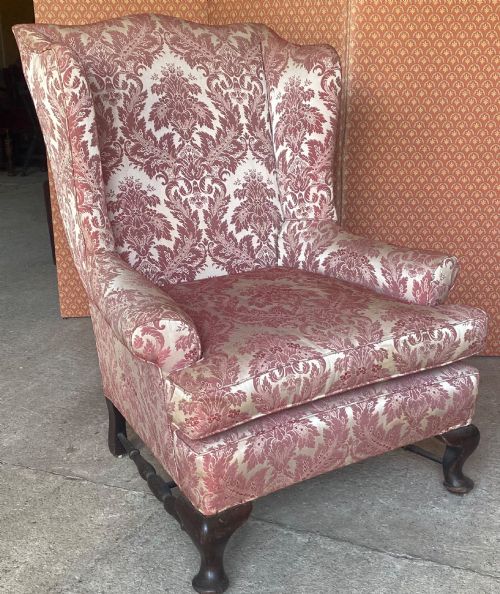
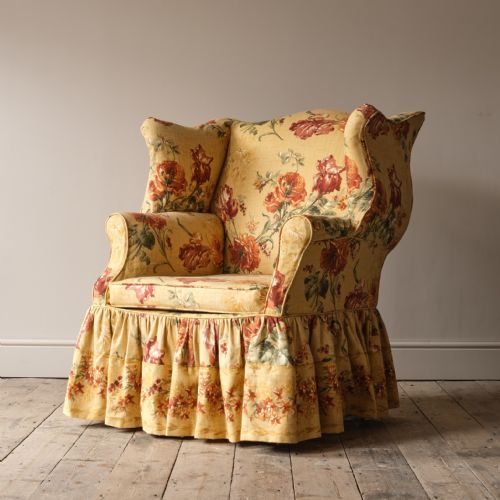
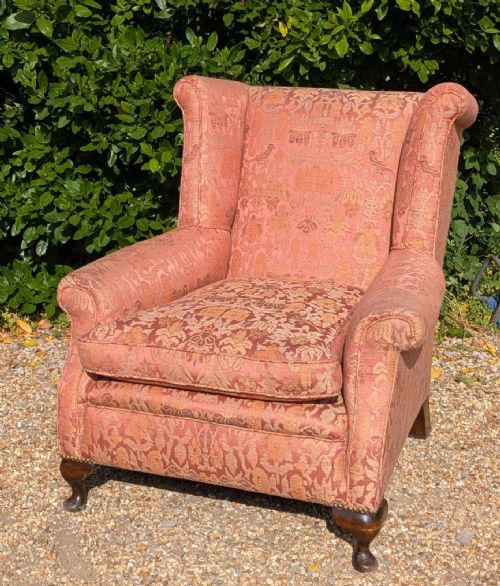
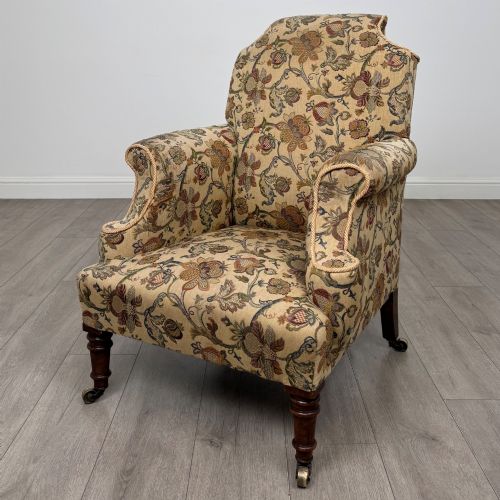


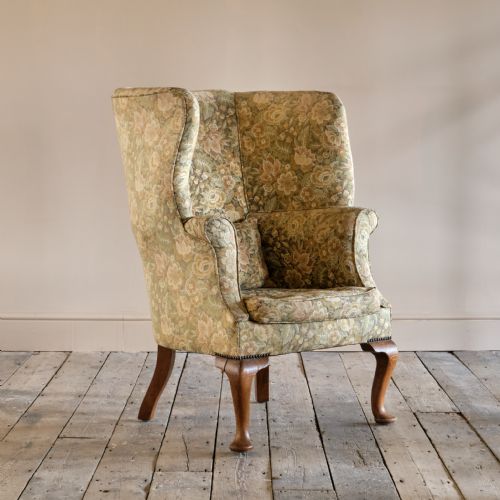


Floral Wingback Chair
A floral wingback chair brings draught-excluding comfort and upholstered warmth to a room, drawing on centuries of high-backed seating traditions.
Floral Wingback Chair
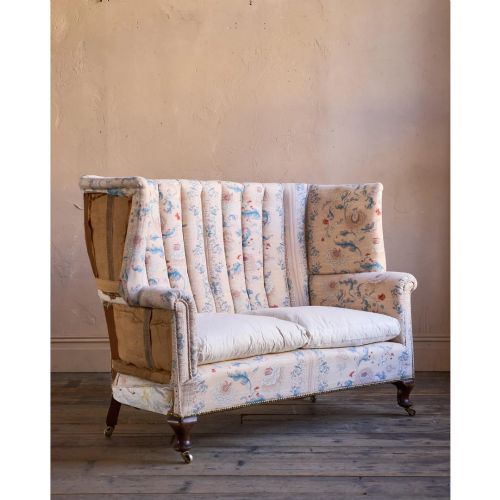
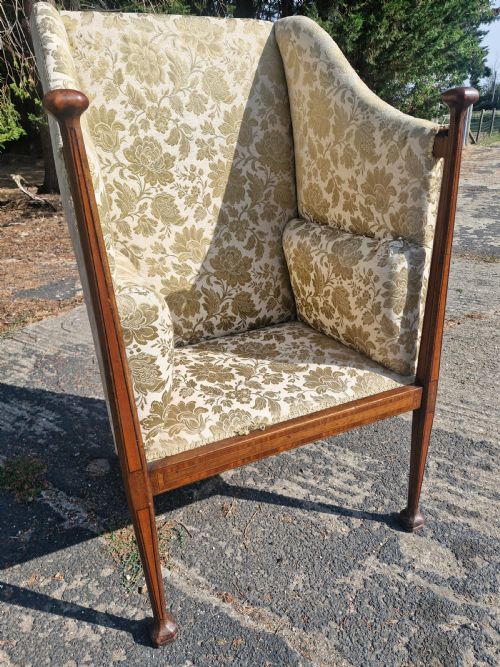
When you search for a floral wingback chair, you encounter high-backed upholstered seating designed to shelter the sitter from drafts. The selection spans robust Georgian models and 19th-century interpretations down to Edwardian and 1920s fireside armchairs.
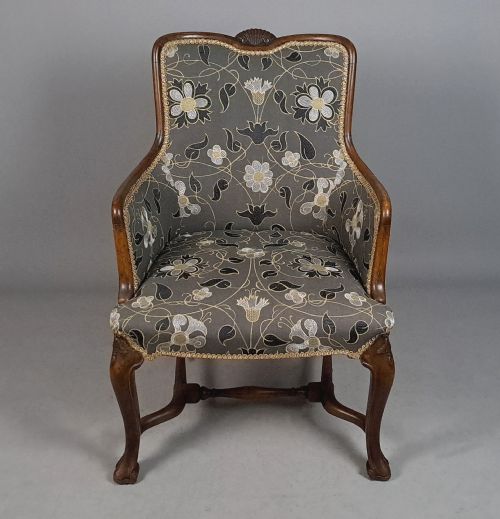
The evidence shows a strong representation of Queen Anne style and Chippendale style revivals alongside Victorian and Art Nouveau examples. Makers adapted traditional forms using damask, tapestry fabric, and various floral textiles.
Most pieces function as fireside armchairs or barrel-backed armchairs, with occasional sofas appearing in the 19th-century records. Frames are constructed from mahogany, walnut, oak, and other hardwoods.
What varies in quality
The distinction between ordinary and superior examples lies in the integrity of the wooden frame and the precision of the carving. Dense hardwoods like walnut and mahogany provide durability that softer woods lack.
Upholstery materials and the execution of revival styles also set pieces apart. Pieces retaining period-appropriate textiles or well-executed Queen Anne and Chippendale proportions demonstrate higher craftsmanship.
Listings feature floral wingback chairs spanning from the 18th century through the Georgian, Victorian, Edwardian, and 1920s periods.
Thomas Chippendale
The Floral Wingback Chair Glossary
- Wingback
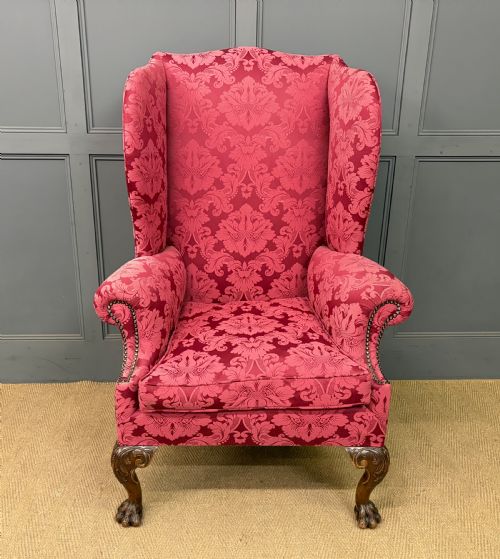
- An upholstered armchair with projecting side panels designed to trap heat from a fireplace and shield the occupant from drafts. These wings became a defining feature of fireside seating from the 18th century onward.
- Cabriole leg
- A furniture leg that curves outward at the knee and tapers inward toward the foot, commonly ending in a pad or claw. This form is frequently seen on Queen Anne style chairs.
- Damask
- A reversible figured fabric woven on a jacquard loom, traditionally utilising silk, linen, or wool. It appears frequently as an upholstery choice for formal period armchairs.
- Barrel back
- A seating design where the curved backrest flows continuously into the arms, enclosing the sitter. Examples in the record date from the early 20th century.
- Tapestry fabric
- A heavy, hand- or machine-woven textile featuring pictorial or floral designs. It provides a durable and decorative surface for antique upholstery.
Floral Wingback Chair: Frequently Asked Questions
What is a floral wingback chair?
A floral wingback chair is a high-backed upholstered armchair featuring protective side panels and covered in patterned textile. These chairs were traditionally designed to keep drafts away from the person sitting near the hearth.
The form evolved through various historical periods, producing Georgian originals, Victorian interpretations, and later Edwardian fireside seating.
How do I identify the period?
Dating relies on examining the timber of the frame, the carving style, and the upholstery technique. Georgian and 18th-century pieces display different proportions and joinery compared to Edwardian or 1920s revivals.
Style markers like Queen Anne cabriole legs or Art Nouveau inlays provide further clues to the decade of manufacture.
Were these chairs used at a desk?
These pieces were primarily designed as fireside armchairs or reading chairs rather than desk seating. Their high backs and winged sides were meant for domestic comfort in parlours and drawing rooms.
The enclosed shape protected sitters from cold air currents in unheated rooms.