


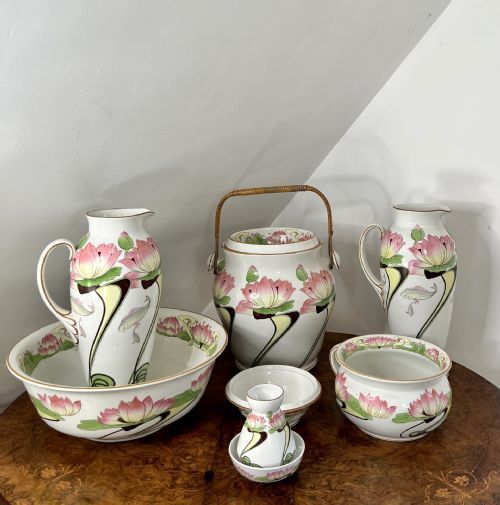


Floral Wash Basin
These floral wash basin pieces are ceramic toilet sets and footbaths carrying painted flowers, offering period charm for modern interiors.
Floral Wash Basin
A floral wash basin search brings up ceramic utility wares made to sit upon washstands in bedrooms before plumbed bathrooms took over. The inventory here spans pieces from the nineteenth century into the twentieth century, taking in Victorian and Edwardian periods.
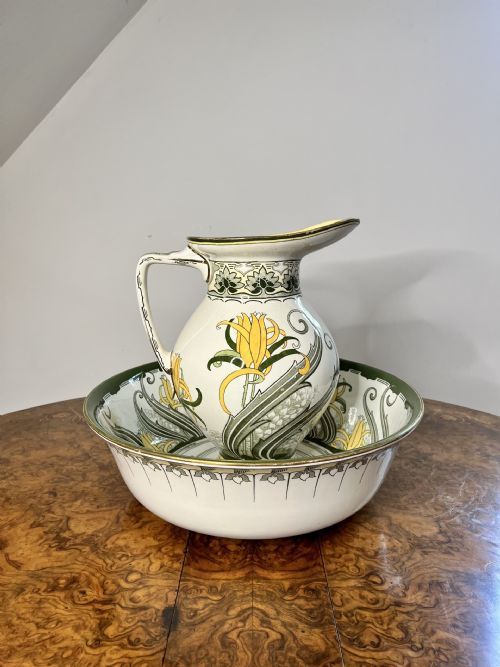
Most entries belong to larger jug and bowl sets, alongside standalone basins, footbaths, and decorative bowls. Makers adopted styles ranging from traditional transferware patterns to Art Nouveau fluidity and Meiji period Japanese work.
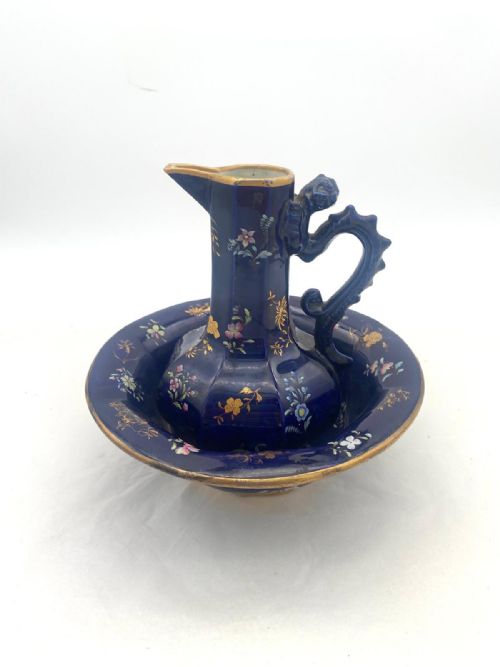
Forms vary from miniature sets to large four-piece bathroom suites and heavy footbaths. Materials cover earthenware, ironstone, glazed ceramic, and enamel, each carrying floral motifs.
How They Were Made
Potters shaped these vessels from earthenware, ironstone, and ceramic bodies before applying glazes. Decoration relied upon hand-painting, transfer printing, or enamel work to render the floral subjects.
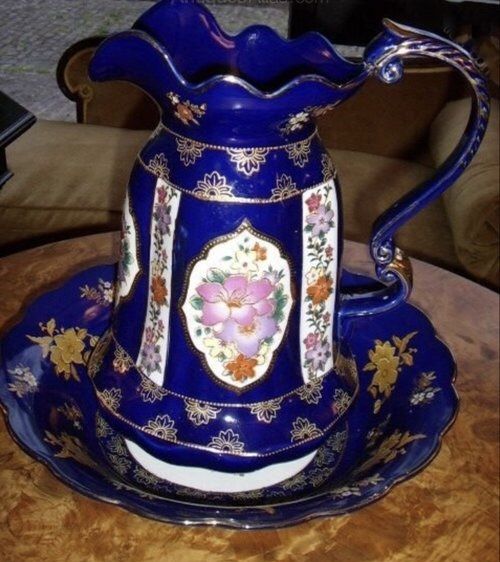
Certain pieces received highlights in gold leaf or gilt to accent handles, rims, and floral details. Metal items like silver plate also appear, produced through electroplating over a base metal.
Floral Wash Basin Retail Price Guide 2026
Typical asking prices for floral wash basin among the pieces listed under this phrase on Sellingantiques today, from the lower quarter to the upper quarter. They describe what is for sale here now, not the wider market.
Listings feature earthenware, ironstone, and glazed ceramic pieces across the Victorian and Edwardian eras.
What Varies in Quality
Quality rests upon the crispness of the ceramic moulding and the precision of the floral painting or transfer. Pieces from established potteries display finer clay bodies and more controlled glazing than basic utilitarian wares.
Completeness dictates value within sets, as matching jugs and basins surviving together command greater interest. Hand-finished details such as gilt accents or intricate cloisonne enamel elevate individual items above standard production.
Doulton Burslem·Mann And Co·Christofle
The Floral Wash Basin Glossary
- Earthenware
- Porous pottery fired at lower temperatures and coated in glaze to hold water. It forms the body of most everyday wash ware.
- Ironstone
- A durable, heavy ceramic patented in the nineteenth century to imitate porcelain. It resists chipping better than standard earthenware.
- Spongeware
- Pottery decorated by dabbing colour onto the biscuit body using a sponge or cloth. This creates a mottled, patterned surface.
- Cloisonne
- Metalwork technique where enamel paste is placed within compartments wired to a base. It yields detailed decorative patterns.
- Footbath
- A deep, wide vessel designed for soaking feet before the era of fitted bathroom fixtures. They often match the design of the wash basin.
Floral Wash Basin: Frequently Asked Questions
What were floral wash basins used for?
These basins served personal hygiene routines in bedrooms before running water became common in homes. They held water for washing hands and faces, paired alongside matching water jugs.
Today, collectors use them as decorative planters, umbrella stands, or standalone display pieces in hallways and bathrooms.
How do I date a wash basin set?
Dating relies on maker marks stamped or printed underneath the ceramic base, alongside stylistic clues. Victorian pieces often feature dense floral transfer prints, while Edwardian examples lean towards softer palettes and Art Nouveau influences.
Material composition also helps, as heavy ironstone gained popularity in the nineteenth century while later pieces adopted lighter ceramic bodies.
Are jug and bowl sets waterproof?
Most ceramic and ironstone pieces retain their glazed waterproof interior, though hairline cracks can develop over decades of use. It is wise to test them with cold water before placing them on delicate wooden furniture.
Metal or silver-plated items should be checked for interior corrosion if intended to hold water for long periods.
How should I display a footbath?
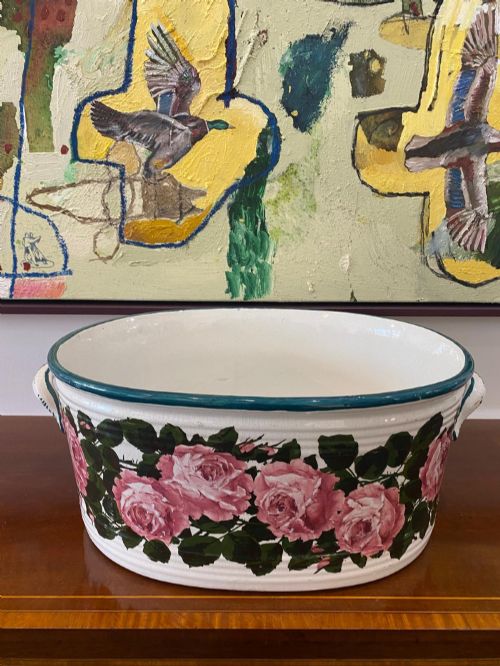
Footbaths make striking centrepieces due to their generous oval proportions and painted interiors. They sit well on low tables, hearths, or sturdy sideboards.
Filled with dried floral arrangements or left empty, their decorated rims draw the eye in traditional or eclectic interiors.