

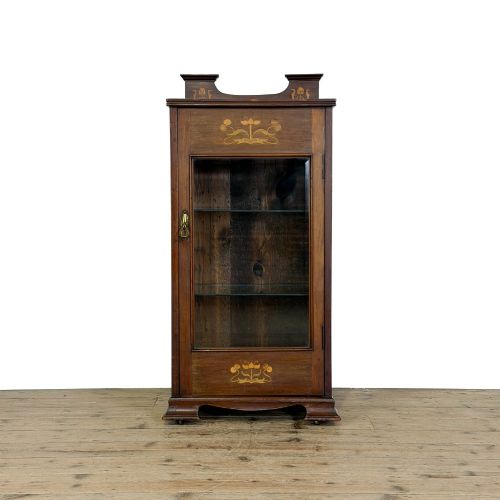
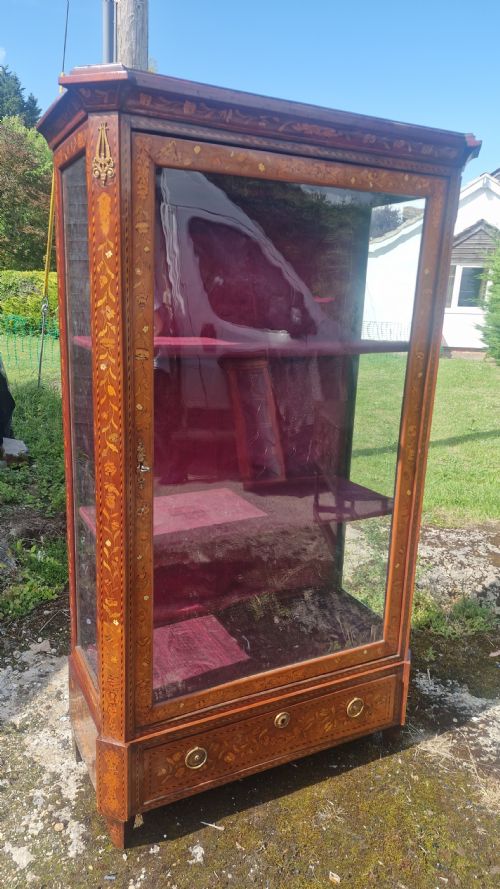


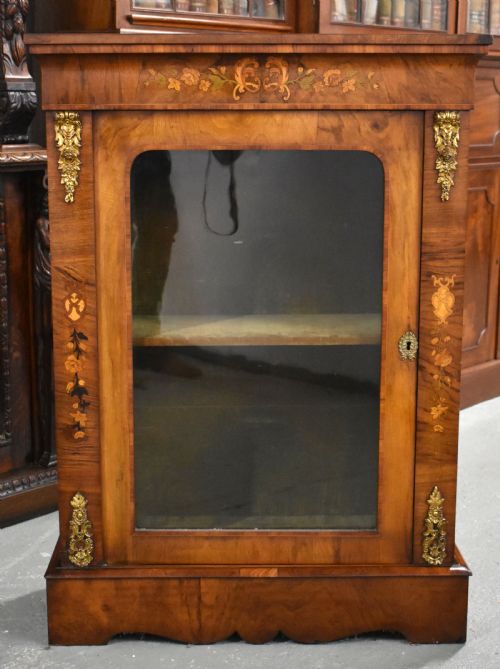

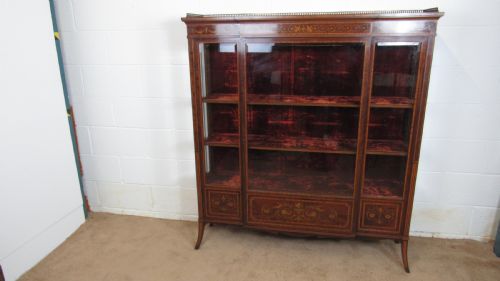


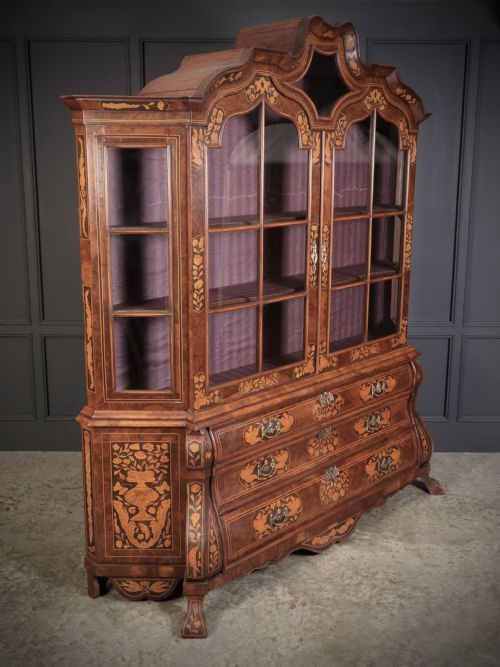

Floral Marquetry Display Case
These floral marquetry display cases combine glazed cabinetry with intricate wood inlay, offering a refined way to exhibit precious collections.
Floral Marquetry Display Case
A floral marquetry display case unites fine cabinetry with botanical wood inlay, creating a decorative focal point for any room. When searching for a floral marquetry display case, buyers encounter a variety of forms including pier cabinets, vitrines, corner cabinets, and display tables.
The pieces available originate from several periods, ranging from the eighteenth century through to the twentieth century. Victorian walnut examples with detailed floral inlays appear alongside Edwardian pieces and Dutch Baroque styles.
Cabinet makers utilised diverse timbers such as walnut, mahogany, and kingwood as bases for complex wood inlay patterns. Glazed doors and panels allow contents to be viewed while protected behind glass.
How They Were Made
Craftsmen built the carcases of these cabinets using solid timbers and decorative veneers such as figured burr walnut, fiddle back mahogany, and kingwood. These woods provided contrasting background tones for the detailed botanical motifs.
The floral decoration was formed using wood inlay techniques, carefully cutting contrasting tinted woods and assembling them into floral patterns. Metal elements like ormolu mounts and brass details were frequently added to accent the cabinet designs.
Glass panels were fitted into glazed doors and sides, sometimes accompanied by velvet-lined interiors to display objects safely. Bombe shapes, serpentine fronts, and curved glass required advanced woodworking skills to achieve.
Floral Marquetry Display Case Retail Price Guide 2026
Typical asking prices for floral marquetry display case among the pieces listed under this phrase on Sellingantiques today, from the lower quarter to the upper quarter. They describe what is for sale here now, not the wider market.
The furniture spans multiple eras, including eighteenth century pieces, nineteenth century Victorian designs, and twentieth century Edwardian styles.
What Varies in Quality
The precision and complexity of the wood inlay determine much of the visual merit in these cabinets. Finer pieces demonstrate intricate floral marquetry with subtle tonal variations in the woods, whereas simpler examples feature more repetitive or basic foliage patterns.
Cabinet construction quality is evident in the choice of primary timbers and secondary woods, alongside the execution of complex forms like bombe shapes or serpentine fronts. The integration of cast ormolu mounts and the clarity of the glass further distinguish standard production from exceptional work.
The Floral Marquetry Display Case Glossary
- Marquetry
- Decorative wood inlay forming pictures or patterns using various tinted veneers applied to a carcase. It requires precise cutting of thin wood sections to fit together seamlessly.
- Vitrine
- A glass-fronted cabinet designed specifically for displaying fine porcelain, curiosities, or objects of art. These cabinets often feature glazed sides to maximise light penetration.
- Pier Cabinet
- A low display cabinet traditionally designed to stand against the wall space between two windows. Victorian examples frequently incorporate marquetry inlay across the door panels.
- Ormolu
- Gilt bronze ornamentation applied to furniture for decorative accent. It provides a bright metallic contrast to dark woods like walnut and mahogany.
- Bijouterie Table
- A glazed display table with hinged or lifting top used for exhibiting small valuable items or jewellery. Edwardian versions frequently utilise inlaid timber frames.
Floral Marquetry Display Case: Frequently Asked Questions
What is a floral marquetry display case?
A floral marquetry display case is a piece of glazed furniture decorated with botanical wood inlay. These cabinets were designed to showcase valuable items while displaying intricate craftsmanship on their exterior surfaces.
They appear in various forms including tall vitrines, low pier cabinets, and corner units. The primary wood is often walnut or mahogany, embellished with contrasting timber veneers.
How do I date a display cabinet?
Dating a display cabinet involves examining the timber selection, construction methods, and stylistic cues present in the piece. Victorian walnut examples often feature rich burr veneers, whereas Edwardian pieces display lighter mahogany or satinwood.
Stylistic influences such as Louis XV revival curves or Art Nouveau lines offer further clues to the decade of manufacture. Comparing the hardware and glass type helps confirm the historical period.
Where should I place a vitrine?
A vitrine suits drawing rooms, dining spaces, or hallways where natural light can illuminate the glass panels. Placing the cabinet away from direct sunlight protects both the polished wood and any displayed contents from fading.
Corner cabinets fit neatly into unused angles of a room, while pier cabinets sit effectively against flat wall spaces. Ensuring adequate floor clearance allows doors and drawers to open without obstruction.
What woods are used for inlay?
Marquetry inlay utilises a variety of domestic and exotic timbers chosen for their natural colours and grain patterns. Woods like boxwood, fruitwood, and walnut are often dyed or shaded with hot sand to create depth in floral motifs.
These contrasting veneers are meticulously cut and fitted together before being applied to the cabinet carcase. The base timber underneath is typically walnut, mahogany, or kingwood.