


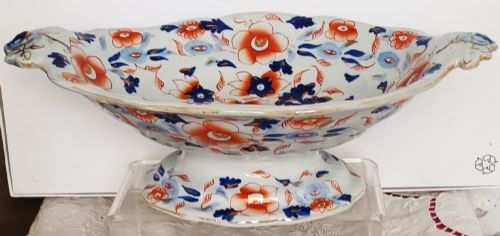
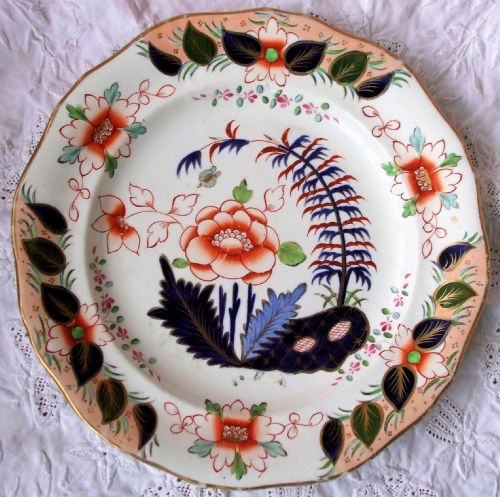


Floral Ironstone Dish
A floral ironstone dish brings sturdy utility and vibrant pattern to the table, taking the form of platters, comports, and tureens.
Floral Ironstone Dish
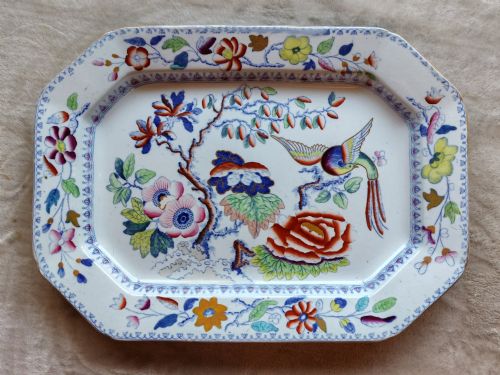
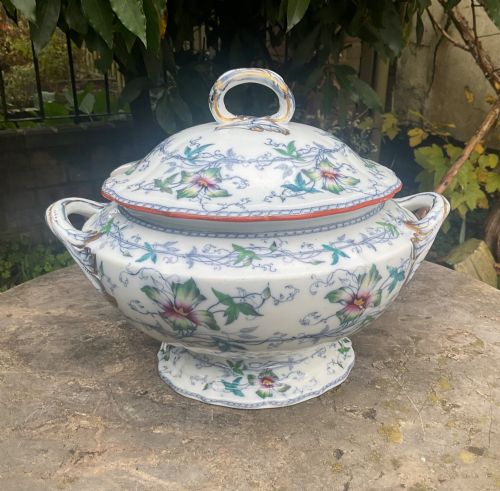
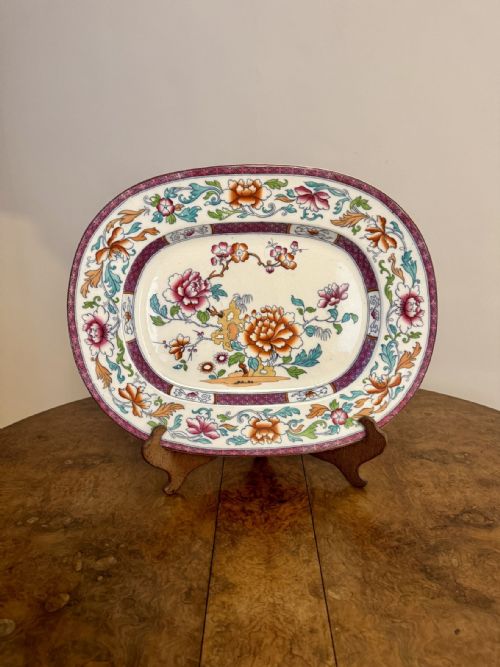
A floral ironstone dish is a heavy ceramic vessel designed for serving food, found in forms such as large meat platters, pedestal bowls, comports, and vegetable tureens. The pieces span the Georgian and Victorian periods, reflecting robust domestic dining traditions of the nineteenth century.
The most common examples on this page are nineteenth-century serving dishes and plates bearing traditional patterns. Buyers meet everything from massive footed cheese dishes and huge dishes with strainers to pairs of tureens and decorative chargers.
Origins trace directly to English potteries producing dense stoneware and earthenware bodies for everyday durability. These wares combine utilitarian weight with colourful, hand-applied decoration that emulates more costly porcelain.
How they were made
Potters utilised ironstone, ceramic, and stoneware bodies to create dense, heavy vessels capable of withstanding heavy daily use. This durable ceramic base was shaped into intricate forms including pedestal bowls, ashets, and lidded tureens.
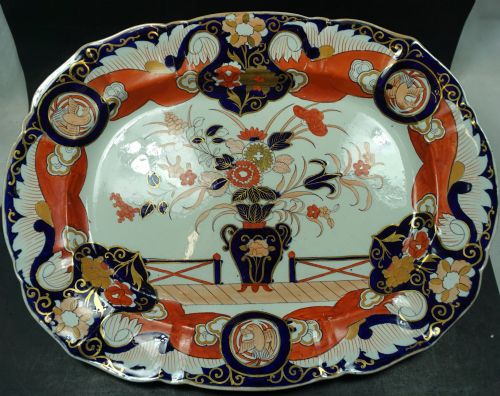
Makers applied enamel colours, glaze, and occasional gold leaf or gilding by hand to finish the surface. Patterns often drew on Imari, Chinoiserie, and Amherst Japan aesthetic traditions, fusing Eastern motifs with British manufacturing techniques.
Floral Ironstone Dish Retail Price Guide 2026
Typical asking prices for floral ironstone dish among the pieces listed under this phrase on Sellingantiques today, from the lower quarter to the upper quarter. They describe what is for sale here now, not the wider market.
Listings feature ironstone, stoneware, and earthenware bodies decorated with enamel, glaze, and gold leaf across the Georgian and Victorian periods.
What varies in quality
Quality rests in the crispness of the moulded form and the precision of the hand-painted enamel work. Pieces featuring rich gilding and complex multi-colour transfer or painted scenes sit at the upper end of the scale.
The weight, resonance, and integrity of the ironstone body distinguish finer production runs from standard utility wares. Superior examples retain clear maker marks and vibrant, well-preserved glaze surfaces without heavy fading.
John Davenport of Longport·John Ridgway·Mason's Patent Ironstone·Coalbrookdale
The Floral Ironstone Dish Glossary
- Ironstone
- A heavy, durable type of earthenware or stoneware patented in the nineteenth century. It offered a robust alternative to true porcelain for domestic dining.
- Comport
- A pedestal bowl or raised dish used for serving fruit or dessert at the table. These elevated pieces add height and formal structure to a dining arrangement.
- Imari
- A decorative style inspired by Japanese export wares featuring iron red, cobalt blue, and gilt. British makers frequently adopted this palette for ironstone services.
- Ashet
- A regional British term for a large meat platter or serving dish. They were essential for presenting joints of meat at nineteenth-century dinners.
- Chinoiserie
- European artistic interpretations of Chinese and East Asian decorative motifs. These patterns often appear on nineteenth-century serving dishes in vibrant enamel colours.
Floral Ironstone Dish: Frequently Asked Questions
What is an ironstone dish?
An ironstone dish is a heavy ceramic serving vessel produced in nineteenth-century England for dining and display. These pieces were built for durability while offering decorative floral and oriental patterns.
They appear as large meat platters, comports, vegetable tureens, and heavy soup dishes. The dense body resists chipping, making them practical for both collection and occasional use.
How do I date an ironstone dish?
Dating relies on maker marks stamped into the ceramic base, stylistic clues, and the specific floral or oriental pattern used. Pieces marked as patent ironstone often point towards early nineteenth-century production.
Georgian examples tend to show distinct Regency or Imari influences, while later Victorian items incorporate denser floral borders. Comparing glaze characteristics and weight helps narrow the decade of manufacture.
How were these dishes used originally?
These vessels served joints of meat, vegetables, cheese, and desserts across nineteenth-century dining tables. Large platters and ashets held heavy roasts, while pedestal bowls and comports presented fruit.
Covered tureens kept soups and vegetables warm during long meals. Their robust construction meant they could handle the demands of busy household kitchens.
How do I care for antique ironstone?
Wash antique ironstone gently by hand using warm water and mild soap to protect the glaze and enamel details. Avoid soaking pieces with old hairline cracks to prevent moisture trapping.
Display them securely on sturdy sideboards or use wall hangers designed for heavy platters. Regular dusting keeps the enamel and gilding bright without risking surface wear.