

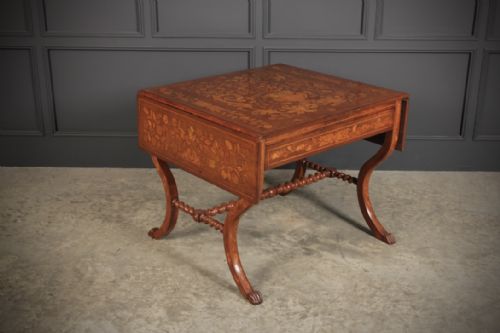


Floral Inlaid Sofa
These floral inlaid sofa pieces and related inlaid tables bring rich marquetry and figured timbers directly into a room.
Floral Inlaid Sofa
A floral inlaid sofa search leads buyers to nineteenth-century settees and seating suites featuring detailed marquetry work. The selection on this page relies heavily on Victorian and Edwardian examples, alongside related Dutch marquetry forms.
Buyers frequently encounter occasional tables, centre tables, and side tables carrying similar floral inlay alongside the main seating forms. These pieces span the nineteenth century, with specific examples recorded from eighteen seventy and eighteen eighty.
Origin and period vary across the listings, showing distinct Dutch, French, and English influences. Walnut, burr walnut, rosewood, and mahogany provide the primary foundations for this floral work.
How they were made
Workshops built these pieces using solid and veneered timbers including walnut, burr walnut, rosewood, and mahogany. Cabinet makers shaped these foundational woods into complex forms such as drop leaf tables, oval centre tables, and settees.
Fruitwood inlay and marquetry inlay create the detailed floral motifs seen across the surfaces. Craftsmen combined these contrasting woods with brass elements and ebonised wood to accentuate the structural lines.
Floral Inlaid Sofa Retail Price Guide 2026
Typical asking prices for floral inlaid sofa among the pieces listed under this phrase on Sellingantiques today, from the lower quarter to the upper quarter. They describe what is for sale here now, not the wider market.
One settee simply waited for a new life, appearing in an Edwardian boudoir suite explicitly listed for re-upholstery.
What varies in quality
The sophistication of the marquetry work dictates the standing of each piece. Finer examples display precise cutting of fruitwood and varied timbers within the floral patterns, whereas simpler versions rely on heavier, less nuanced decoration.
Timber selection plays a major role, distinguishing standard mahogany or walnut structures from richly figured burr walnut and rosewood frames. The integration of structural brass and ebonised details further separates standard production from superior work.
The Floral Inlaid Sofa Glossary
- Marquetry inlay
- Decorative woodwork where pieces of various coloured timbers and fruitwood are fitted into a veneer to form floral or pictorial patterns. This technique defines the visual character of nineteenth-century tables and settees.
- Burr walnut
- Timber taken from the growth excrescence of a walnut tree, yielding highly swirled and mottled grain patterns. Cabinet makers prized this wood for high-status Victorian centre tables and sofa tables.
- Drop leaf table
- A table with hinged flaps on either side that fold down to save space or lift up to extend the surface. Examples in the evidence combine this mechanism with French Empire styling and marquetry inlay.
- Ebonised wood
- Timber treated with a dark stain or finish to imitate ebony. This dark material provides sharp contrast against lighter fruitwood floral inlay on nineteenth-century pieces.
Floral Inlaid Sofa: Frequently Asked Questions
What periods do these pieces date from?
The listings span the nineteenth century, including specific years like eighteen seventy and eighteen eighty, alongside Victorian and Edwardian periods.
Craftsmen produced these examples across multiple decades, leading to diverse stylistic influences from Dutch marquetry to French Empire and Aesthetic Movement designs.
What timbers were used for the inlay?
Makers utilised fruitwood inlay and complex marquetry to create floral designs across walnut, burr walnut, rosewood, and mahogany surfaces.
Contrasting woods and ebonised elements further enhanced the decorative detail on these nineteenth-century tables and settees.
Are seating suites available with inlay?
Edwardian mahogany inlaid boudoir suites appear alongside individual settees and various side or centre tables.
These seating options often require re-upholstery while retaining their original inlaid wooden frames.
How do Dutch and French styles differ?
Dutch pieces frequently showcase extensive marquetry across the entire surface of settees and sofa tables, reflecting traditional regional cabinet making.
French Empire and Napoleon III examples incorporate specific structural forms like drop leaves and lamp tables paired with rosewood or walnut.