

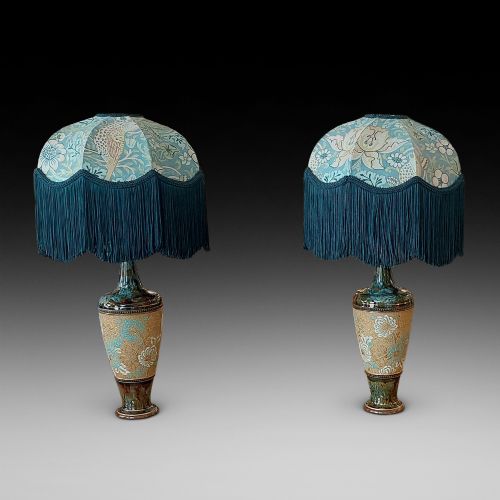


Floral Ceramic Base
These floral ceramic base pieces bring botanical colour and hand-painted detail to any room, offering both character and practical illumination.
Floral Ceramic Base
A floral ceramic base is primarily found configured as a table lamp, inkwell, vase, oil lamp, or candlestick, often incorporating botanical motifs on stoneware, porcelain, or faience. These items span multiple periods from the eighteenth century through to the art deco era, reflecting diverse manufacturing traditions.
The most common versions encountered here are electrified or adaptable table lamps utilising porcelain or stoneware bodies. Many of these pieces integrate mounts of brass, ormolu, or wooden components to support their overall form.
Origins vary widely across continental European factories, British potteries, and East Asian ceramic traditions. Collectors encounter everything from nineteenth-century Sitzendorf figural pairings to twentieth-century Chinese baluster forms and Doulton stoneware productions.
How they were made
Makers shaped these items using traditional ceramic techniques, producing stoneware, porcelain, faience, and earthenware bodies. Surface decoration often involved hand-painted enamel pigments, sometimes complemented by famille rose or famille verte palettes.
Many ceramic sections were mounted onto structural supports made from brass, ormolu, or wood to provide stability for lamps and desk accessories. Gilding and secondary metalwork frequently enhanced the decorative appeal of the finished object.
Floral Ceramic Base Retail Price Guide 2026
Typical asking prices for floral ceramic base among the pieces listed under this phrase on Sellingantiques today, from the lower quarter to the upper quarter. They describe what is for sale here now, not the wider market.
Gardener figures with baskets double as porcelain candlesticks, proving that eighteenth-century horticulture makes for excellent mood lighting.
What varies in quality
Quality in a floral ceramic base depends heavily on the crispness of the hand-painted detail and the fidelity of the botanical or figural modelling. Pieces featuring finely rendered enamel work or intricate hand-painted faience display superior artistic intent compared to simpler transfers.
The integration of secondary materials such as ormolu mounts, cast brass bases, or original wooden elements dictates the structural sophistication of the piece. Well-executed mounts that complement the ceramic body without overwhelming it mark the higher end of the range.
Royal Doulton·Doulton Burslem·Sitzendorf
The Floral Ceramic Base Glossary
- Stoneware
- A robust ceramic pottery fired at high temperatures until vitrified, making it dense and impermeable. It is frequently seen in early twentieth-century British productions.
- Ormolu
- Gilded bronze or brass applied as decorative mounts to furniture and ceramics. It provides a bright metallic contrast to the glazed ceramic body.
- Famille Rose
- A Chinese porcelain palette dominated by opaque pink enamel, introduced in the eighteenth century. This style recurs across various lamp conversions.
- Faience
- Tin-glazed earthenware decorated with opaque coloured glazes, often associated with vibrant hand-painted continental items. It yields a rich, glossy surface finish.
- Baluster
- An architectural term describing a vase-shaped column or body that tapers toward the top. This profile frequently forms the central body of table lamps.
Floral Ceramic Base: Frequently Asked Questions
What periods do these pieces date from?
These items span from the eighteenth century through the Victorian era up to the nineteen-thirties.
Most examples originate from the nineteenth and early twentieth centuries, reflecting changing decorative tastes.
How were these ceramic bases originally used?
Many served as functional lighting devices, including oil lamps, candlesticks, and later electrified table lamps.
Others functioned as desk accessories like inkwells or as decorative display vases before later conversion.
Are these items converted for modern lighting?
Several pieces began as oil lamps, vases, or ginger jars before being adapted into modern table lamps.
This conversion allows historical ceramic forms to function practically within contemporary interior spaces.
How do I identify different regional ceramic styles?
European factories often employed figural elements and ornate Rococo or Art Deco surface patterns.
East Asian pieces characteristically utilise baluster forms decorated with famille rose or famille verte enamel schemes.