

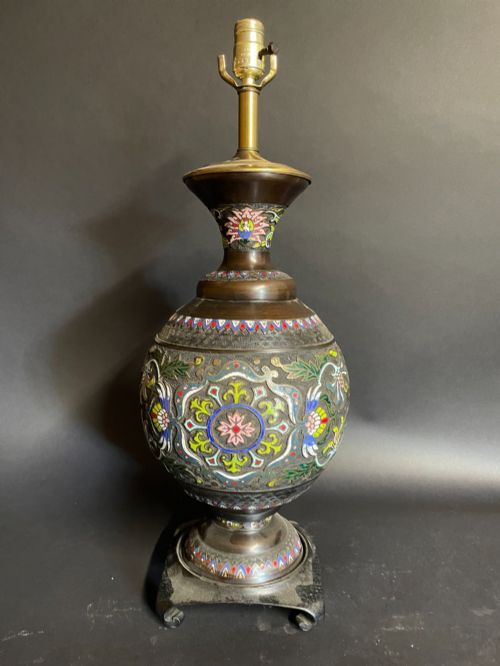


Floral Bronze Lamp
A floral bronze lamp brings sculptural weight and botanical detail into a room, combining cast metalwork with naturalistic motifs.
Floral Bronze Lamp
When searching for a floral bronze lamp, buyers encounter lighting fixtures that incorporate botanical or floral designs alongside cast bronze elements. These pieces often merge the structural firmness of metalwork with decorative plant motifs.
The selections available on this page most commonly appear in forms like table lamps and electrified vases originating from the nineteenth century. Makers frequently integrated porcelain bodies, such as Sèvres style porcelain or pâte-sur-pâte, alongside gilt bronze mounts to achieve a botanical aesthetic.
Origins span French 19th Century, Edwardian, and Art Deco periods, bringing diverse regional sensibilities to the metal casting. Styles such as French Rococo Revival, Chinoiserie, and Neoclassical frequently inform the underlying architecture of these lighting pieces.
How they were made
The construction of these lighting objects relies heavily on traditional metalworking techniques, utilising bronze, ormolu, and brass to form structural bases and decorative mounts. Artisans often chased and gilt the bronze components to accentuate the intricate contours of leaf and flower motifs.
Many designs integrate ceramic and glass elements directly into the metal frame, combining porcelain, enamel, and glass with the primary bronze structure. Fabric shades and painted details complete the assemblage, marrying rigid cast metal with delicate surface decoration.
Floral Bronze Lamp Retail Price Guide 2026
Typical asking prices for floral bronze lamp among the pieces listed under this phrase on Sellingantiques today, from the lower quarter to the upper quarter. They describe what is for sale here now, not the wider market.
Periods represented in the current selection span the nineteenth century, Edwardian era, and the 1920s and 1930s.
What varies in quality
The distinction between standard and superior pieces rests on the crispness of the metal chasing and the finesse of the applied ornamentation. Finer examples display deeply undercut bronze casting where floral petals and foliage retain sharp, tactile definition.
Quality also manifests in the harmony between disparate materials, such as the seamless integration of porcelain bodies within gilt bronze mounts. Superior items maintain balanced proportions where the botanical theme informs both the primary structure and the subsidiary decorative details.
The Floral Bronze Lamp Glossary
- Ormolu
- Gilded bronze, where a layer of finely ground gold-mercury amalgam is applied to a bronze base and heated. This technique produces a durable, rich golden surface finish frequently found on nineteenth-century decorative items.
- Cloisonné
- An enamelwork technique where thin metal wires are soldered to a metal base to form compartments, which are then filled with coloured enamel paste and fired. This method creates vibrant, patterned surfaces often seen on vases adapted into lamps.
- Pâte-sur-pâte
- A ceramic decorating method where successive layers of liquid clay are applied to a background body to build up a low relief design. The technique results in cameo-like white ornamentation against a contrasting coloured ground.
- Faience
- Tin-glazed earthenware produced across Europe, known for its opaque white glaze and painted surface decoration. It offers a smooth canvas for botanical motifs on nineteenth-century lighting.
Floral Bronze Lamp: Frequently Asked Questions
How do I date a bronze lamp?
Dating relies on examining the casting methods, the style of the mounts, and the integration of secondary materials like porcelain or brass. Nineteenth-century examples often display hand-chased details and specific regional revival aesthetics.
Secondary indicators include the wiring remnants, the composition of the bronze alloy, and the manufacturing marks hidden beneath the base or mounts. Comparing these structural characteristics with established period styles helps narrow the timeline.
Were these always electric lamps?
Many pieces began life as oil lamps, vases, or garniture urns before being converted to electricity during later periods. The original bodies were frequently repurposed to accommodate modern wiring while retaining their decorative mounts.
Examining the interior channels and drill holes reveals whether the conversion respects the original metalwork. Understanding this conversion history helps maintain the integrity of the object.
How do I clean bronze and ormolu?
Maintenance requires gentle dusting with a soft, dry brush to prevent accumulation in the recessed botanical details. Moisture and harsh chemical cleaners can strip the original gilding or patina from the metal.
Preserving the surface involves avoiding abrasive cloths that might scratch the delicate ormolu or enamel work. Regular, careful upkeep protects the historic finish of the bronze.
What styles influence these lamps?
Design influences draw heavily from French Rococo Revival, Neoclassical, and Chinoiserie traditions, incorporating naturalistic plant forms into formal structures. These aesthetic movements dictated the curve of the bronze mounts and the choice of floral ornamentation.
Art Deco and Edwardian periods later introduced more streamlined or ornate interpretations of botanical themes. Recognising these stylistic markers clarifies the regional origin and design pedigree.