

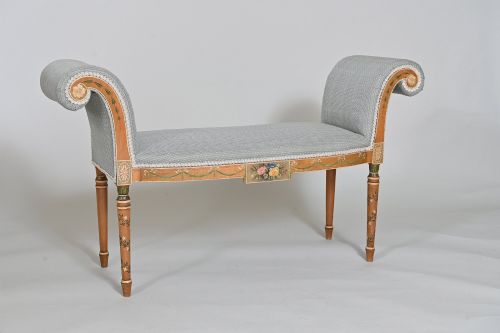



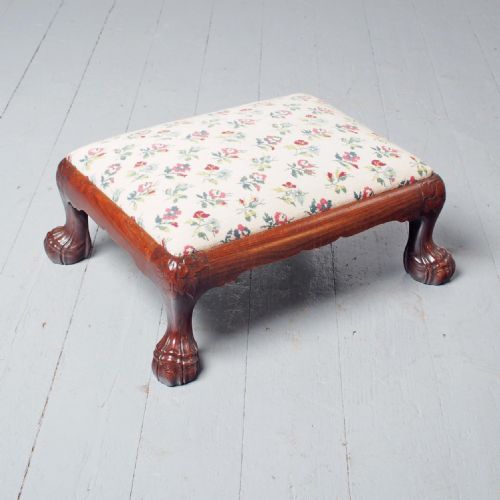


Floral Bedroom Stool
These floral bedroom stool examples offer practical seating and dressing table complements, spanning Victorian and Art Deco eras in classic timbers.
Floral Bedroom Stool
A floral bedroom stool serves primarily as a dressing table seat or footstool, providing low seating for personal grooming spaces. The pieces gathered here span from the mid-nineteenth century through the Edwardian period and into the Art Deco era of nineteen-thirty, reflecting shifting domestic habits.
The most common formats on this page are mahogany or walnut dressing stools, often featuring newly applied textile, velvet, tapestry, or wool covers. These forms range from simple nineteenth-century frames to drum-shaped oak pieces with storage and carved mahogany examples by Whytock and Reid.
Stylistic influences vary widely across the selection, encompassing traditional Victorian designs, Georgian and Queen Anne styles, French Chateau aesthetics, and geometric Art Deco lines. Such variety ensures a suitable match for period bedrooms as well as eclectic modern interiors.
How they were made
Makers constructed these frames using dense hardwoods like mahogany, walnut, oak, and sycamore, often employing traditional joinery and hand-carved details such as twisted rope legs. Woodworkers shaped structural supports to bear weight while maintaining delicate proportions suited to bedroom dressing areas.
Upholstery formed an integral part of the construction, utilising durable fabric, plush velvet, traditional wool, and detailed needlepoint tapestry. Many pieces feature refreshed upholstery or new flowery top covers applied during professional restoration work.
Floral Bedroom Stool Retail Price Guide 2026
Typical asking prices for floral bedroom stool among the pieces listed under this phrase on Sellingantiques today, from the lower quarter to the upper quarter. They describe what is for sale here now, not the wider market.
One exceptional nineteen-thirty oak piece doubles as a drum-shaped hiding spot, proving that even a small seat can keep secrets.
What varies in quality
Quality differences lie primarily in the refinement of the woodwork, from plain structural frames to elaborately carved mahogany and walnut structures produced by noted workshops. The choice of primary timber and the intricacy of leg turnings or carved details distinguish standard production pieces from finer outputs.
The standard of upholstery materials and the fidelity of textile covers also dictate overall grade, with hand-stitched needlepoint and rich velvet elevating the piece. Furthermore, the success of structural restorations and the preservation of original timber patination influence the standing of each item.
Whytock and Reid
The Floral Bedroom Stool Glossary
- Dressing stool
- A low seat designed specifically to sit comfortably in front of a bedroom dressing table or vanity. These are typically compact to tuck beneath furniture when not in use.
- Sycamore
- A dense, pale hardwood belonging to the maple family, often utilised in Art Deco furniture for its smooth grain and light tone. It provides a striking contrast to darker cabinet woods.
- Needlepoint
- A type of counted thread embroidery stitched onto an open-weave canvas mesh, frequently employed to create durable, highly patterned textile tops for period stools. It requires considerable hand-working time.
- Twisted rope leg
- A decorative turning style on furniture legs that mimics the spiral appearance of a twisted rope. This technique was popular in various nineteenth-century and revival periods.
- Drum-shaped
- A cylindrical furniture form resembling a drum, sometimes engineered with internal storage compartments beneath the seat. This clever design conceals clutter while offering a firm perch.
Floral Bedroom Stool: Frequently Asked Questions
What is a floral bedroom stool used for?
These pieces function primarily as seats at a dressing table or as low footstools in a bedroom setting. Their compact proportions allow them to sit neatly beneath vanity tables.
Historically, they provided comfortable, movable seating for grooming and dressing rituals. Today, they serve the same practical purpose while adding a decorative textile element to the room.
How do I date a Victorian stool?
Dating relies on examining the timber species, construction techniques, and stylistic revival cues present in the frame. Victorian examples often utilise solid walnut or mahogany with characteristic nineteenth-century turning.
Secondary clues include the type of upholstery webbing, screws, and hand-cut joinery methods. Comparing the leg style to known period pattern books helps narrow down the decade of manufacture.
Are the fabric covers original?
Many listings indicate that the textile top cover has been renewed or restored. Finding a nineteenth-century frame paired with a recent upholstery fabric is common practice among dealers.
Original textiles from the eighteen-hundreds rarely survive in usable condition without deterioration. Consequently, modern replacement covers in period-appropriate floral designs are frequently fitted to preserve usability.
How do Art Deco stools differ?
Art Deco pieces from nineteen-thirty discard Victorian ornamentation in favour of clean geometric lines and alternative timbers like sycamore or oak. They often incorporate functional innovations such as built-in storage compartments.
These designs reflect a distinct shift towards streamlined modernism in interior decoration. Their shapes tend to be more architectural, contrasting with the curves of earlier Queen Anne and French styles.