




Floor Standing Rack
Floor standing rack items organise books, papers, and music while anchoring a room with period utility.
Floor Standing Rack
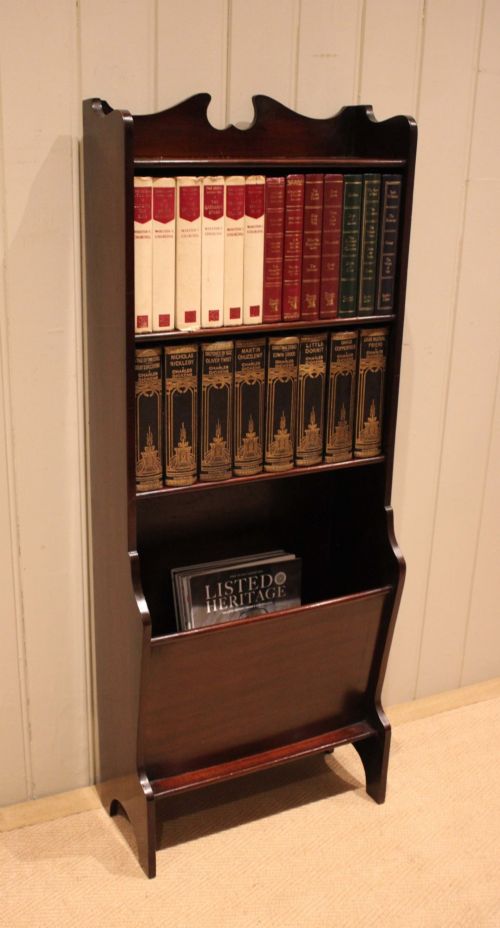
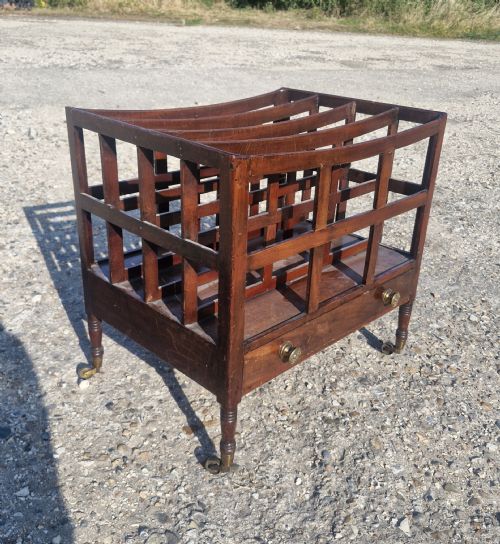
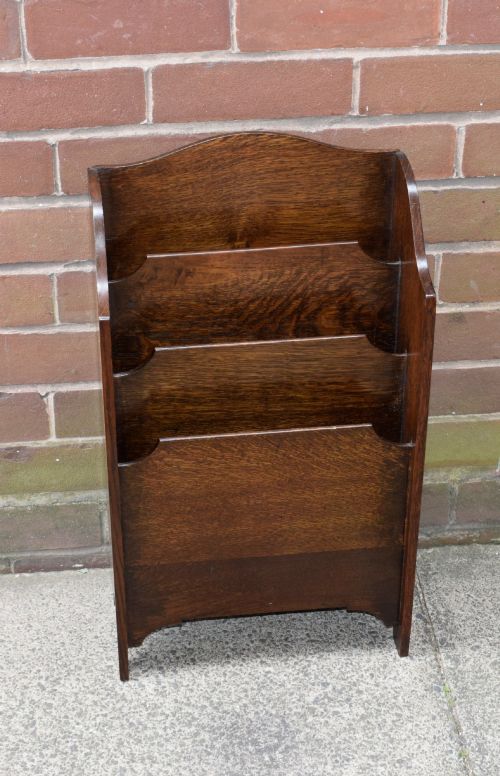
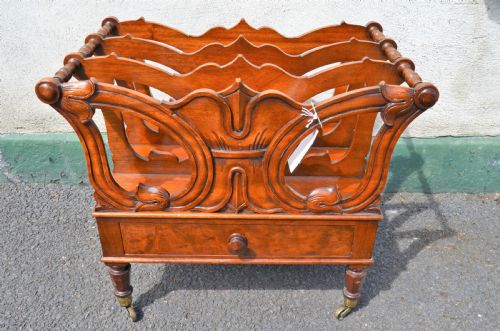
The term floor standing rack encompasses a diverse family of upright furnishings designed to hold reading materials, music sheets, folios, and household linens. These pieces range from dedicated newspaper holders and canterburys to rotating book stands, music tables, and multi-rail towel stands.
Examples span the nineteenth century through the interwar decades, taking on specific forms such as Arts and Crafts oak racks, bamboo canterburys, and late Georgian folio stands. Buyers encounter everything from revolving brass and mahogany book stands to carved Black Forest portfolio music stands.
Origins stretch across Victorian, Edwardian, William IV, Regency, and Georgian Revival periods, reflecting changing domestic habits in libraries, drawing rooms, and studies. Each variation serves a distinct organisational purpose while displaying the characteristic construction methods of its era.
Materials and construction methods
Cabinetmakers relied heavily on hardwoods such as mahogany, oak, walnut, and rosewood to build the structural frames and compartments of these upright furnishings. Secondary materials like bamboo, rattan, and cast brass introduced contrasting textures and mechanical functionality, particularly in revolving models and towel rails.
Surface treatments included polished finishes, painted decoration, ebonising, and gilding to enhance the visual appeal of the timber. Joinery methods varied according to the period and form, combining turned components, carved details, and metal fixings to ensure stability under daily use.
Distinctions in quality and execution
Distinctions in quality often rest upon the selection of timber, such as figured mahogany or quarter-sawn oak, and the crispness of carved or turned details. Superior examples display thoughtful integration of brass fittings, smooth mechanical rotation in revolving stands, and robust joinery that withstands the weight of heavy folios.
The distinction between standard utility items and finer decorative pieces lies in the subtlety of proportion, the finish applied to the wood, and the retention of original hardware. Well-executed designs balance functional capacity with refined aesthetic restraint.
The Floor Standing Rack Glossary
- Folio stand
- An adjustable or fixed upright frame used for supporting large books, maps, prints, or architectural drawings. These pieces frequently incorporate hinged mechanisms to alter the viewing angle.
- Revolving stand
- A bookcase, magazine rack, or book trough mounted on a central pivoting axis above a heavy base. This mechanism allows users to access stored items from multiple seating positions.
- Black Forest
- A term describing nineteenth-century carved wooden decorative objects and furniture originating from the mountainous regions of Central Europe. These pieces are typically characterised by naturalistic motifs and deep relief carving.
- Ebonised
- Wood treated with a dark stain or chemical finish to imitate the appearance of genuine ebony. This technique gained widespread popularity during the Victorian period for decorative furnishings.
Floor Standing Rack: Frequently Asked Questions
Where should I place a floor standing rack?
These pieces function effectively beside armchairs, near desks, or within home libraries where reading materials require neat containment.
Their upright footprint allows them to fit into narrow alcoves and corners while keeping periodicals and folios within arm reach.
How do I distinguish between a music stand and a magazine rack?
Music stands typically feature adjustable slanted desks or ledges designed to support bound scores and sheet music at a readable angle.
Magazine racks and canterburys utilise vertical partitions or troughs built specifically for dropping in unbound papers and periodicals.
What maintenance do these wooden stands require?
Regular dusting with a soft, dry cloth preserves the polished surface of mahogany, oak, and walnut without building up unwanted residues.
Keeping timber furnishings away from direct heat sources and dramatic humidity shifts prevents timber movement and splitting.
How do revolving stands operate?
Revolving stands rely on a concealed central bearing system mounted between the upper display structure and the heavy floor base.
This metal or wooden pivot mechanism allows the entire tier of books or magazines to turn smoothly in either direction.