

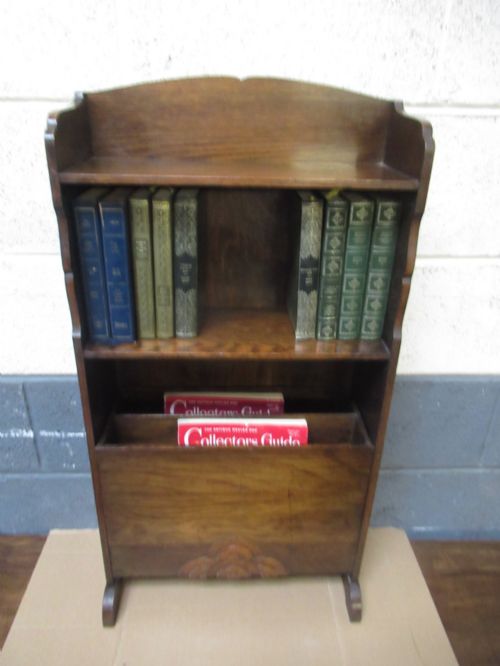
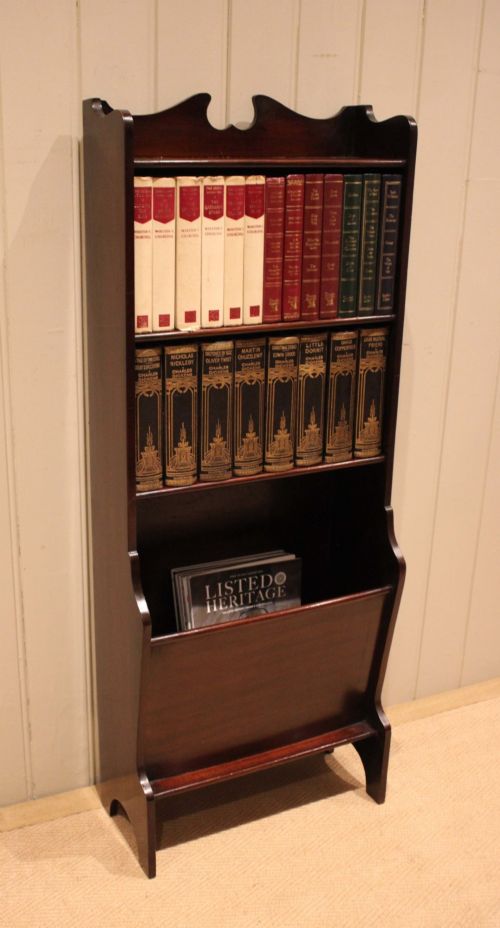
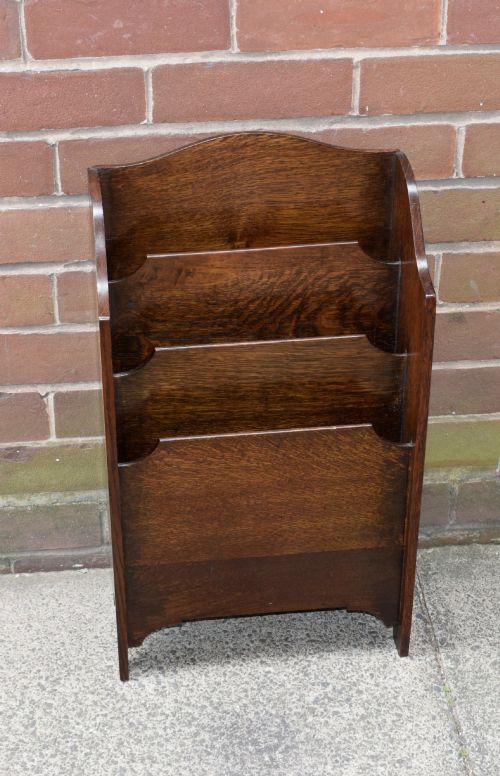
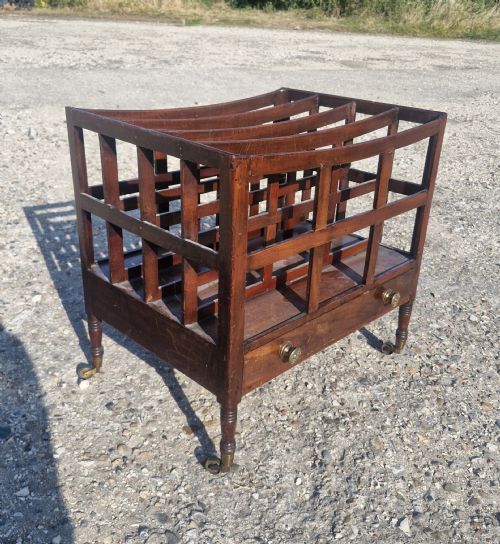


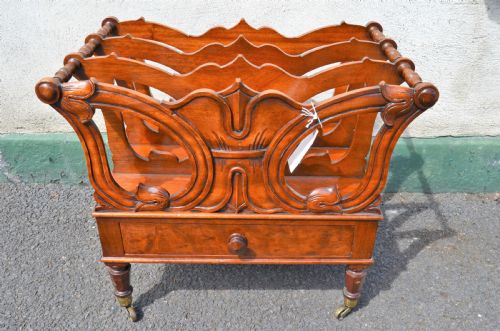


Floor Standing Magazine Holder
A floor standing magazine holder keeps your papers and folios tidy while anchoring a room with period character.
Floor Standing Magazine Holder
A floor standing magazine holder encompasses various freestanding domestic items designed to organise periodicals, books, music sheets, and folios. When searching for a floor standing magazine holder, buyers encounter forms ranging from traditional canterburys and book troughs to revolving stands and music stands.
The selection on this page draws from multiple periods, including the Victorian era, Edwardian period, and the 1930s. Pieces often serve multiple functions, combining magazine racks with book stands, shelves, or canterburys to suit domestic reading habits.
How they were made
Cabinet makers utilised sturdy timbers such as mahogany, oak, and Cuban mahogany, often pairing them with brass mounts, handles, and revolving mechanisms. These construction materials ensure the pieces withstand the daily handling of heavy books and newspapers.
Floor Standing Magazine Holder Retail Price Guide 2026
Typical asking prices for floor standing magazine holder among the pieces listed under this phrase on Sellingantiques today, from the lower quarter to the upper quarter. They describe what is for sale here now, not the wider market.
Some Victorian music stands doubled as folio holders, ready to catch dropped scores mid-concert.
What varies in quality
Quality rests upon the selection of timber, such as figured Cuban mahogany or solid oak, combined with the precision of the joinery and any turned or carved details. Superior examples exhibit refined proportions and well-integrated brass hardware that operates smoothly.
The sophistication of the form dictates distinction, separating standard utility pieces from elaborately constructed revolving bookcases and multifaceted canterburys. Original surface finishes and integrated functional elements preserve the integrity of each piece.
The Floor Standing Magazine Holder Glossary
- Canterbury
- A low freestanding stand with partitioned sections, traditionally used for holding sheet music, folios, or loose papers.
- Folio stand
- A hinged or A-frame rack designed to hold large art folios, prints, or large books upright.
- Book trough
- A V-shaped desktop or floor-standing rack that keeps books upright and accessible.
- Revolving bookcase
- A rotating tiered bookcase mounted on a central pivot and stand for easy access to volumes from any angle.
- Black Forest carving
- Highly detailed wood carving originating from the central European mountain region, typically featuring naturalistic animal and plant motifs.
Floor Standing Magazine Holder: Frequently Asked Questions
What is a canterbury?
A canterbury is a low stand featuring vertical partitions designed to hold music sheets, newspapers, or periodicals.
Originating in the late eighteenth century, these pieces evolved to serve domestic sitting rooms and music rooms as practical storage.
How do revolving stands work?
Revolving stands utilise a central pivot mechanism hidden beneath the tiers to allow smooth rotation.
This engineering enables users to browse a collection of books or magazines from a single seated position.
Where should I place a magazine holder?
These holders suit living rooms, studies, and libraries, positioned next to armchairs or reading desks.
Their freestanding nature allows them to sit independently without requiring wall fixings.
What woods were commonly used?
Makers frequently selected mahogany, oak, and bamboo for their structural strength and appearance.
Finer pieces utilised Cuban mahogany or incorporated brass fittings to enhance the visual appeal.