



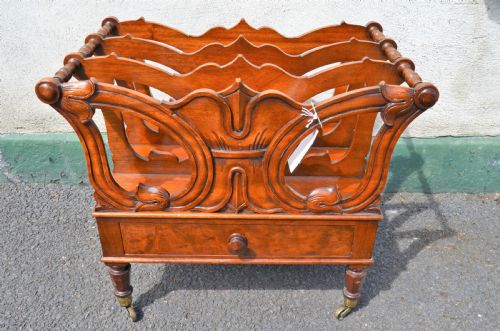


Floor Magazine Rack
These floor magazine rack pieces range from bamboo canterburys to revolving brass stands, offering practical domestic storage with period character.
Floor Magazine Rack
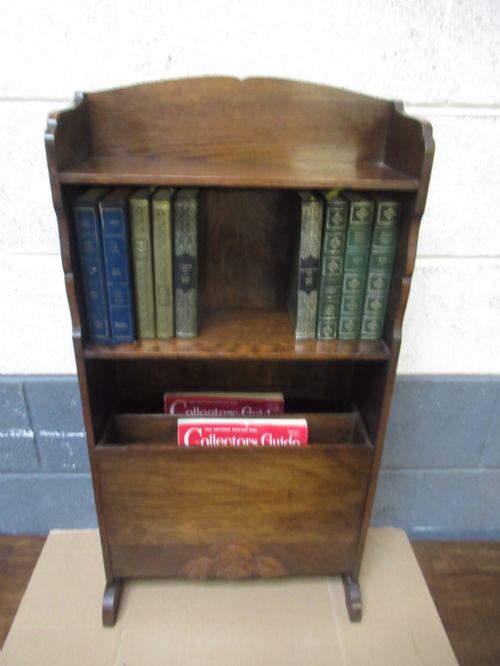
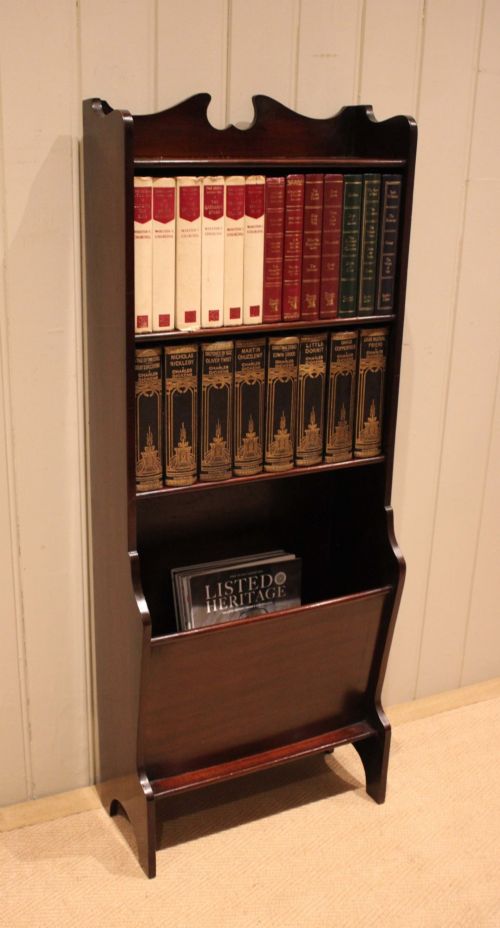
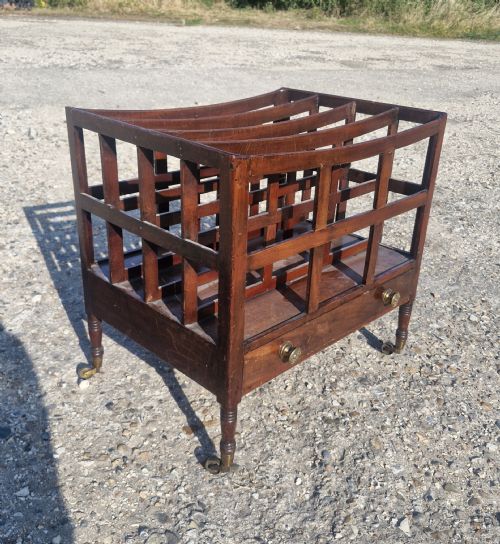
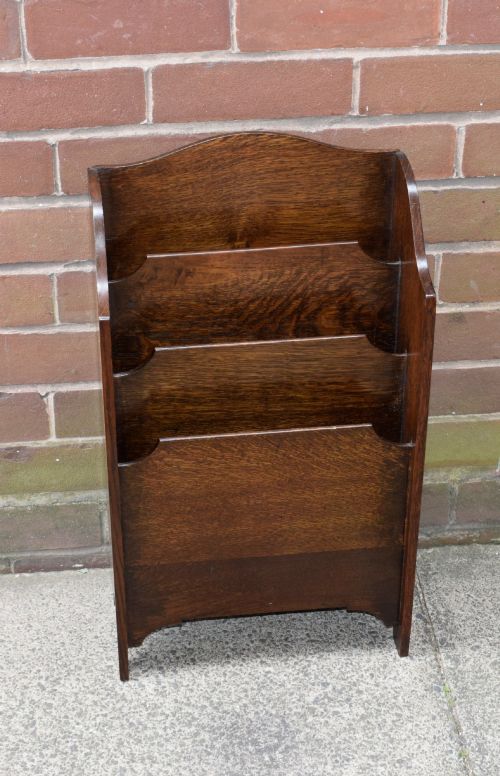
When you search for a floor magazine rack, you encounter a variety of nineteenth and early twentieth century freestanding stands designed to hold periodicals, books, and folios. The selection spans utilitarian newspaper racks in oak and mahogany to elaborate revolving brass stands and bamboo canterburys.
Edwardian and Victorian examples dominate the available pieces, often combining compartmented storage for reading material with carrying handles or tier structures. Forms range from low book troughs and music stands to larger canterburys and rotating library units.
Makers adapted these stands for specific domestic spaces like the drawing room, library, or parlour. Some pieces double as side tables or integrate small bookcases to maximise utility within domestic interiors.
How they were made
Cabinetmakers utilised dense hardwoods such as mahogany and oak alongside exotic materials like bamboo and rattan to construct these pieces. Construction often involved traditional joinery for frames, paired with turned wooden spindles or metal uprights.
Metal components, particularly cast brass, appear frequently in revolving stands and decorative fittings. Painted wood and gilt finishes also feature across specific revival styles and period interpretations.
Floor Magazine Rack Retail Price Guide 2026
Typical asking prices for floor magazine rack among the pieces listed under this phrase on Sellingantiques today, from the lower quarter to the upper quarter. They describe what is for sale here now, not the wider market.
Current listings span the Victorian, Edwardian, and Arts and Crafts periods, utilising mahogany, oak, bamboo, and brass.
What varies in quality
The choice of timber grade and grain figure separates standard domestic furniture from superior examples. Cuban mahogany and carefully selected oak denote higher workshop standards.
The complexity of the mechanism in revolving stands and the intricacy of carved elements, such as those seen in Black Forest pieces, distinguish finer craftsmanship.
The Floor Magazine Rack Glossary
- Folio stand
- A sloping or upright piece of furniture designed to hold large volumes, prints, or unbound papers. These often allow items to be viewed or sorted easily.
- Book trough
- A V-shaped open receptacle placed on the floor or a tabletop to hold a small selection of books upright. They are typical of Edwardian library and study furnishings.
- Revolving stand
- A tiered display unit mounted on a central pivot and brass base, allowing users to access books or periodicals from all sides without moving the furniture.
Floor Magazine Rack: Frequently Asked Questions
How do revolving stands work?
Revolving stands utilise a central vertical pivot supported by a heavy metal base. This allows the tiers of book and magazine storage to turn smoothly.
They were designed for placement beside armchairs or in libraries to provide immediate access to multiple volumes.
Where should I place a floor rack?
These racks suit studies, libraries, and living rooms where reading materials accumulate. Their compact footprints allow placement beside desks or seating areas.
Freestanding models also function effectively as low room dividers or companion pieces to traditional side tables.
Are bamboo racks sturdy?
Victorian bamboo and rattan pieces offer surprising durability through rigid stem construction and reinforced joints. They were built to withstand regular domestic use in conservatory and drawing room settings.
Care should be taken to keep them away from excessive moisture to preserve the natural plant fibres.