


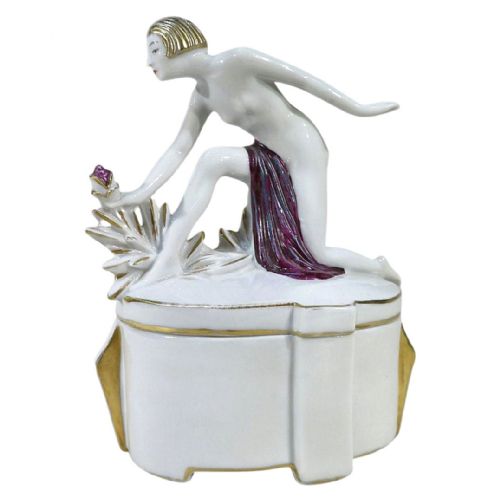


Flapper Powder Jar
A flapper powder jar brings the playful glamour of the nineteen thirties straight onto your dressing table.
Flapper Powder Jar
When you search for a flapper powder jar, you are looking at vanity accessories from the Art Deco period. These items typically take the form of trinket boxes, powder boxes, and novelty powder bowls designed for the boudoir.
The version you are most likely to meet on this page is an Art Deco piece featuring a ceramic or porcelain half doll depicting a stylish figure. Many of these date to around nineteen thirty and originate from British, French, Austrian, or German makers.
Alongside lidded jars, the selection includes powder puff stands and vanity sets that incorporate fabric and feather elements. They served both a practical purpose for cosmetics and a decorative function in the bedroom.
How they were made
These items rely primarily on ceramic and porcelain bodies shaped into figural half dolls and lidded bowls. Artisans applied smooth glazes to the clay to create glossy surfaces suitable for domestic vanity use.
Decoration often involved enamel painting alongside gilding or gold leaf trim to accentuate the geometric and stylized lines typical of the period. Some pieces integrated delicate textiles and feathers into the design of the garments.
Flapper Powder Jar Retail Price Guide 2026
Typical asking prices for flapper powder jar among the pieces listed under this phrase on Sellingantiques today, from the lower quarter to the upper quarter. They describe what is for sale here now, not the wider market.
The listings on this site concentrate entirely on the Art Deco period around nineteen thirty, utilising porcelain, ceramic, and enamel.
What varies in quality
The application of gold leaf trim and the preservation of original fabric or feather components significantly elevate the character of a piece. Well-modelled half dolls with expressive styling represent the higher tier of production.
Fasold and Stuach
The Flapper Powder Jar Glossary
- Half doll
- A ceramic figure modelled from the waist up, originally designed to sit atop a boudoir cushion, tea cosy, or powder jar cover. They were widely produced in Europe during the early twentieth century.
- Powder bowl
- A wide ceramic container used for loose face powder on a dressing table. These often feature a fitted lid or a figural topper.
- Art Deco
- A design style of the nineteen twenties and thirties characterised by sleek lines, geometric shapes, and modern industrial motifs. It influenced all branches of decorative arts.
- Gilt trim
- A thin layer of gold or metallic finish applied to the edges or decorative elements of ceramic objects. This adds a bright highlight to the piece.
- Vanity accessories
- Small functional items kept on a dressing table for cosmetics and personal grooming. They include powder jars, perfume bottles, and trinket boxes.
Flapper Powder Jar: Frequently Asked Questions
What is a flapper powder jar?
A flapper powder jar is a vanity container from the Art Deco era featuring a ceramic half doll lid. They were kept on dressing tables to hold cosmetic powder.
These decorative objects combined practical storage with the fashionable aesthetic of the nineteen thirties.
How were powder jars used?
Owners stored loose face powder inside the ceramic or porcelain bowl for daily grooming. The figural lid kept the powder clean and doubled as a decorative sculpture.
Some designs incorporated stands specifically to hold powder puffs alongside the main jar.
How do I date these items?
Most examples date to around nineteen thirty, aligning with the height of the Art Deco period. Stylistic markers include the geometric patterns and the characteristic clothing of the figural tops.
Factory marks on the base of the ceramic or porcelain can sometimes provide a more exact origin.
How do I care for a powder jar?
Keep these pieces out of direct sunlight to preserve the delicate enamel colours and any applied fabric or feathers. Dust them gently with a soft dry cloth.
Avoid using liquid cleaners on gilded or enamelled surfaces to prevent wearing away the original finish.