

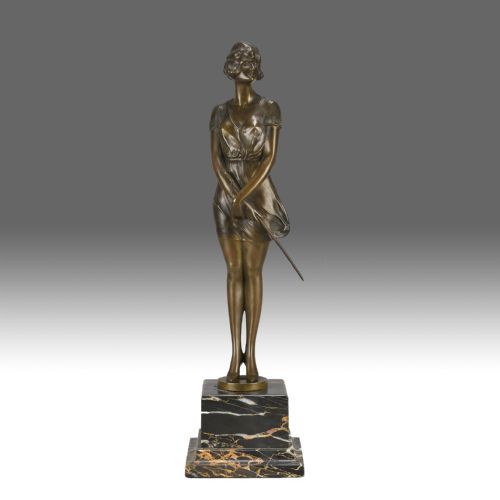


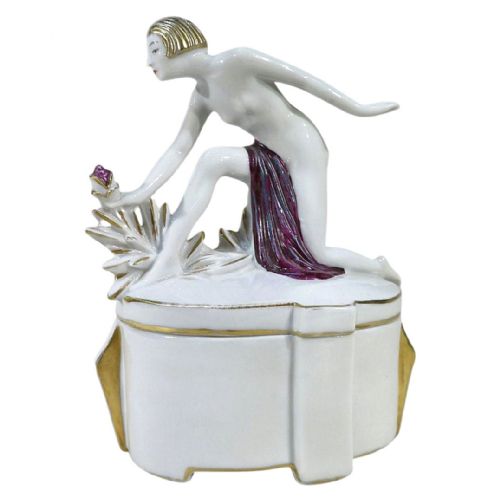
Flapper Girl Art
Flapper girl art captures the spirited modernist energy of the interwar period through stylish porcelain figures and bronze dancer sculptures.
Flapper Girl Art
When searching for flapper girl art, collectors encounter distinct objects from the 1920 and 1930 periods that embody the sleek aesthetic of Art Deco design. These pieces range from monumental bronze dancer studies to small utilitarian items designed for the dressing table.
The most common forms on this page are porcelain half dolls and ceramic powder boxes, alongside spelter figures mounted on onyx bases. Originating from workshops in France, Germany, and Austria, these items served both decorative and everyday purposes for the modern woman.
How they were made
Makers utilised cast bronze and spelter for sculptural figures, frequently pairing metallic patination with marble or onyx bases to provide stability and contrast. These metal works captured dynamic poses of dancers and figures through precise foundry casting.
Ceramic and porcelain pieces relied on detailed moulding and hand-painting under glaze, sometimes enhanced with gold leaf accents. Half dolls and powder jars combined functional lidded vessels with expressive upper body portraits of stylish women.
Flapper Girl Art Retail Price Guide 2026
Typical asking prices for flapper girl art among the pieces listed under this phrase on Sellingantiques today, from the lower quarter to the upper quarter. They describe what is for sale here now, not the wider market.
Some cigarette strikers had flapper girls whose heads doubled as the striking surface for matches.
What varies in quality
Metal castings demonstrate quality through the definition in drapery and hair, as well as the genuine weight of the bronze or spelter versus simpler alloys. The selection of base materials, such as banded onyx rather than plain stone, also signals a higher tier of production.
Bruno Zach·D.H. Chiparus·Fasold & Stauch·Royal Dux
The Flapper Girl Art Glossary
- Half doll
- A ceramic torso without legs, manufactured to sit atop tea cosies, lampshades, or powder boxes. These figures represent fashionable women with elaborate 1920s hairstyles and hats.
- Spelter
- A zinc-based alloy commonly used as an economical substitute for bronze in decorative figures. It accepts metallic paints and patinas to mimic more costly metals.
- Powder jar
- A lidded ceramic or porcelain container intended for dusting powder on a dressing table. They frequently feature sculpted female figures forming the lid.
- Onyx
- A banded variety of chalcedony used extensively as a heavy plinth material for Art Deco metal sculptures. Its natural strata provide varied colouration beneath the figure.
Flapper Girl Art: Frequently Asked Questions
What is a flapper girl half doll?
A half doll is a porcelain upper torso created during the early twentieth century to adorn functional items like powder boxes or dressing table accessories. They showcase the characteristic hairstyles, hats, and expressions of the period.
These pieces allowed owners to bring modernist style into daily domestic routines, serving as both decoration and practical vanity equipment.
How do I identify Art Deco style?
Art Deco objects display geometric clarity, stylised human forms, and sleek lines that break away from nineteenth-century ornamentation. Look for symmetrical designs and depictions of dancers or modern machinery.
The aesthetic prioritises motion and streamlined elegance, particularly visible in sculptures produced during the 1920 and 1930 eras.
Where were these ceramic pieces made?
Many ceramic powder boxes and half dolls originated in European kilns, particularly in France, Germany, and Austria. Different regions specialised in distinct glazing techniques and porcelain bodies.
Firms and independent workshops exported these vanity items internationally to satisfy the demand for modern dressing table accessories.
How should I display a bronze figure?
Bronze and spelter sculptures benefit from placement on stable surfaces away from direct moisture, allowing their patinas to remain undisturbed. Placing them on independent wooden or stone furniture highlights their sculptural silhouettes.
Ensure figures mounted on onyx bases are placed where accidental knocks are minimised, as the stone can chip under sharp impacts.