





Flambe Glazed Pottery
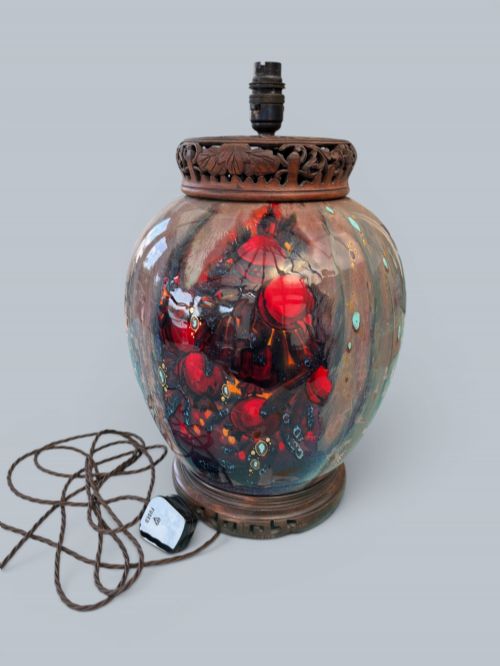
These flambe glazed pottery pieces bring rich, unpredictable colour runs and high-fired depths into a room.
Flambe Glazed Pottery
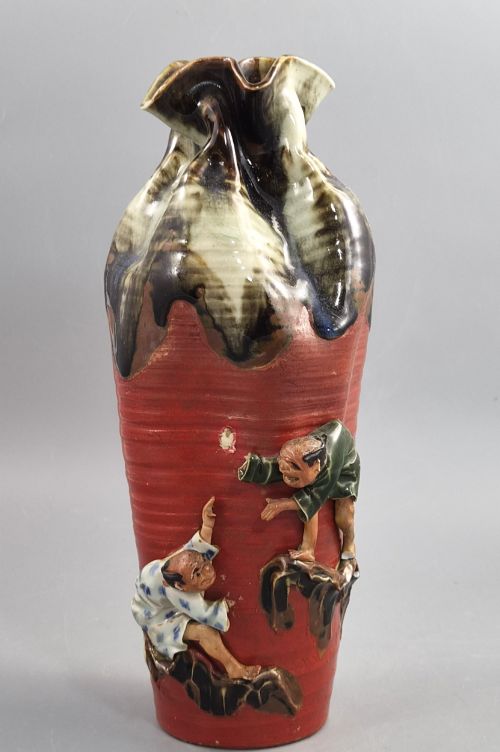
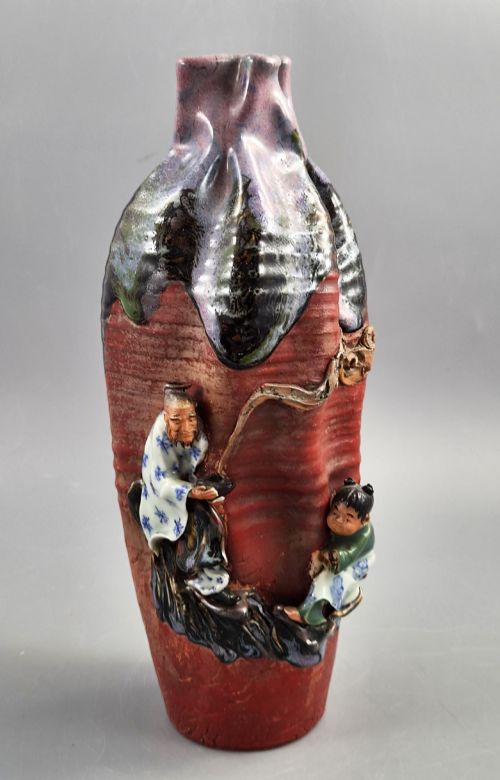
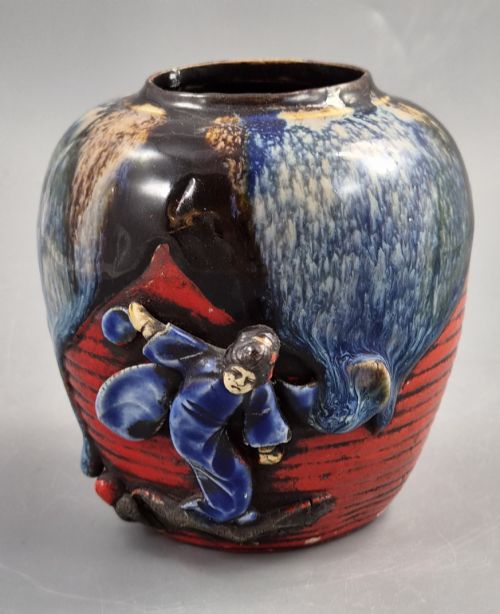
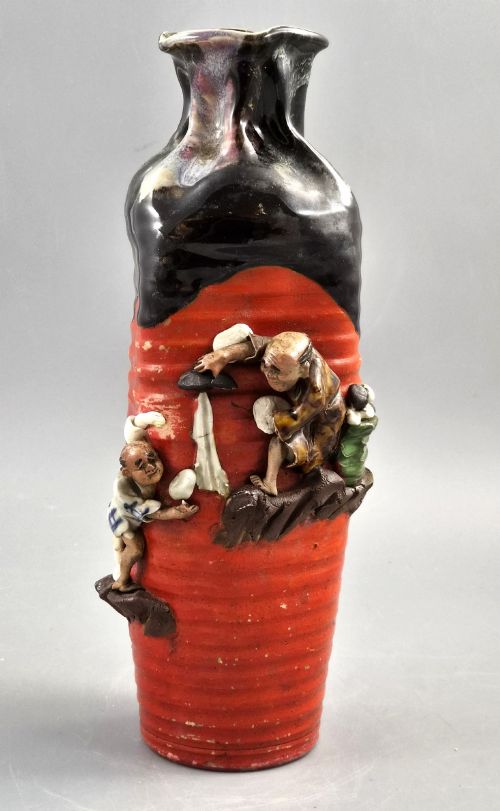
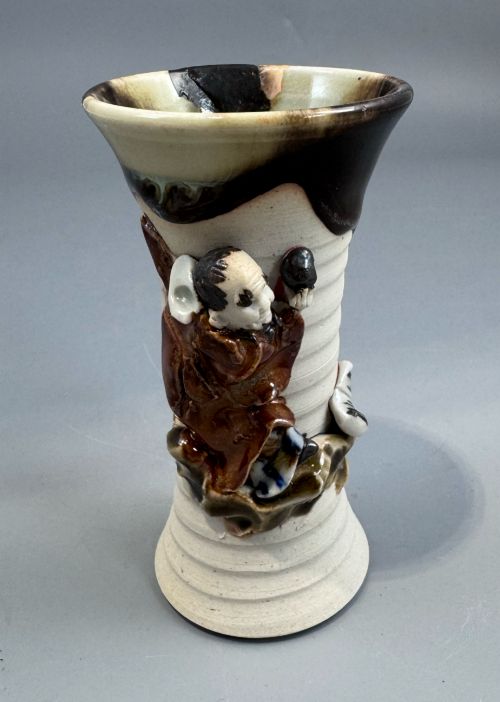
Flambe glazed pottery encompasses vibrant vases, bowls, and lamps driven by complex kiln reactions that produce streaked, mottled, and dripping surfaces. You will most frequently meet Japanese Sumida Gawa ware from the Meiji and Taisho periods featuring applied figures, alongside European art pottery from the early twentieth century.
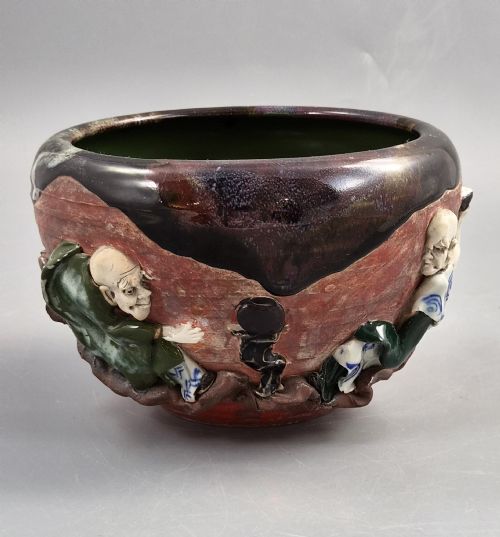
The selection ranges from tall baluster vases with pinched sack rims to decorative bowls and table lamps. Works from Japanese makers often display applied figures in relief, such as sages and children, climbing the exterior walls.
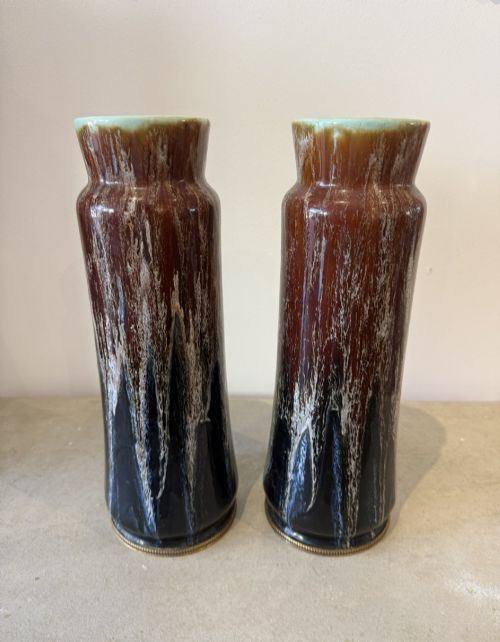
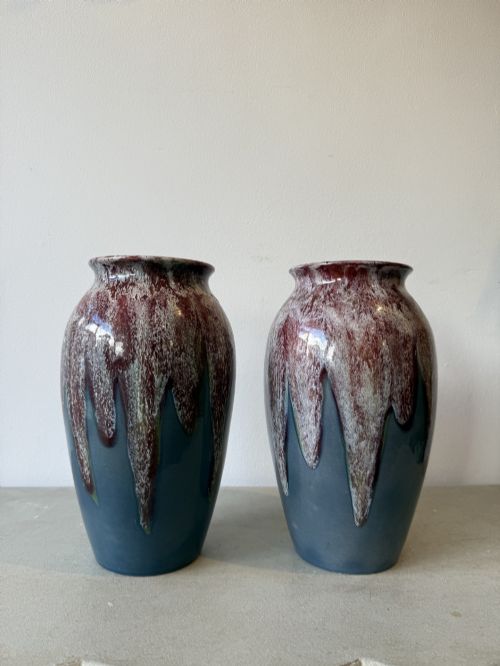
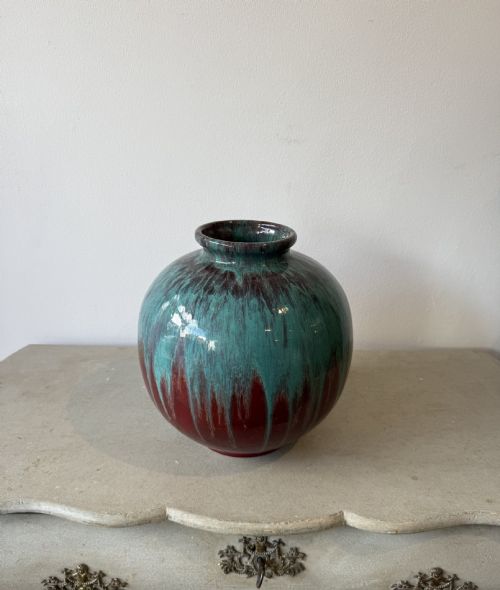
European examples rely purely on the chemistry of the glaze over earthenware, stoneware, or terracotta bodies rather than sculptural relief. These pieces bridge decorative utility and studio craft from nineteen-hundred through the nineteen-thirties.
How they were made
Potters shaped these vessels using earthenware, stoneware, terracotta, and ceramic bodies before applying metallic oxide glazes. Copper reductions during high-temperature firings yielded the characteristic oxblood, lavender, and blue colour runs.
Japanese Sumida Gawa pieces incorporated distinct sculptural techniques, pressing clay figures of sages, rakan, and children directly onto the textured or glazed surfaces. European makers focused on the fluid movement of drip glazes across simple turned forms.
Flambe Glazed Pottery Retail Price Guide 2026
Typical asking prices for flambe glazed pottery among the pieces listed under this phrase on Sellingantiques today, from the lower quarter to the upper quarter. They describe what is for sale here now, not the wider market.
Materials recorded across these pieces include stoneware, earthenware, terracotta, brass, and enamel alongside specialised glazes.
What varies in quality
Quality rests in the control and unpredictability of the glaze transformation, where deep, luminous pools and clean transitions separate superior runs from dull surfaces. The integration of applied figures on Sumida Gawa pottery dictates the sculptural success of the piece.
Makers' signatures and attribution sharply influence standing, with signed works by notable Japanese ceramicists commanding closer attention. The crispness of relief modeling and the balance of the glaze across the rim and base determine the overall visual harmony.
Inoue Ryosai·Ban-ni·Ishiguro Koko·Hiroshi·Boch Freres·Moorcroft·Royal Doulton
The Flambe Glazed Pottery Glossary
- Flambe glaze
- A rich, high-fired ceramic glaze containing metallic oxides that produce streaked or mottled colour effects. It draws inspiration from ancient Chinese kiln techniques.
- Sumida Gawa
- A distinct type of Japanese art pottery characterised by heavily textured glazes and applied figures in high relief. Pieces often originate from the banks of the Sumida River in Tokyo.
- Oxblood
- A deep, dark red glaze colour achieved through copper reduction firings in the kiln. It forms a cornerstone of flambe aesthetics.
- Baluster
- A vase or lamp base form that swells gently towards the lower portion before tapering at the neck. The shape provides a stable canvas for fluid glaze runs.
- Rakan
- An enlightened follower of Buddha, frequently depicted as a sage in applied ceramic relief work. These figures add narrative depth to Japanese art pottery.
Flambe Glazed Pottery: Frequently Asked Questions
What is flambe glazed pottery?
These ceramic works feature high-fired glazes driven by metallic oxides that transform in the kiln to create streaked, mottled, and unpredictable colour effects.
The technique produces distinctive surfaces ranging from deep oxblood reds to vibrant blues and lavenders across vases, bowls, and lamps.
How do I display a flambe vase?
Place these pieces in areas with strong natural light to bring out the subtle depths and metallic sheens hidden within the glaze runs.
Because the surfaces are visually complex, they sit well against neutral walls and simple backgrounds that allow the colours to stand out.
What is Sumida Gawa pottery?
Sumida Gawa refers to Japanese art pottery from the Meiji and Taisho periods featuring heavy, textured glazes and distinct sculptural figures applied in relief.
These pieces often depict sages, children, and robed figures climbing the exterior walls of jars and baluster vases.
How do I date a flambe piece?
Dating relies on identifying the period styles, such as Meiji and Taisho Japanese aesthetics or early twentieth-century European art pottery movements.
Signatures, impressed factory marks, and the specific composition of the ceramic body also help narrow down the production era.