


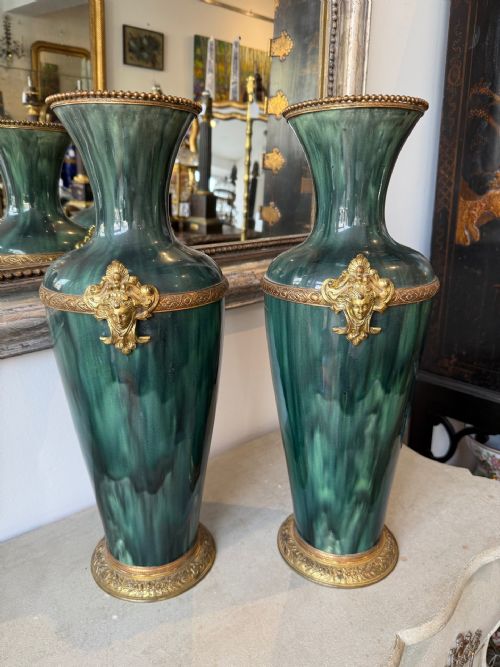


Flambe Glaze Ceramic
Flambe glaze ceramic pieces bring striking pooled colour and high-fired movement to a room, ranging from Japanese art pottery to Chinese imperial works.
Flambe Glaze Ceramic
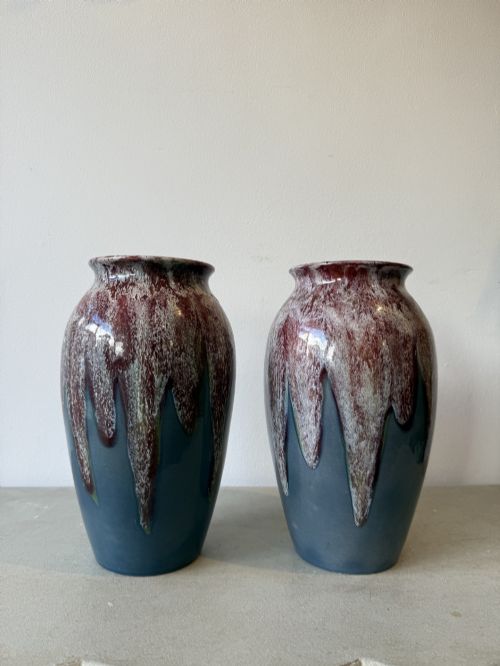
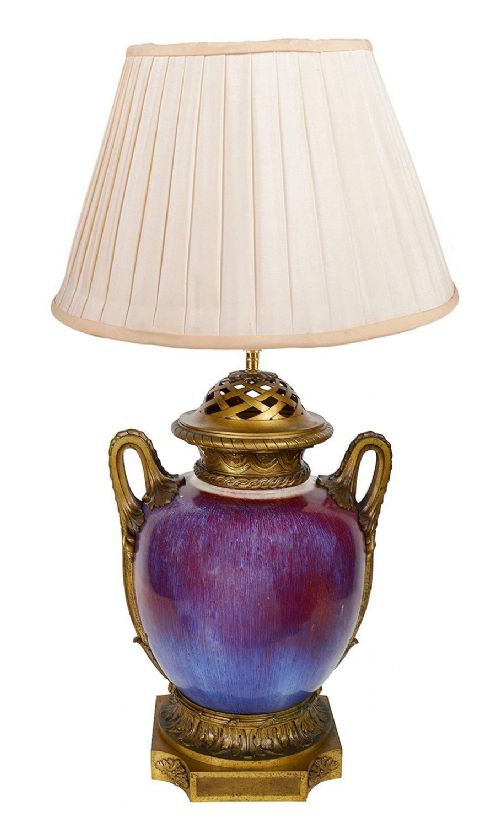
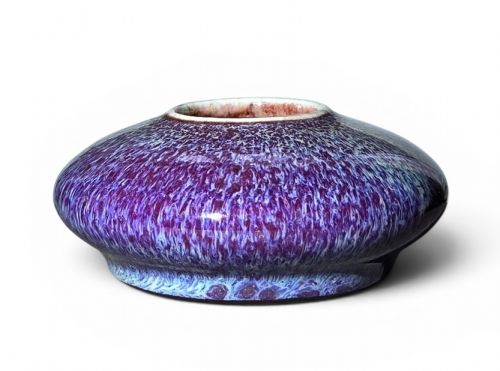
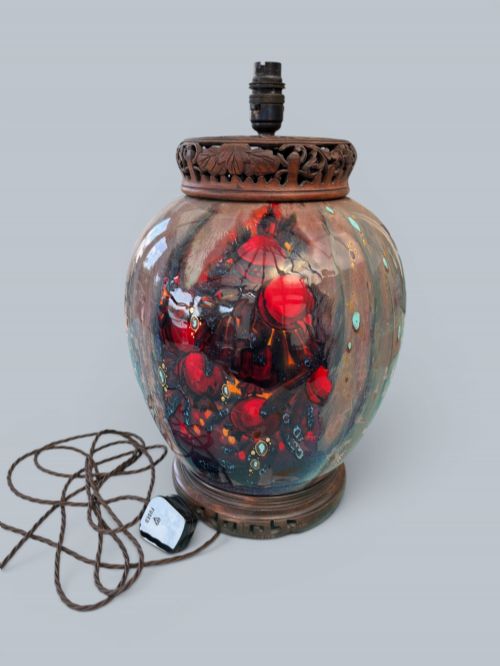
When you search for flambe glaze ceramic, you encounter pieces that display rich, streaked, and mottled colour effects created by metallic oxides in the kiln. These items span various forms, including tall vases, jars, table lamps, bowls, and brush washers.
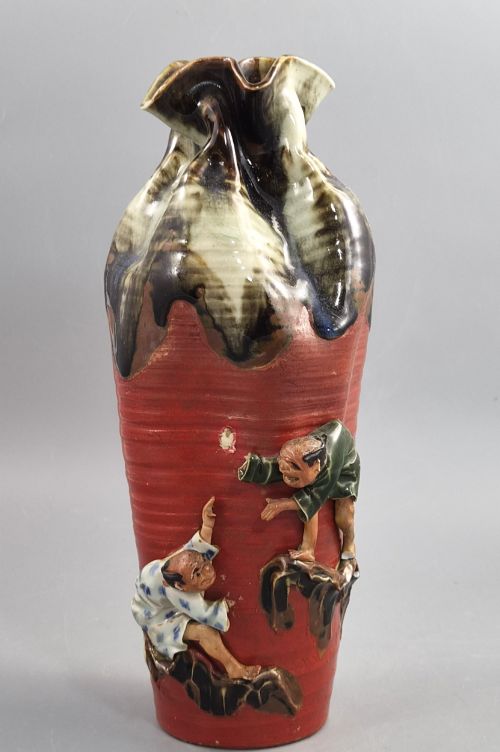
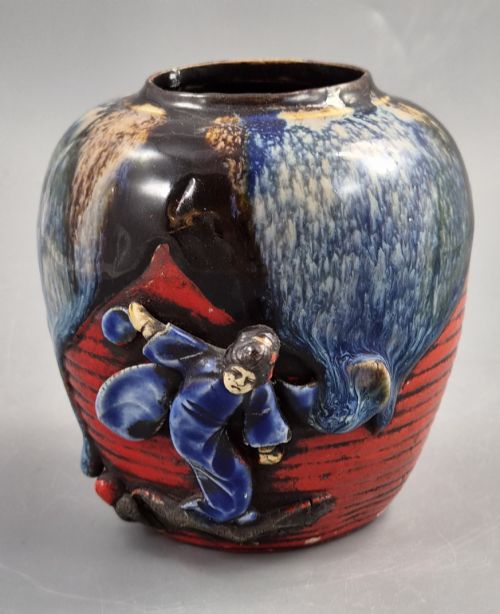
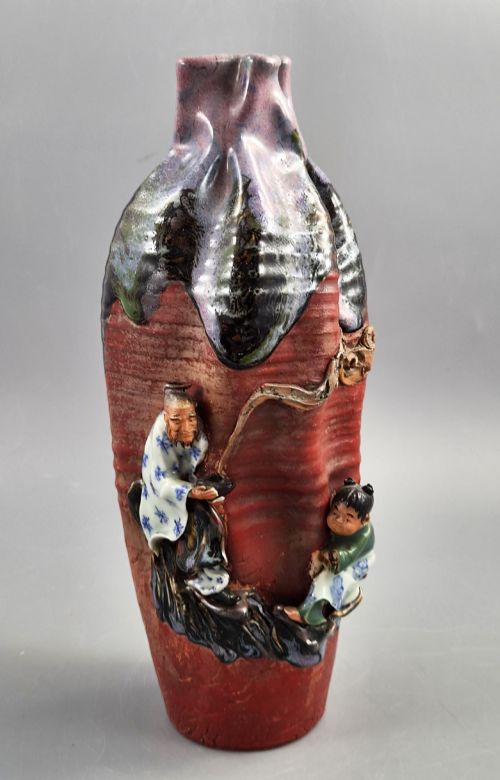
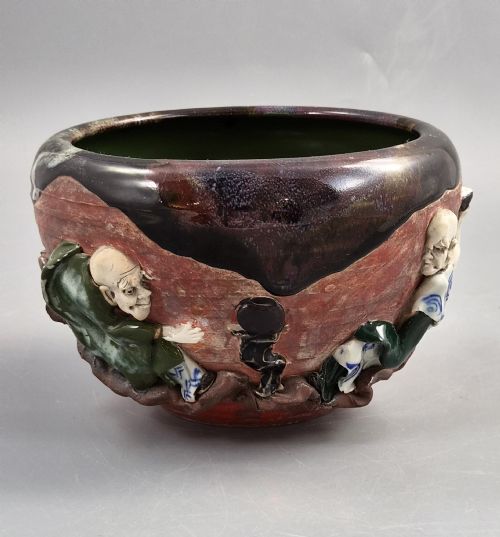
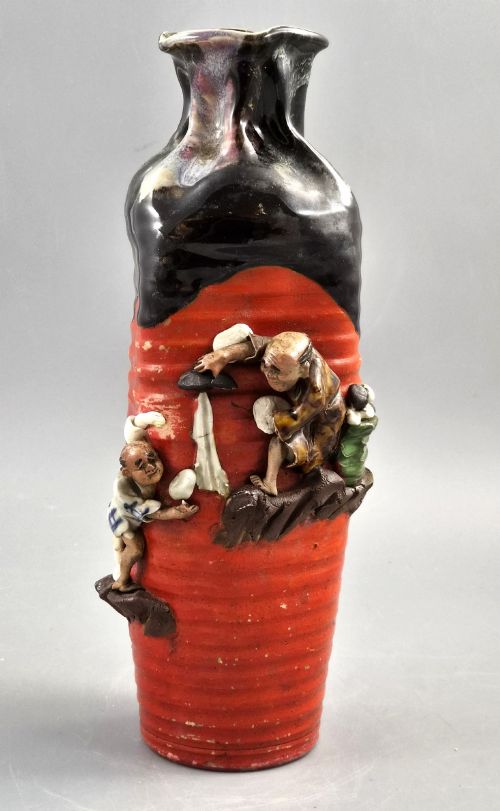
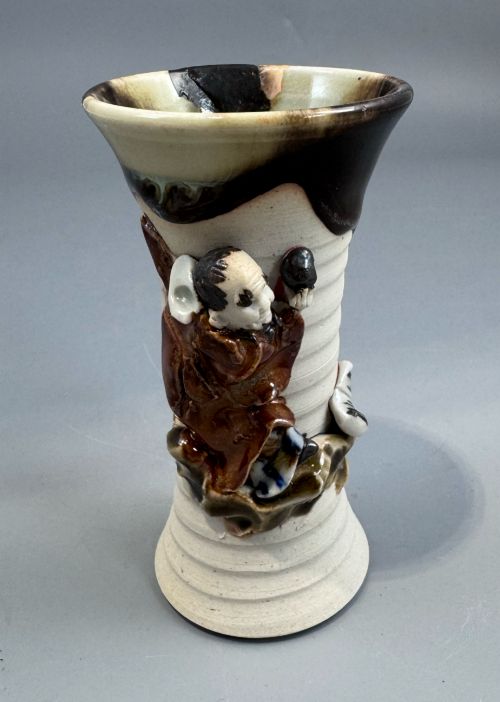
The pieces you are most likely to meet on this page include Japanese Sumida Gawa art pottery from the Meiji and Taisho periods, alongside Chinese wares and European art pottery productions. Forms range from pinched sack rims to heavy baluster shapes decorated with applied figures.
Origins stretch from the eighteenth century up through the early twentieth century, showing both Asian export traditions and Western studio adaptations. Stoneware and earthenware serve as the primary bodies for these heavily glazed surfaces.
Materials and technique
Potters built these vessels using stoneware, earthenware, porcelain, and terracotta bodies, shaping them into vases, bowls, and lamps sometimes fitted with brass elements. The foundational clay body needed to withstand the intense kiln temperatures required for these specialised finishes.
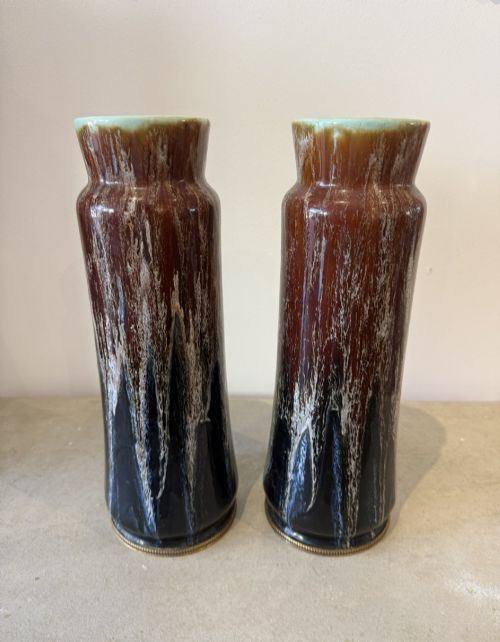
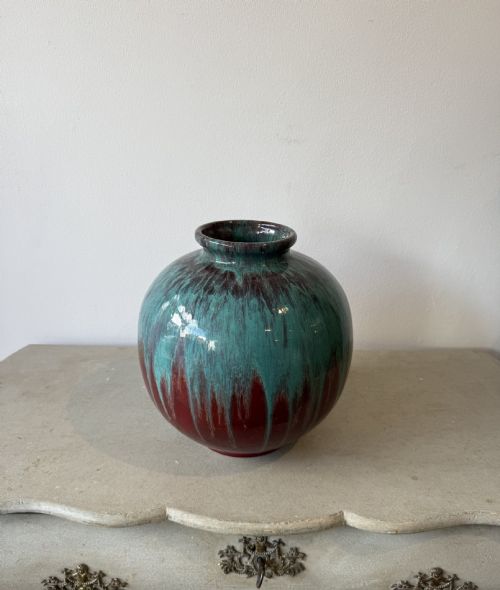
The distinctive glaze effects rely on copper and other metallic oxides applied to the ceramic surface before firing in a reduction atmosphere. This process allows the glaze to run, pool, and mottling into oxblood, lavender, and blue tones.
Flambe Glaze Ceramic Retail Price Guide 2026
Typical asking prices for flambe glaze ceramic among the pieces listed under this phrase on Sellingantiques today, from the lower quarter to the upper quarter. They describe what is for sale here now, not the wider market.
Listings feature ceramics spanning the eighteenth to the twentieth century, incorporating stoneware, porcelain, earthenware, and terracotta.
Judging quality in flambe glaze ceramic
Quality rests upon the depth, control, and visual movement of the glaze itself, where successful pieces display a rich depth of colour rather than a flat finish. The way the glaze pools and breaks across the ceramic body dictates much of the visual success.
For pieces with sculptural elements, such as applied figures or relief work, the crispness and detailing of the modelled work distinguish finer items. Signature marks by recognised makers also influence the standing of individual pieces.
Inoue Ryosai·Ban ni·Ishiguro Koko·Boch Freres·Royal Doulton·Moorcroft
The Flambe Glaze Ceramic Glossary
- Flambé
- A glossy, variegated glaze marked by streaked or mottled colour effects, often achieved through metallic oxides in reduction firings. This technique produces unpredictable and dynamic surface patterns.
- Sumida Gawa
- A style of Japanese art pottery originating near Tokyo, known for heavy, drip glazes and applied figures in high relief. Pieces often feature rough, unglazed patches juxtaposed against colourful glazes.
- Sang de boeuf
- A rich oxblood red glaze derived from copper, originating in Chinese kilns and later emulated by Western potteries. The deep crimson colour results from precise kiln reduction.
- Stoneware
- A dense, hard ceramic fired at high temperatures until vitrified, making it impermeable to liquids even without glaze. It forms the sturdy body for many heavy art pottery vessels.
- Brush washer
- A small ceramic vessel traditionally used in East Asian literati culture for cleaning writing brushes. Examples often feature compressed globular forms and subtle glaze variations.
Flambe Glaze Ceramic: Frequently Asked Questions
What is flambe glaze ceramic?
Flambe glaze ceramic refers to pottery finished with a dynamic, highly coloured glaze that pools, streaks, and shifts across the surface during high-temperature firing. The technique creates unpredictable patterns of red, blue, lavender, and green.
These pieces encompass various forms including Chinese porcelain and stoneware, Japanese Sumida Gawa art pottery with applied figures, and twentieth-century European studio pieces.
How do I date Japanese Sumida Gawa pieces?
Japanese Sumida Gawa ceramics are typically dated to the Meiji, Taisho, and early Showa periods, spanning roughly the late nineteenth to the early twentieth century. Stylistic clues include the modelling of applied figures and the texture of the clay.
Signatures from workshops or makers such as the Ryosai family or Koko provide further chronological markers. The presence of specific glaze combinations also helps narrow down the production era.
Where were these ceramics made?
The pieces originate from diverse geographic centres, most notably historic Chinese kilns, Japanese workshops near Tokyo, and European potteries. Each region developed its own interpretation of high-fired reduction glazes.
Chinese works often look back to imperial traditions, while Japanese Sumida Gawa wares developed for export markets. European makers adapted these East Asian glazing methods within their own art pottery traditions.
How should I display a flambe vase?
Display these vessels where natural light can strike the undulating surface, as the shifting metallic oxides reveal their depth best under good illumination. Placing them away from cluttered backgrounds allows the heavy glazes and relief details to stand out.
Consider height and stability, particularly with heavier stoneware and earthenware forms, ensuring they rest on secure surfaces. Some pieces, such as vases and jars, also function as fitted table lamps.