


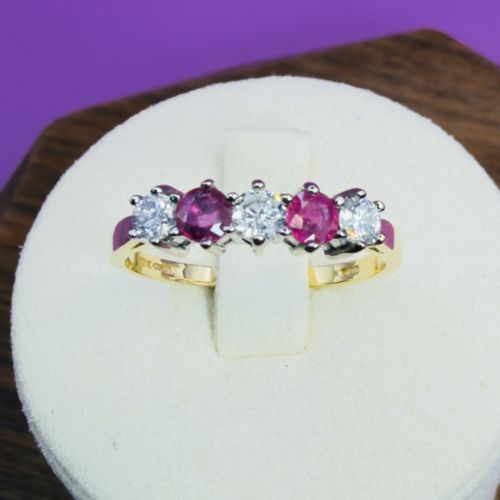
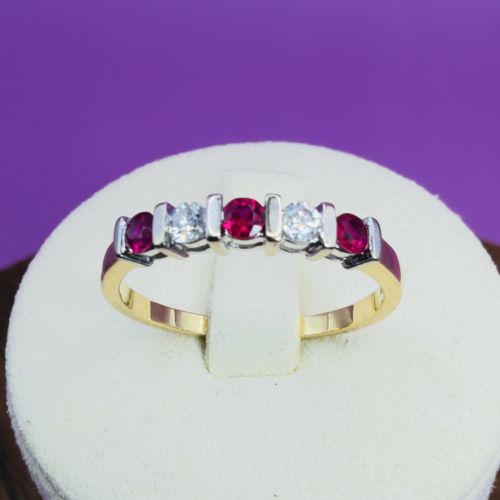
Five Stone Gemstone Band
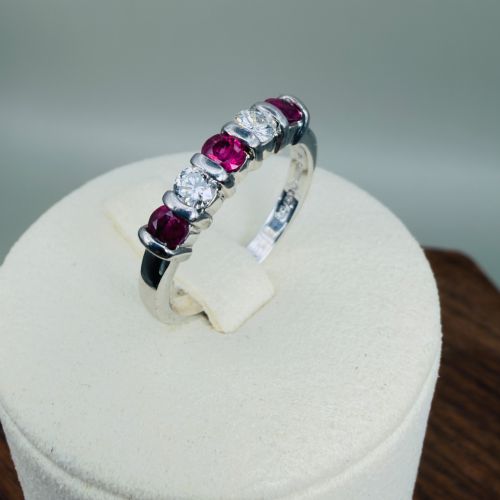
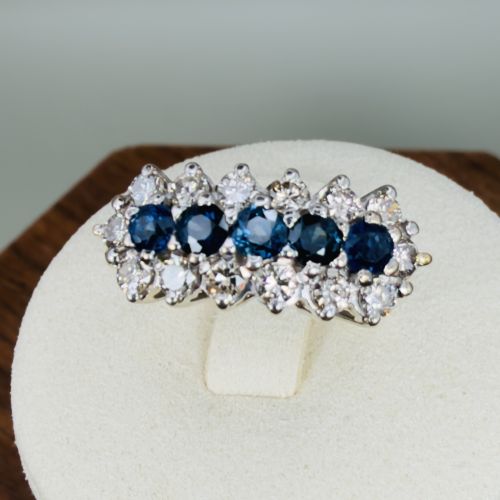
A five stone gemstone band sits low on the finger, offering a rhythmic row of coloured gems and diamonds that catches the light with every movement.
Five Stone Gemstone Band
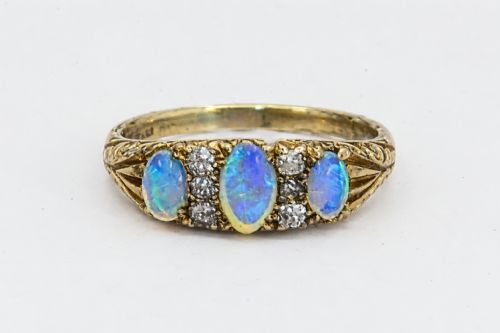
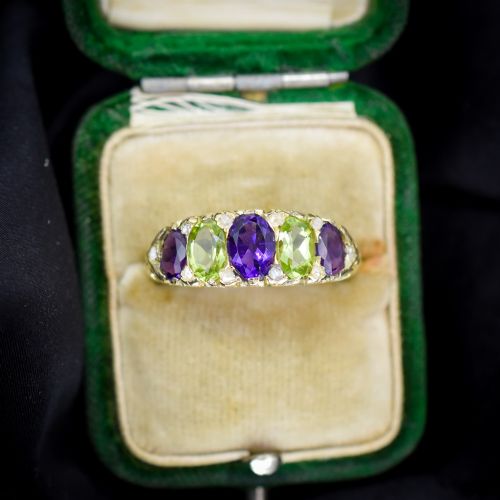
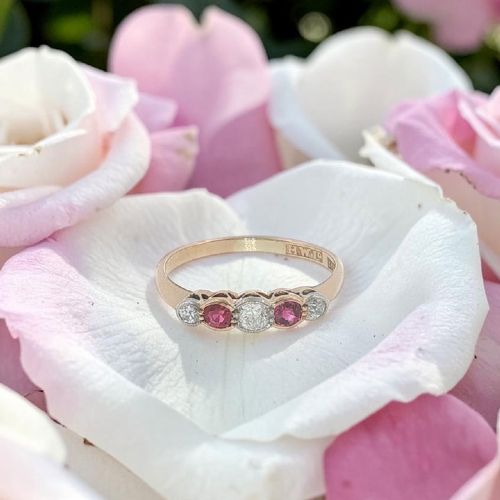
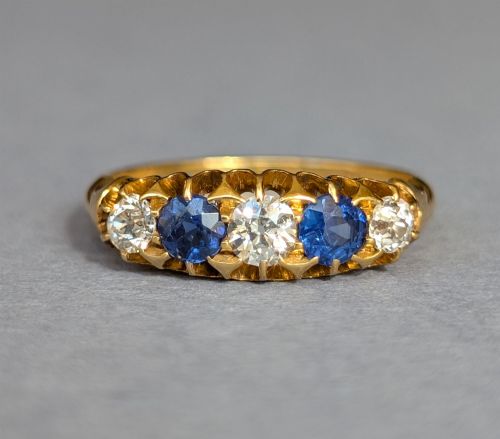
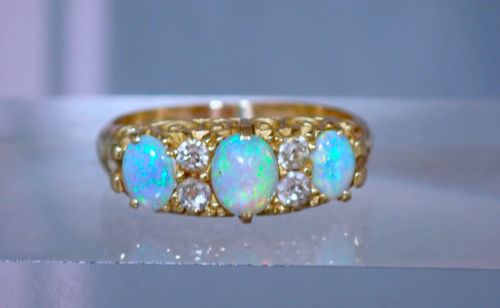
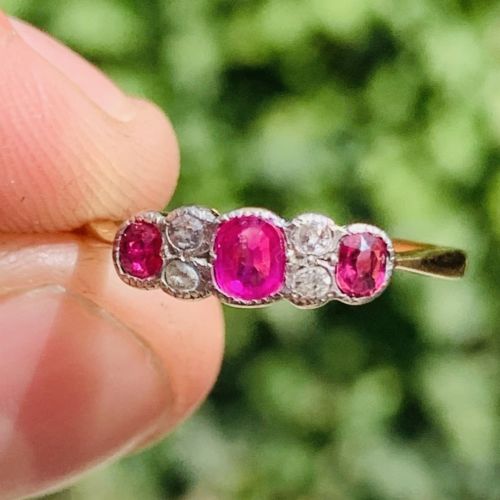
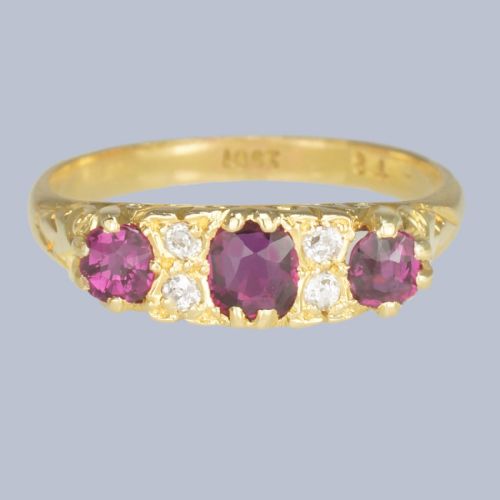
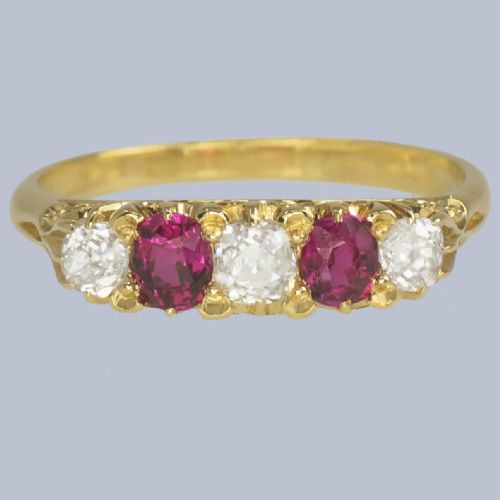
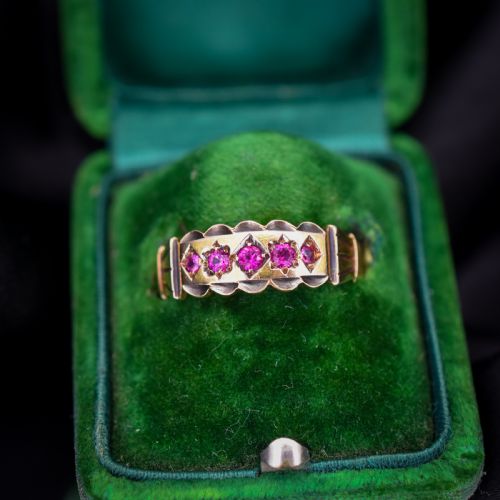
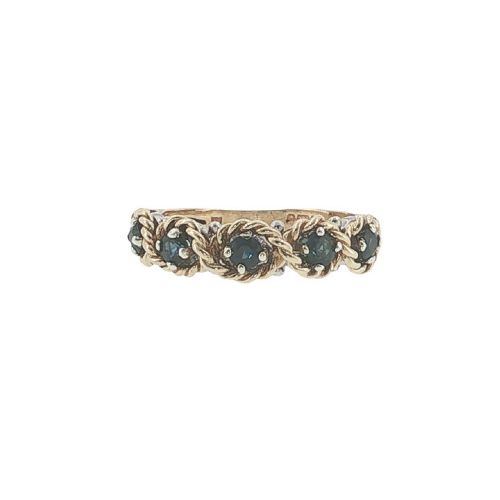
A five stone gemstone band displays a linear sequence of five gems set closely across the top of the hoop. You find these rings in Victorian, Edwardian, and later vintage styles, spanning periods from the nineteenth century through the mid-twentieth century.
The layout frequently pairs diamonds with rubies, sapphires, opals, or turquoise, often arranged in alternating patterns or graduating sizes. Many examples take the form of traditional band rings or boat rings, designed to sit flush or comfortably alongside other bands.
How they were made
Goldsmiths worked primarily in 18ct yellow gold, white gold, and occasionally 15ct gold, forming solid shanks that support the gemstone settings. Stones were secured using traditional techniques such as claw settings, star settings, or boat-shaped mounts.
Cutters shaped the stones by hand, utilising old-cut diamonds, old mine cuts, and rose-cuts alongside rubies, sapphires, opals, and emeralds. Metalwork often incorporates detailed shoulders and patterned bands marked with Chester, Birmingham, or London hallmarks.
Listings span multiple eras from the nineteenth century into the 1970s, utilising yellow gold, white gold, and platinum alongside diamonds, rubies, sapphires, opals, and turquoise.
What varies in quality
Quality rests upon the visual harmony of the stones, the crispness of the claw or boat mount, and the preservation of original hallmarks. A balanced arrangement of well-matched gems with strong colour saturation elevates a piece above standard examples.
The integrity of the gold shank and the precision of the stone cut define the standard of craftsmanship. Secure settings that protect the girdle of each gem demonstrate superior workshop execution.
The Five Stone Gemstone Band Glossary
- Boat ring
- A ring setting shaped like an elongated boat, curving gently across the finger to house a central cluster or linear row of stones.
- Old-cut diamond
- A diamond cut by hand before the advent of modern machine standards, typically featuring a smaller table and a higher crown that produces a soft, warm glow in candlelight.
- Navette ring
- A ring featuring an eye-shaped or marquise-shaped mounting that tapers to points at either end of the finger.
- Half hoop ring
- A band where gemstones extend only across the upper half of the hoop rather than circling the entire finger.
- Rose-cut diamond
- A vintage diamond cut with a flat base and a domed crown of triangular facets resembling an unopened rosebud.
Five Stone Gemstone Band: Frequently Asked Questions
What periods do these rings come from?
These rings originate from the Victorian and Edwardian eras, extending through the Art Deco period and into mid-century modern designs.
Craftsmanship and materials shifted over these decades, moving from nineteenth-century yellow gold mounts to twentieth-century white gold and platinum-topped variations.
How do I wear a five stone band?
A five stone band works well worn alone on the hand or stacked alongside a plain wedding band for daily wear.
The low profile of the traditional boat and band settings helps prevent the stones from catching on clothing during regular activities.
What gems are used in these bands?
The listings feature diamonds paired with coloured stones including rubies, sapphires, opals, turquoise, and emeralds.
These gems appear in various combinations, sometimes accompanied by garnets, peridots, or pearls in traditional and suffragette-inspired arrangements.
How do I identify a Victorian ring?
Victorian examples often display higher carat yellow gold, robust boat settings, and hand-stamped provincial hallmarks from assay offices like Chester or Birmingham.
Stones from this era typically exhibit hand-cut facets such as old mine cuts and rose-cuts set securely within heavy metalwork.