

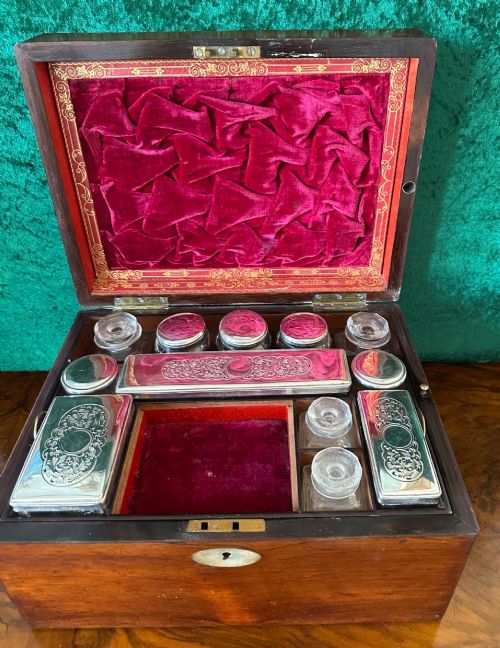


Fitted Wooden Jewellery Box
A fitted wooden jewellery box organises precious keepsakes inside compartments lined with velvet, housing generations of craftsmanship in rosewood, walnut, and coromandel.
Fitted Wooden Jewellery Box
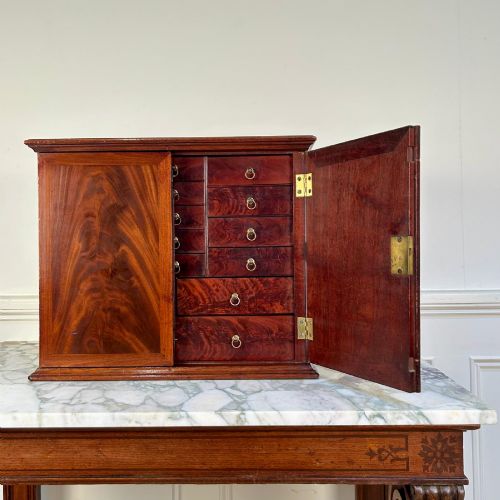
A fitted wooden jewellery box brings together compartments, mirrors, and lift-out trays designed to hold rings, necklaces, and trinkets securely. When searching for a fitted wooden jewellery box, the versions most commonly met on this page date from the Georgian and Victorian periods, often taking the form of dressing cases, vanity boxes, or table cabinets.
These pieces range from compact rosewood and burr walnut boxes intended for a boudoir to larger travelling cases bound in brass. Alongside standard British Victorian designs, variations include Anglo-Indian teak miniature campaign trunks, Chinese Hongmu travelling boxes, and Swedish burr birch table boxes.
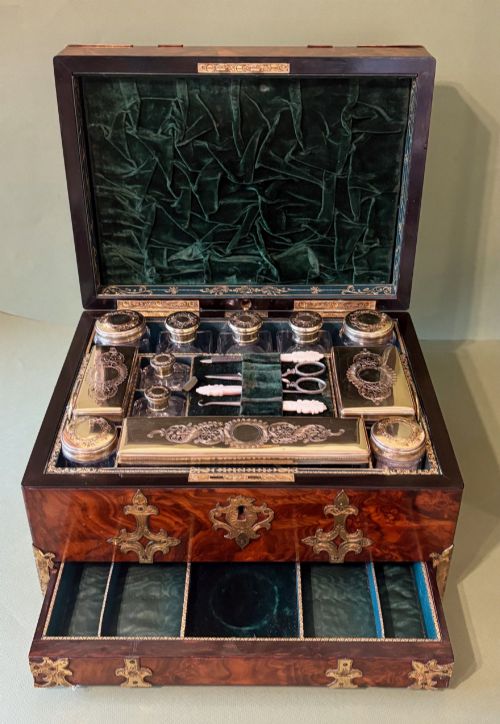
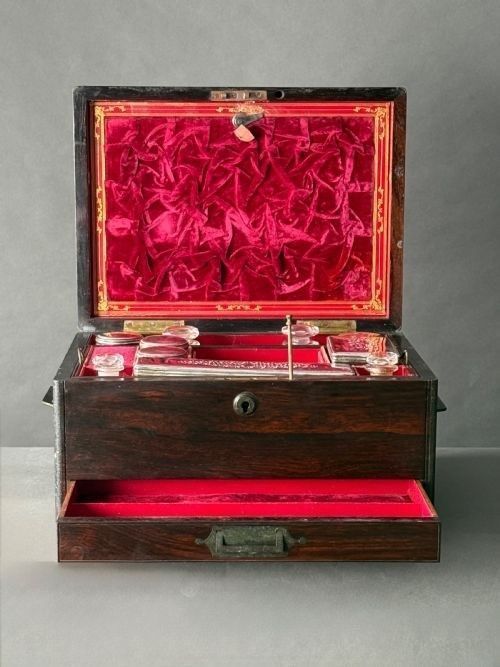
Interior fitments define these items, featuring velvet-lined trays, swing-out cases, and spaces originally built for glass and silver mounted jars. They serve as practical storage solutions while displaying rich timber figures like burr walnut, mahogany, and coromandel.
How they were made
Cabinet makers constructed these boxes using dense timbers such as rosewood, walnut, coromandel, and mahogany, frequently selecting highly figured burr veneers for the exterior lids and panels. Mother-of-pearl inlay and brass stringing often embellish the surfaces, highlighting the precision of nineteenth-century joinery.
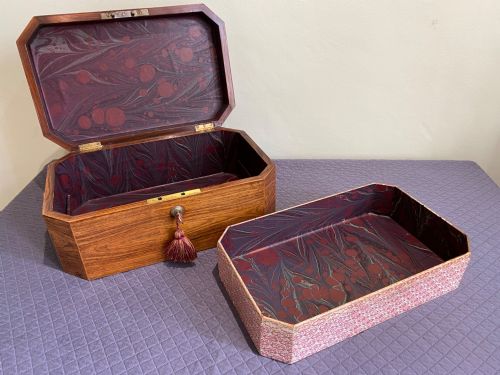
Interiors rely on precision woodworking to create secret drawers, lifting trays, and compartmentalised sections lined in plush velvet. Brass locks, campaign-style inset handles, and working keys complete the construction, securing the contents for daily use or travel.
Fitted Wooden Jewellery Box Retail Price Guide 2026
Typical asking prices for fitted wooden jewellery box among the pieces listed under this phrase on Sellingantiques today, from the lower quarter to the upper quarter. They describe what is for sale here now, not the wider market.
Some Victorian travelling boxes include secret compartments released by hidden wooden spring pins known only to the original owner.
What varies in quality
The degree of refinement in the interior fitments separates standard production boxes from exceptional examples. Fully fitted interiors featuring matching silver-topped glass bottles, integrated mirrors, and original velvet linings command greater attention than empty or later re-lined compartments.
Timber selection and decorative detail also drive distinction. Finely figured burr walnut, intricate mother-of-pearl inlay, and signed maker's plaques denote workshop production from notable London addresses, whereas simpler regional or unmarked pieces offer plain mahogany or rosewood surfaces.
H Mitchell·Parkins and Grotto·Parkins & Gotto
The Fitted Wooden Jewellery Box Glossary
- Coromandel
- A dense, heavily figured Southeast Asian timber prized for its dark brown grain and contrasting stripes, frequently utilised in luxury nineteenth-century dressing cases.
- Burr Walnut
- A knotty growth on a walnut tree yielding turbulent, highly decorative grain patterns when sliced into veneer for box lids.
- Campaign Box
- Portable furniture designed for military or travel use, typically fitted with recessed brass handles and reinforced corners to withstand movement.
- Hongmu
- A traditional Chinese term for dense, dark hardwoods used in fine cabinetry and travelling boxes.
- Mother of Pearl
- The iridescent inner layer of certain mollusc shells, sliced thin and inlaid into timber surfaces to create geometric or floral patterns.
Fitted Wooden Jewellery Box: Frequently Asked Questions
What is inside a dressing box?
A dressing box typically contains a fitted interior with lift-out trays, velvet-lined compartments for jewellery, and often built-in mirrors.
Many examples also hold glass jars and silver-topped containers designed for cosmetics and grooming implements.
How do I date a wooden box?
Dating relies on timber choices, brass hardware styles, and construction techniques visible in the interior compartments. Victorian examples often feature burr walnut or coromandel, while Georgian pieces frequently utilise plain mahogany or rosewood.
Maker's marks or stamps on locks and leather interiors provide more precise chronological clues.
Were these boxes used for travel?
Many boxes served as travelling companions for the wealthy, equipped with secure locks and working keys to protect valuables on journeys.
Sturdier campaign-style variants featured recessed brass handles specifically built for transport.
Can I use these for modern jewellery?
The velvet-lined compartments and removable trays suit modern rings, earrings, and necklaces remarkably well.
Older layouts accommodate contemporary pieces safely while adding period character to a dressing table.