

Fitted Armoire
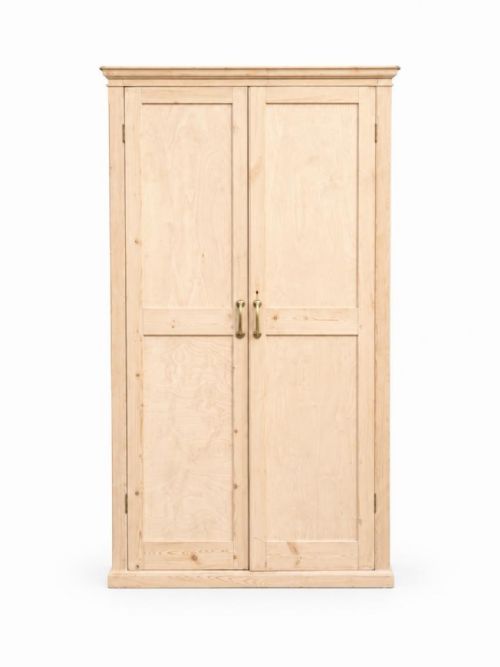
A fitted armoire brings substantial timber storage into a bedroom, offering internal hanging space, shelves and drawers behind grand panelled doors.
Fitted Armoire
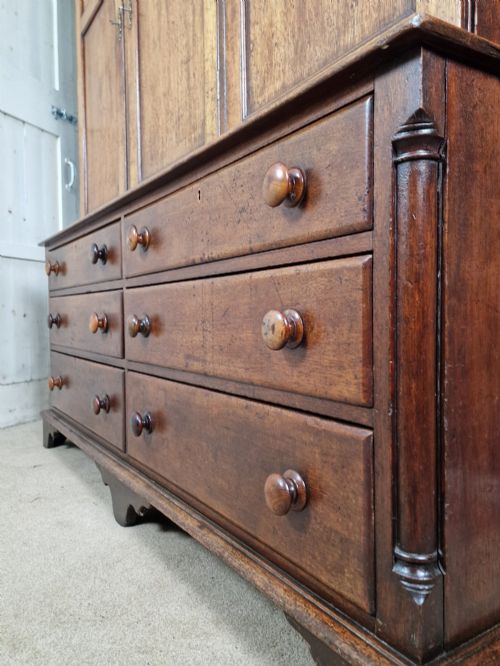
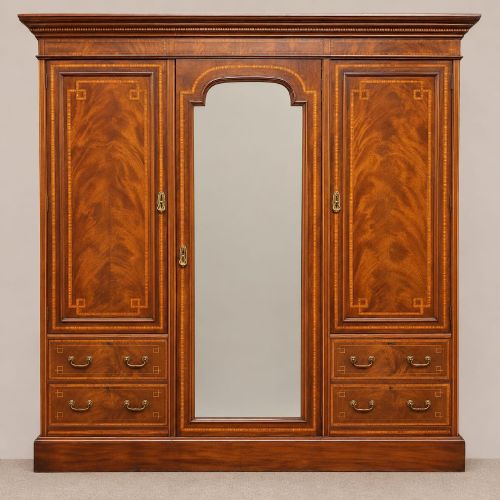
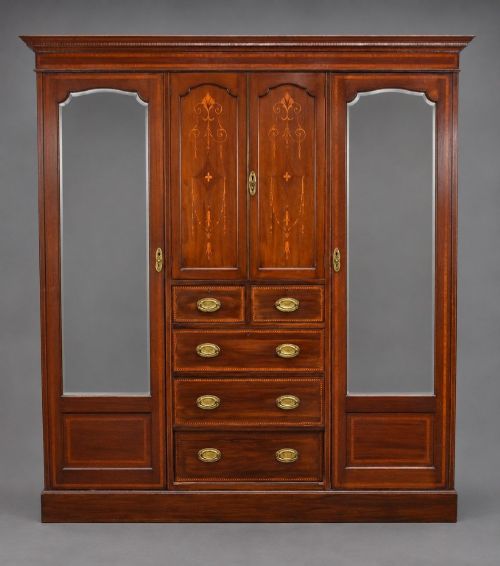
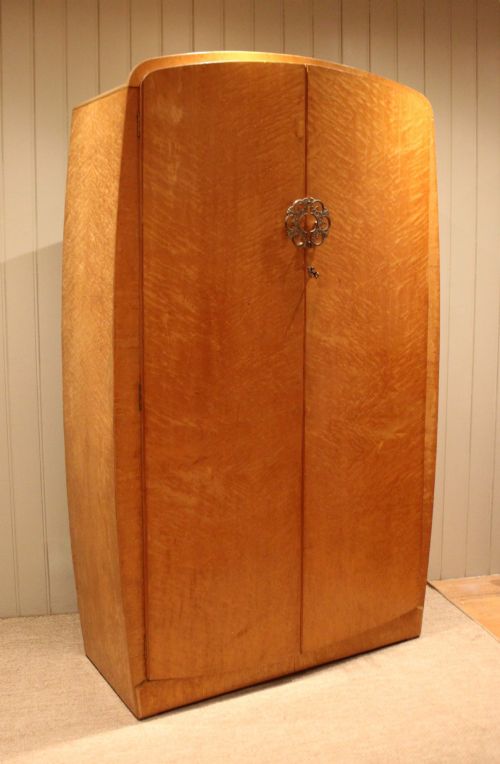
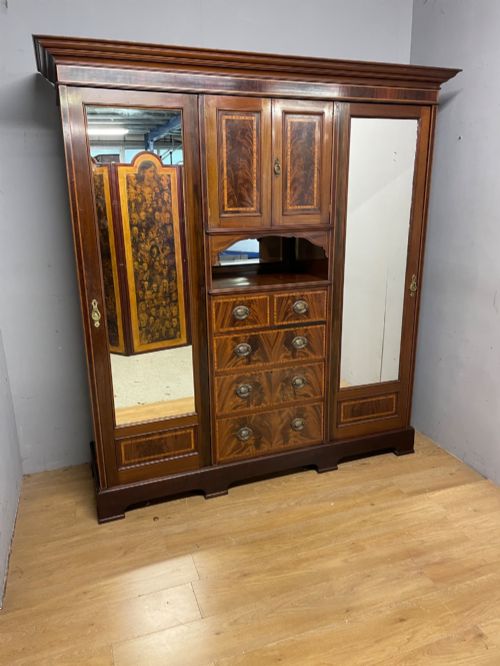
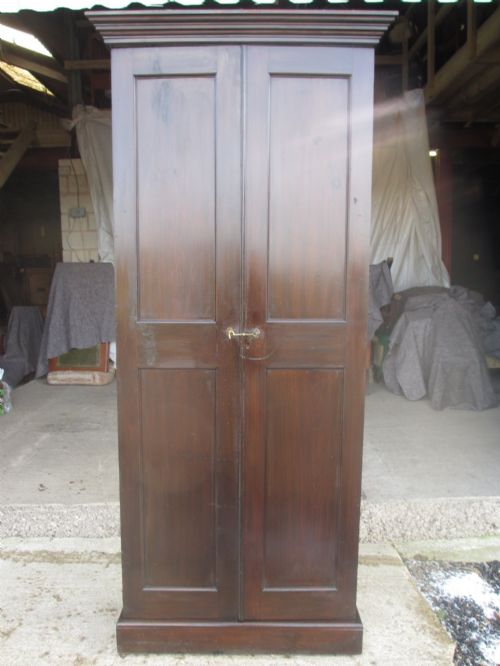
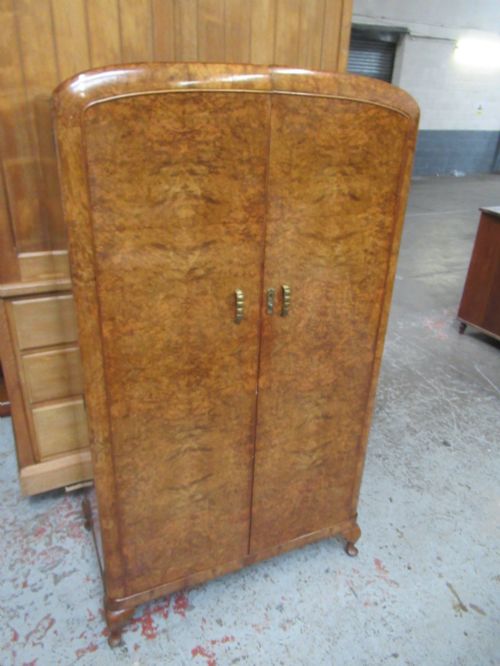
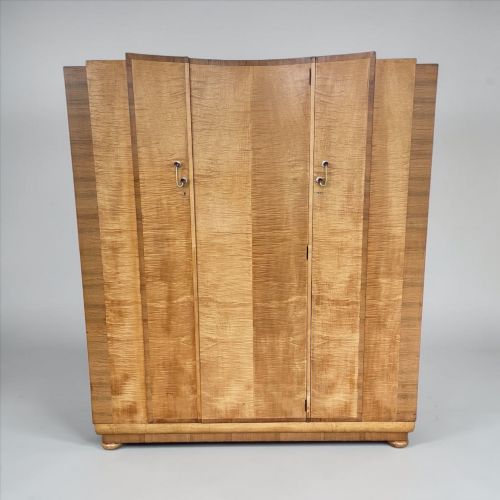
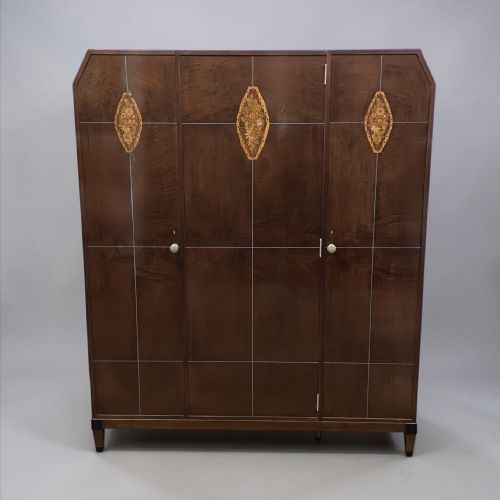
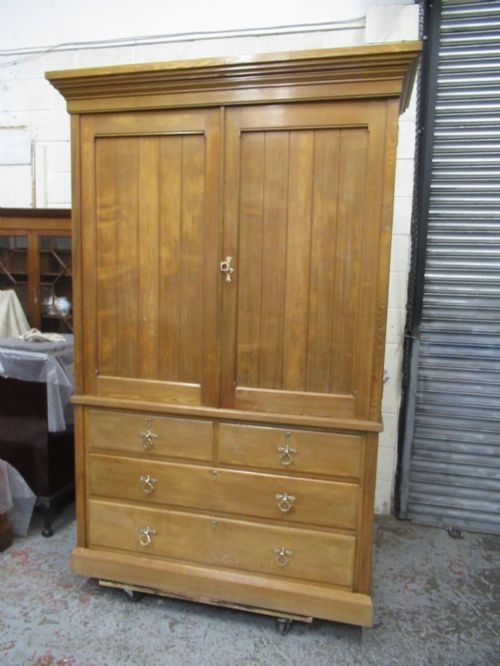
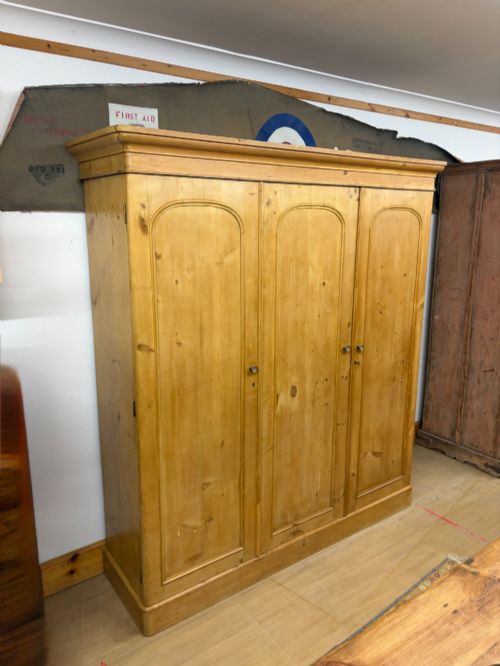
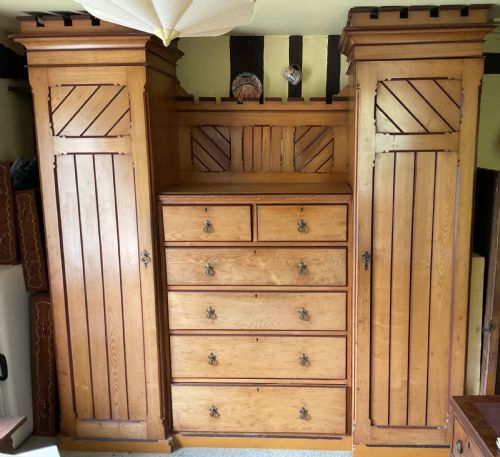
When searching for a fitted armoire, buyers encounter large timber storage furniture spanning several decades and styles. The selection ranges from Victorian mahogany presses to 1920s burr walnut double wardrobes and 1930s Art Deco compactums.
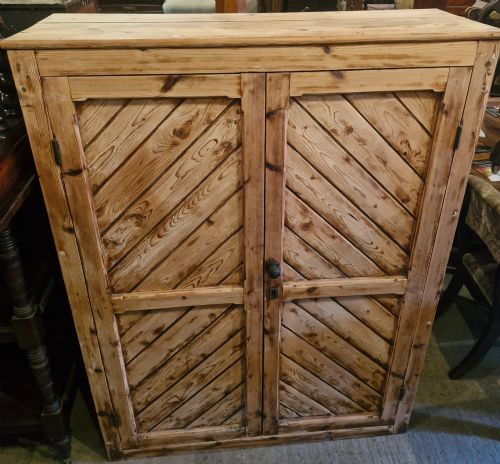
The pieces on this page appear in various forms, including double and triple wardrobes, linen presses and combination compactums. These items originate from periods such as the Edwardian era, the Victorian decades and the early twentieth century.
Many examples incorporate internal fittings such as shelves, sliding trays and hanging rails behind their main doors. The exterior silhouettes follow regional and period fashions, from simple rectilinear oak carcases to serpentine and bow front designs.
Materials and construction methods
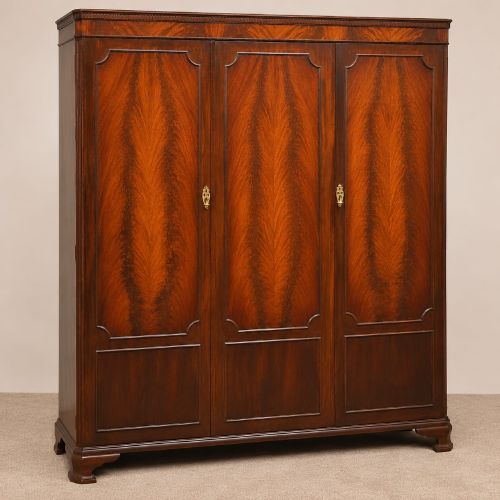
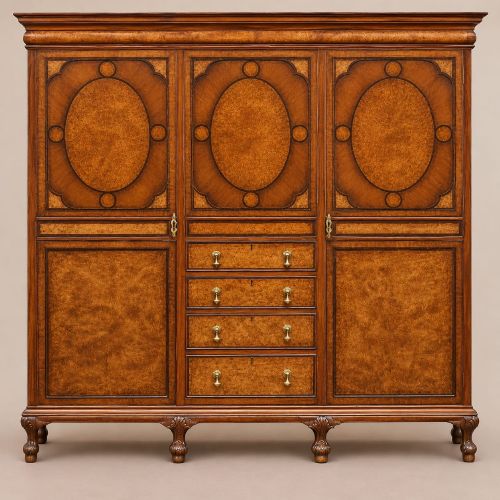
Cabinet makers utilised a foundation of solid timbers like oak, mahogany and ash, often applying decorative veneers to the primary surfaces. Burr walnut, birds eye maple and flame mahogany feature prominently on door panels and drawer fronts to create figured patterns.
Internal components typically combine secondary softwoods with fine dovetail joints on drawer construction and panelled backboards. Brass hardware, including hanging hooks, locks and handles, secures the doors and internal compartments.
Fitted Armoire Retail Price Guide 2026
Typical asking prices for fitted armoire among the pieces listed under this phrase on Sellingantiques today, from the lower quarter to the upper quarter. They describe what is for sale here now, not the wider market.
Many antique wardrobes still retain the faint, comforting aroma of cedar lining and old beeswax hidden inside their dark compartments.
Factors that define build standard
The standard of an individual cabinet rests on the selection of timber veneers and the precision of the joinery. Dense, highly figured burr walnut and carefully matched flame mahogany denote superior cabinet work compared to plainer grain selections.
Internal organisation also distinguishes the pieces, with integrated sliding trays, linen slides and clever compartmentalisation marking out more elaborate commissions. The stability of the main carcase, smooth door alignment and intact original brass furniture indicate higher manufacturing execution.
Crown Furniture·Waring and Gillow·Holland and Sons·Gillows
The Fitted Armoire Glossary
- Compactum
- A multi-functional wardrobe featuring a combination of hanging space, drawers and linen shelves within a single carcase. These units often divide into multiple sections.
- Linen Press
- A tall storage piece containing sliding trays or shelves in the upper section and deep drawers in the lower base. They were traditionally used to store folded textiles.
- Breakfront
- A cabinet design where the central section projects forward from the flanking wings. This architectural arrangement creates depth and visual interest across large wardrobes.
- Veneer
- A thin layer of decorative timber applied to a stable secondary wood foundation. This technique allows cabinet makers to display dramatic grain patterns like burr walnut.
- Serpentine Front
- A curved furniture front featuring a convex centre flanked by concave curves. This shaping requires specialist woodworking skill to execute cleanly on large doors.
Fitted Armoire: Frequently Asked Questions
How do I measure for a large wardrobe?
Measure the available floor space and ceiling height carefully, allowing clearance for crown mouldings and opening doors. Consider access routes through hallways and stairwells before bringing a large timber carcase into a room.
Check whether the wardrobe dismantles into sections, as many larger Victorian and Edwardian armoires separate into a cornice, base and sides for transport.
What is inside a fitted armoire?
Interiors typically contain a combination of hanging rails, fixed or adjustable shelving, and internal drawers. Some variations include sliding linen trays and compartmentalised sections designed for specific garments.
Original fittings vary by period, with older models frequently offering shallow shelves and hooks rather than modern clothes rails.
How do I care for walnut veneer?
Keep walnut furniture away from direct sunlight and heat sources to prevent the wood from drying out and the veneer from lifting. Dust regularly with a dry, soft cloth and avoid chemical polishes.
Applying a traditional beeswax occasionally helps nourish the timber surface and maintain a healthy sheen on the polished finish.
How can I tell the period of a wardrobe?
Examine the timber selection, construction techniques and decorative hardware to determine the era. Victorian pieces often use solid mahogany or figured veneers with heavy carved mouldings, while 1930s Art Deco examples favour streamlined geometric shapes and burr walnut.
Internal drawer construction, such as hand-cut dovetails versus machine-made joints, also provides clues regarding the approximate date of manufacture.