


Fine Jewellery Stud Earrings
Fine jewellery stud earrings are compact, ear-hugging adornments set with diamonds, precious gems, or pearls, prized for their everyday elegance and versatility.
Fine Jewellery Stud Earrings
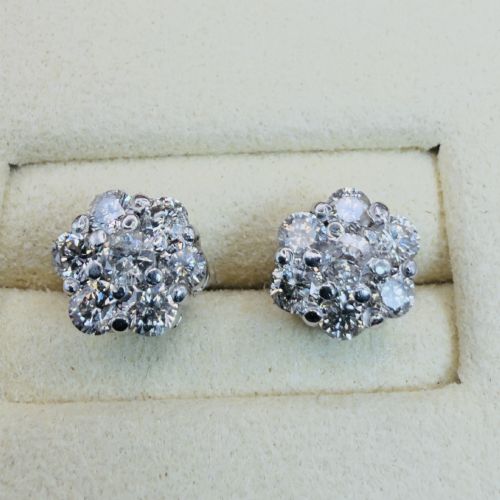
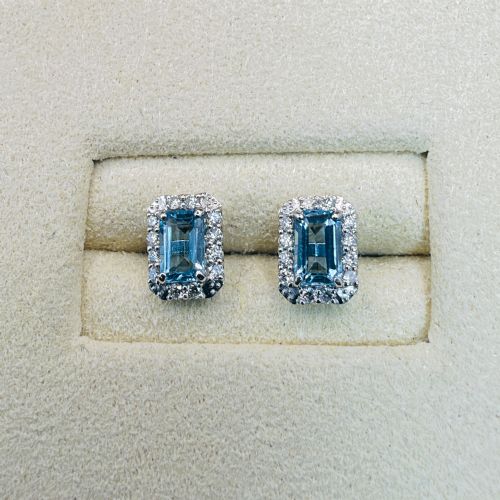
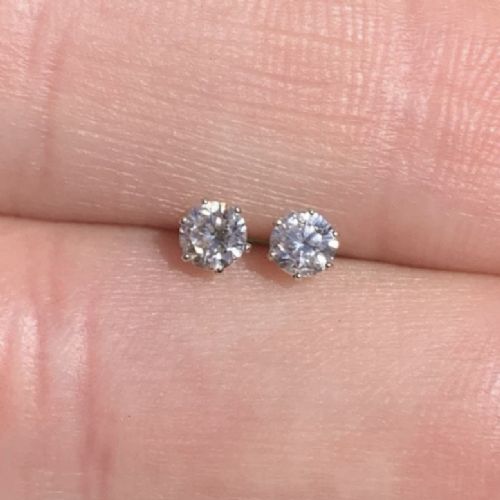
Fine jewellery stud earrings sit directly on the earlobe, secured by friction backs, screw backs, or posts. They range from simple diamond solitaires to intricate gemstone clusters framed by precious metals.
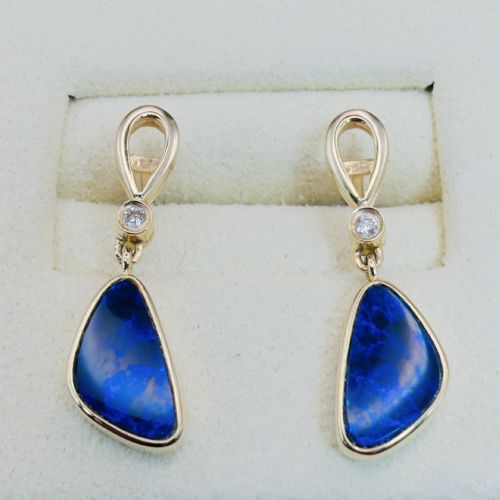
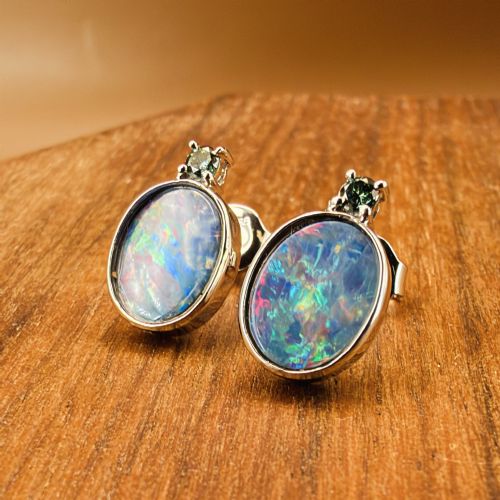
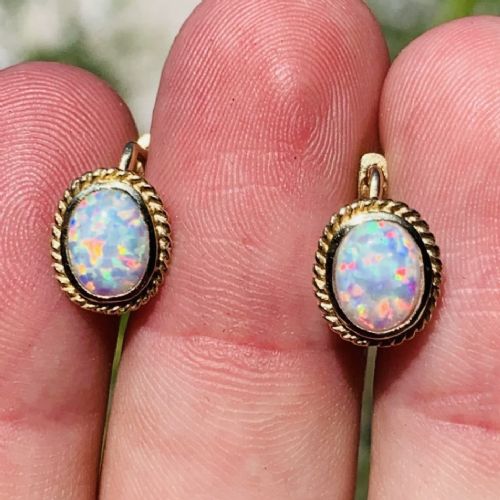
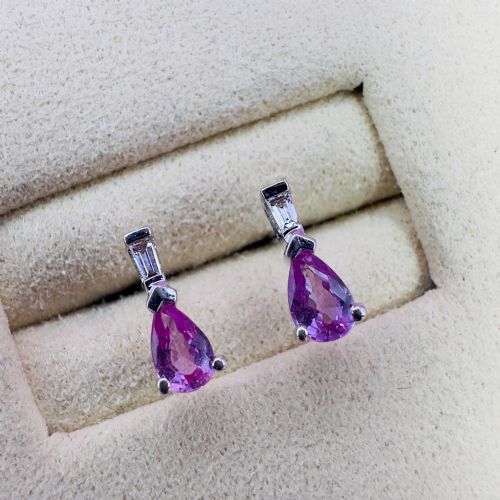
The selection on this page draws heavily from mid-century designs alongside earlier Edwardian and Art Deco specimens. Pieces featuring diamonds, opals, sapphires, and amethysts dominate the current inventory.
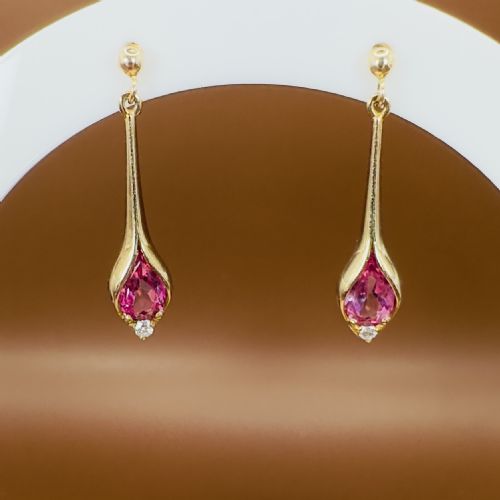
Buyers will encounter configurations varying from modest single stones to substantial drop studs and multi-stone clusters. Yellow gold, white gold, and platinum serve as the primary foundational metals for these forms.
How they were made
Goldsmiths utilised precious metals including 9ct gold, 14ct gold, 18ct gold, 19.2ct gold, and platinum to fabricate secure settings. Stones were meticulously claw-set, bezel-set, or integrated into filigree frameworks to maximise light exposure.
Cluster arrangements combined central gemstones with surrounding melee diamonds, requiring precise metalwork and stone-cutting techniques. Elements like screw backs were engineered to provide secure daily wear for heavier drop and cluster configurations.
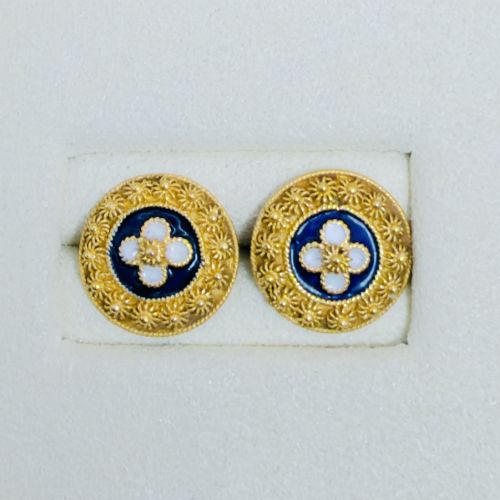
Some mid-century screw backs arrived with their original presentation boxes intact, preserving a tiny time capsule of past gift-giving.
What varies in quality
The calibre of the central gemstone dictates the baseline standard, with superior stones displaying intense natural colour saturation and minimal inclusions. Diamond clarity grades and cut precision heavily influence the brilliance of cluster and solitaire examples.
Execution of the metalwork defines the construction tier, distinguishing hand-finished filigree and robust claw settings from simpler production methods. Original components, such as matched screw backs or maker boxes, elevate the integrity of a surviving piece.
Andrew Grima
The Fine Jewellery Stud Earrings Glossary
- Cluster
- A gemstone setting where a central stone is encircled by a border of smaller stones, typically diamonds. This arrangement maximises visual impact and light reflection.
- Solitaire
- A single gemstone mounted alone in a setting, most frequently applied to a single diamond stud earring. It highlights the inherent characteristics of the individual stone.
- Cabochon
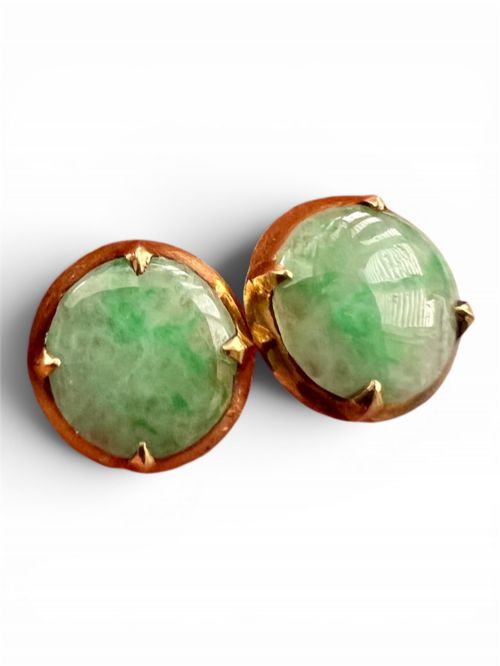
- A gemstone shaped and polished with a smooth, convex dome rather than faceted edges. This cut is commonly utilised for opals, jadeite, and star stones.
- Filigree
- Ornamental work consisting of fine, twisted wire soldered together in open tracery patterns. It appears frequently in gold mounts from the mid-century and earlier periods.
- Screw back
- A threaded post and matching nut mechanism used to secure earrings safely to the lobe. This design provides extra security compared to standard butterfly friction backs.
Fine Jewellery Stud Earrings: Frequently Asked Questions
How do screw back earrings work?
Screw back fasteners utilise a threaded post paired with a matching threaded nut that winds down securely to the earlobe. This mechanism provides added security against loss, particularly for heavier vintage cluster designs.
Wearers should gently twist the backing onto the thread until snug without over-tightening. This preserves the integrity of the vintage metal threads over years of daily use.
How do I care for vintage gold earrings?
Vintage gold and platinum settings require gentle cleaning with warm soapy water and a soft brush to remove everyday oils. Avoid harsh chemical dips, especially when caring for softer gems like opals, pearls, or emeralds.
Store each pair separately in a lined box or pouch to prevent scratching between stones. Checking the prongs periodically ensures the gems remain firmly anchored in their historical mounts.
Are platinum and white gold different?
Platinum is a naturally white, dense, and durable precious metal used extensively in fine jewellery settings from the Edwardian era onward. White gold is an alloy of yellow gold mixed with white metals like palladium or nickel to achieve a similar bright tone.
Both metals offer a cool, neutral backdrop that enhances the brilliance of diamonds and coloured gemstones. Platinum maintains its natural colour without plating, whereas white gold may occasionally be rhodium-plated.