


Fine Jewellery Gold Studs
Fine jewellery gold studs bring together brilliant gemstones and precious metals, offering versatile elegance for daily wear.
Fine Jewellery Gold Studs
Fine jewellery gold studs are compact earrings designed to sit close to the earlobe, often featuring central gemstones secured by precious metal settings. When exploring this selection, buyers encounter pieces primarily originating from the Edwardian era through the mid-twentieth century, alongside later twentieth-century examples.
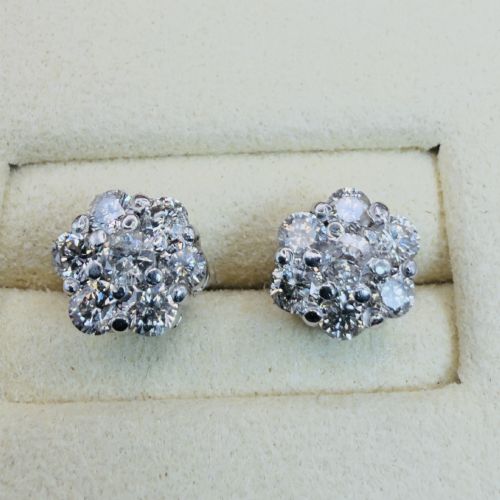
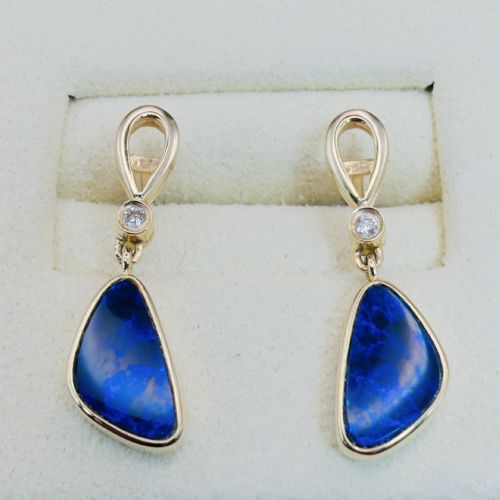
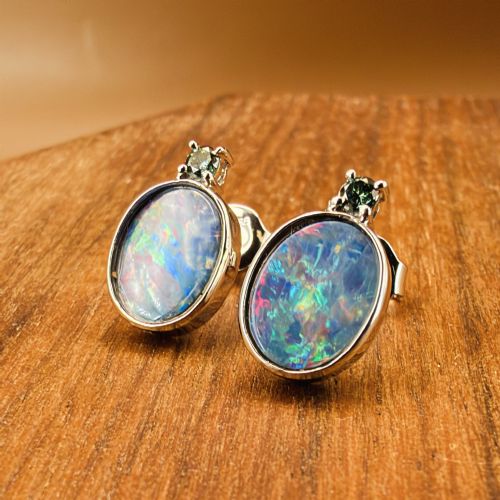
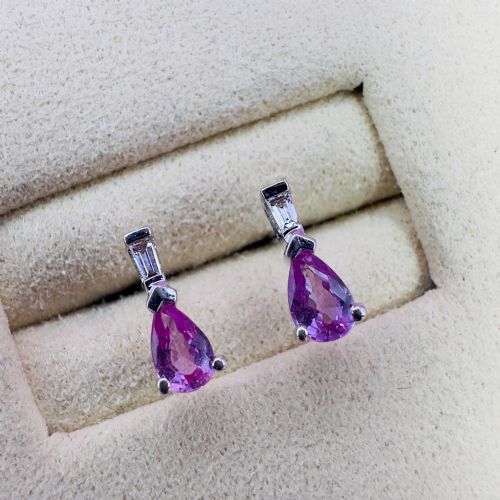
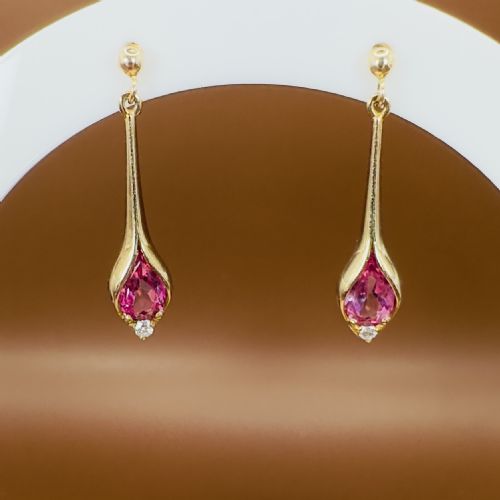
The inventory spans straightforward solitaire and cluster configurations, alongside drop variations that suspend additional stones beneath the main ear fitting. These designs incorporate yellow, white, and higher carat gold alloys, frequently paired with diamonds, sapphires, emeralds, and opals.
Art Deco and mid-century aesthetics dominate the available styles, bringing geometric precision and clean lines to the category. Buyers find both simple everyday studs and elaborate cluster arrangements framed by smaller accent stones.
How they were made
Goldsmiths utilised varying purities of gold, including 9ct, 14ct, 18ct, and specialised higher purities such as 19.2ct, shaping the metal to form secure settings for stones. Prong, claw, and bezel mountings hold gemstones firmly in place while allowing light to enter from multiple angles.
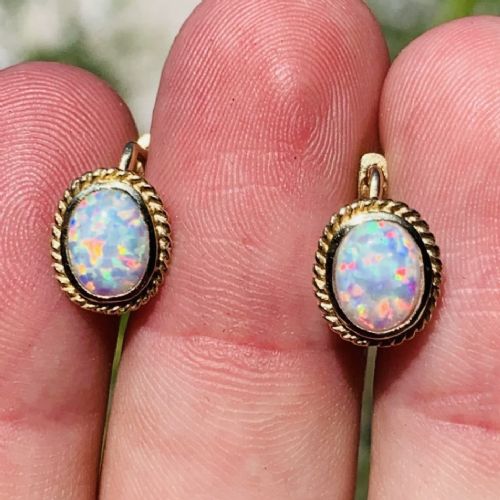
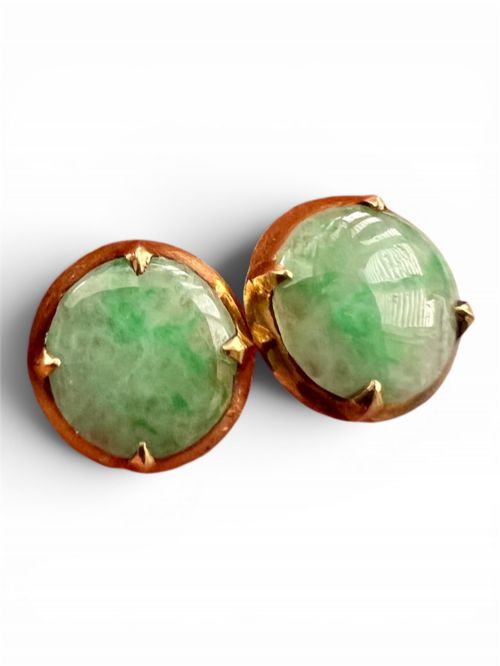
Lapidaries cut stones into distinct shapes, including brilliant, oval, pear, marquis, and trapezoid facets, as well as smooth cabochons for opals, jadeite, and quartz. Screw backs and standard posts provide fastening mechanisms designed for secure daily wear.
Original packaging travels across decades, occasionally preserving the exact velvet-lined box that first held a pair of Grima quartz studs in the nineteen-sixties.
What varies in quality
The calibre of gemstones dictates the upper tier of the range, distinguished by depth of colour, clarity, and precise cutting proportions in diamonds and coloured stones alike. Heavier gold weights and higher carat alloys provide greater structural integrity to the mountings.
Finishing details separate standard production from finer work, visible in the symmetry of cluster arrangements and the delicacy of filigree or engraved metalwork. The integration of supporting accent stones, such as calibrated diamonds surrounding a central sapphire or emerald, elevates the overall execution.
Andrew Grima
The Fine Jewellery Gold Studs Glossary
- Cluster
- A gemstone setting arrangement featuring a prominent central stone encircled by a border of smaller accent stones. This design maximises visual impact and light reflection.
- Cabochon
- A gem cutting style characterised by a smooth, rounded, and polished surface rather than flat facets. This technique is frequently applied to opals and jadeite.
- Screw back
- A threaded earring post paired with a matching nut that screws down onto the lobe for a secure fit. This mechanism appears frequently on mid-century pairs.
- Filigree
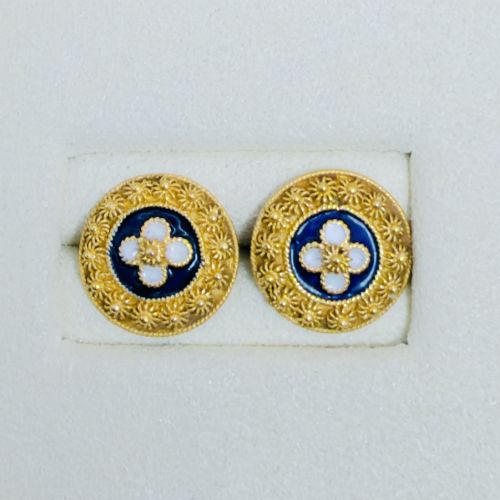
- Openwork metal decoration formed from fine twisted wires soldered together in intricate patterns. It adds delicate texture to gold mountings.
- Doublet
- A composite gemstone made of two joined sections, often pairing a thin slice of opal with a supportive base. This method enhances durability and colour play.
Fine Jewellery Gold Studs: Frequently Asked Questions
How do I care for vintage gold studs?
Clean gold and durable gemstones using warm soapy water and a soft brush to remove everyday debris. Avoid harsh chemical cleaners that may damage softer stones like pearls or opals.
Store each pair separately in a lined box to prevent scratching between metal settings and harder diamond surfaces.
Are screw back earrings hard to use?
Screw backs require twisting the backing nut along a threaded post until it rests comfortably against the earlobe. This design offers added security compared to standard friction push backs.
With brief practice, fastening and removing them becomes a quick routine suitable for daily wear.
What periods do these earrings represent?
The selection encompasses Edwardian pieces alongside significant numbers from the nineteen-thirties, nineteen-fifties, and nineteen-sixties. Mid-century and Art Deco aesthetics appear frequently throughout the inventory.
Each era brings distinct metal colours and gemstone cuts characteristic of its prevailing design movement.
How do cluster studs differ from solitaires?
Cluster studs feature a central gemstone surrounded by multiple smaller accent stones to create a larger overall silhouette. Solitaires present a single standalone stone within the metal setting.
Clusters often utilise contrasting coloured gems and diamonds for heightened visual complexity.