
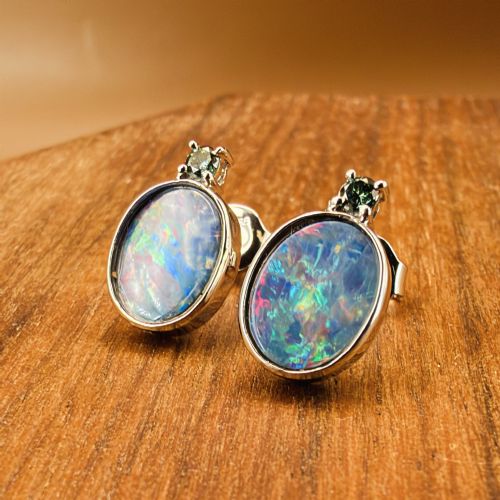
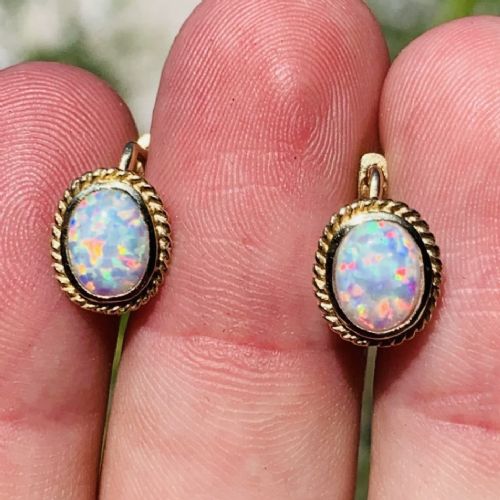
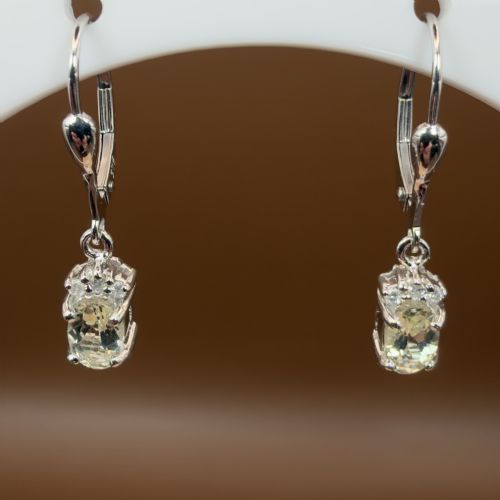
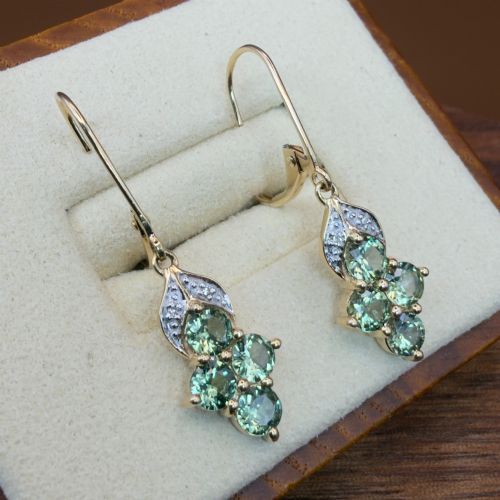
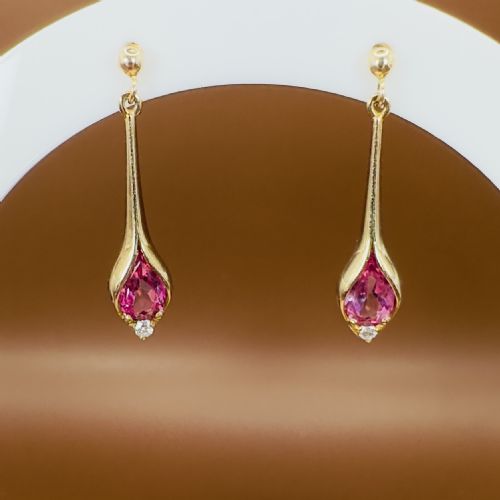


Fine Gold Gemstone Earrings
Fine gold gemstone earrings bring together precious metals and colourful stones in drops, studs and clusters spanning the Edwardian era to the mid-century.
Fine Gold Gemstone Earrings
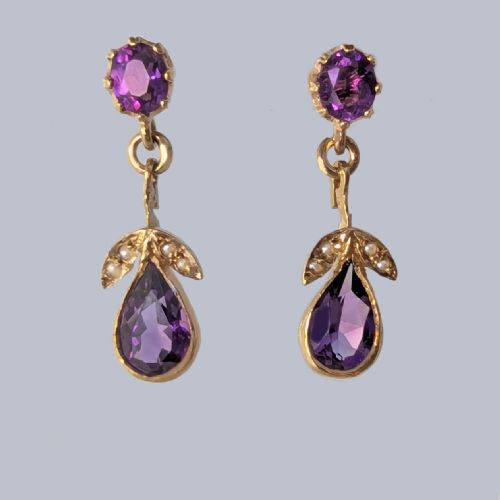
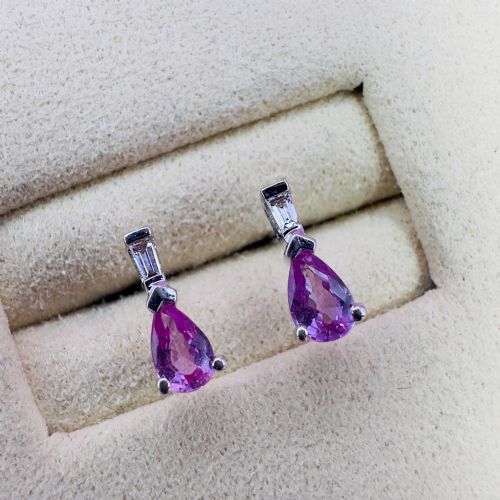
Fine gold gemstone earrings comprise pairs set with diamonds, amethysts, sapphires and emeralds mounted in nine-carat, fourteen-carat and eighteen-carat yellow or white gold. The selection spans the Edwardian period, the nineteen-twenties, nineteen-thirties, nineteen-fifties and nineteen-sixties.
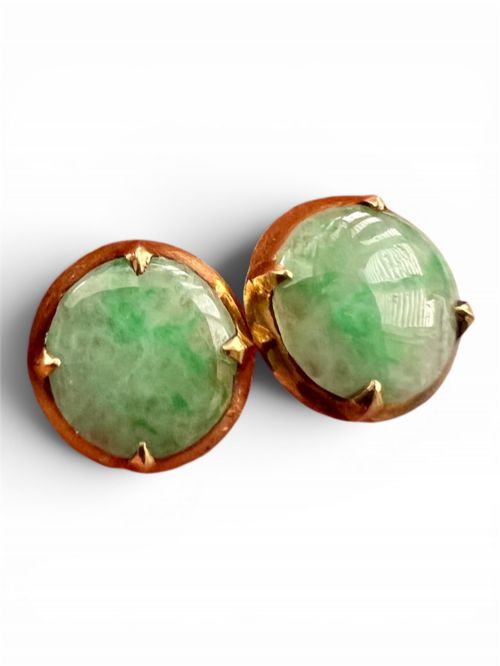
Most examples found here take the form of stud earrings, drop earrings, and hinge-back or dangly cluster designs. Gemstones appear in oval, pear, emerald and marquise cuts alongside seed pearls and jadeite.
Makers and designers worked within styles including Art Deco, Modernist, Victorian Revival and contemporary classic aesthetics. Pieces range from delicate daily wear to substantial stone-set cluster formations.
Materials and technique
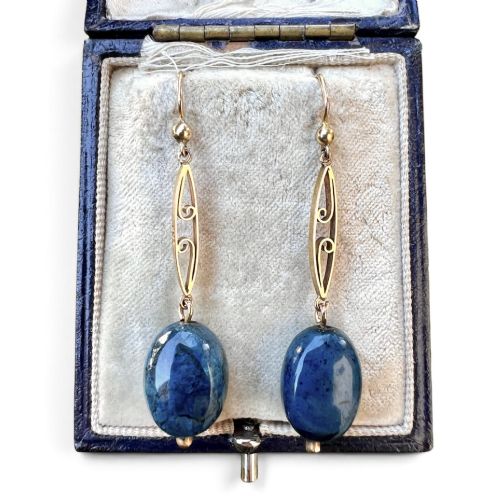
Metals used for these settings include nine-carat, fourteen-carat and eighteen-carat gold in both yellow and white varieties. Stones are secured using claw settings, bezels and filigree metalwork.
Gems such as diamonds, sapphires, emeralds, aquamarines and amethysts undergo faceted or cabochon cutting. Construction methods include cast gold components combined with hand-set stones and hinged fastenings.
Some mid-century drop earrings still rest inside their original fitted presentation boxes.
Quality variations
Quality rests on the saturation and clarity of the gemstones, the weight and purity of the gold mount, and the precision of the stone cutting. Heavier eighteen-carat gold and clean, well-matched stones sit at the upper end.
Design complexity also sets pieces apart, from simple solitaire studs to intricate multi-stone clusters with calibrated diamonds and custom-cut coloured stones.
Andrew Grima
The Fine Gold Gemstone Earrings Glossary
- Cluster
- A stone-setting arrangement where a central gemstone is surrounded by a border of smaller stones, typically diamonds.
- Cabochon
- A gemstone shaped and polished with a smooth, convex domed surface rather than with flat facets.
- Hinge back
- A type of earring fastening featuring a hinged curved wire that secures behind the earlobe.
- Doublet
- A composite gemstone made by fusing two separate pieces together, often a thin slice of opal backed by a sturdier material.
- Filigree
- Delicate ornamental work consisting of fine gold wire twisted and soldered into open patterns.
Fine Gold Gemstone Earrings: Frequently Asked Questions
What periods do these gold gemstone earrings come from?
The pieces span from the Edwardian era through the nineteen-twenties, thirties, fifties and sixties. Styles shift from early Edwardian delicacy to geometric Art Deco and mid-century Modernist designs.
Each era utilised distinct mounting techniques and gold purities, ranging from nine-carat yellow gold to eighteen-carat white gold.
What is the difference between drop and stud earrings?
Stud earrings sit directly on the earlobe, secured with a post and back, whereas drop earrings suspend stones or motifs below the ear. Drop variations often incorporate hinged fittings or dangling elements that move.
Both formats utilise various gemstones, including amethysts, sapphires and opals, mounted in yellow or white gold.
How are gemstones secured in vintage gold earrings?
Stones are held by metal claws, bezels that wrap around the girdle, or detailed filigree framing. Cluster designs position smaller diamonds tightly around a central coloured stone.
Construction quality depends on the precision of the metalwork and how securely the stones are seated within their mounts.
How do I care for antique and vintage gold earrings?
Store each pair separately in a lined box to prevent metal scratching and stone abrasion. Clean them gently with a soft cloth, avoiding harsh chemical dips that can damage softer gems like opals and pearls.
Period pieces with delicate filigree or older settings benefit from professional inspection of the claws.