
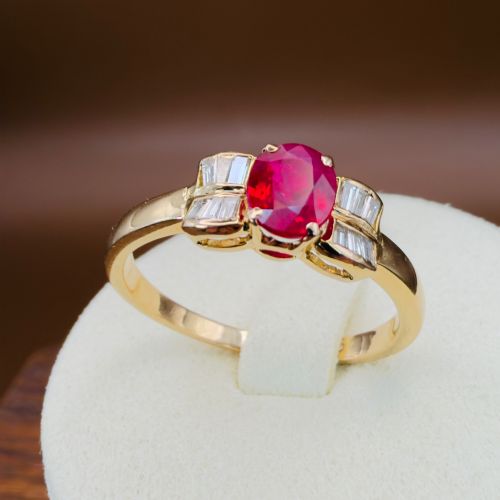
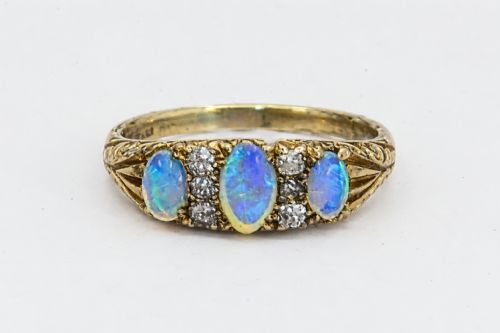
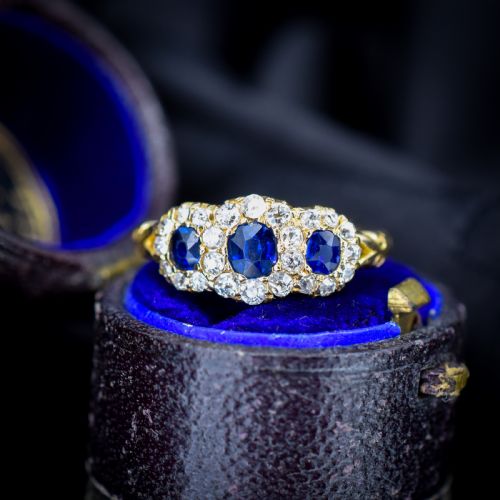
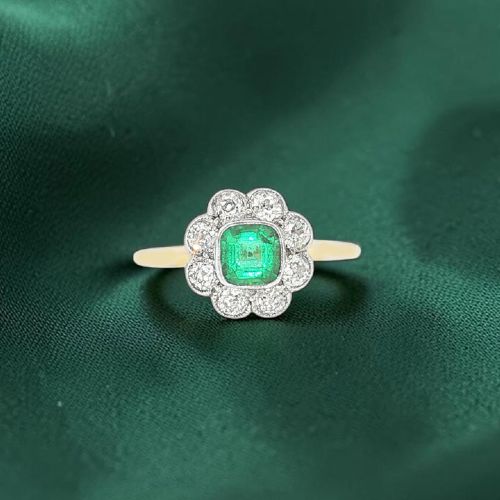




Fine Gemstone Dress Ring
A fine gemstone dress ring brings together vibrant coloured stones and gold in designs spanning from the Victorian era to the mid-century.
Fine Gemstone Dress Ring
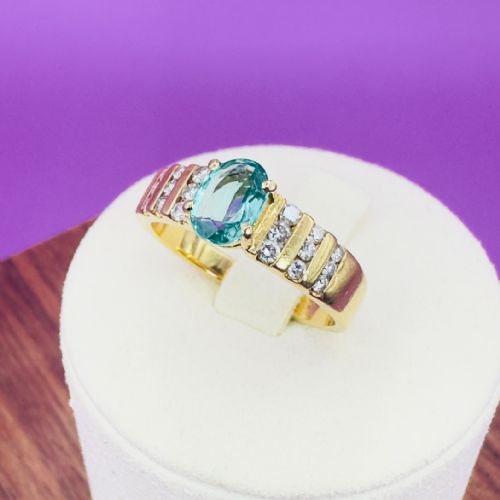
When you search for a fine gemstone dress ring, you encounter a varied selection of antique and vintage finger ornaments designed to draw the eye with prominent central stones. The selection ranges from nineteenth-century pieces to mid-century cocktail rings.
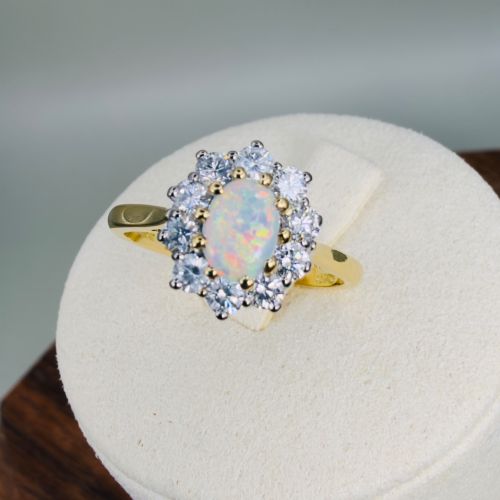
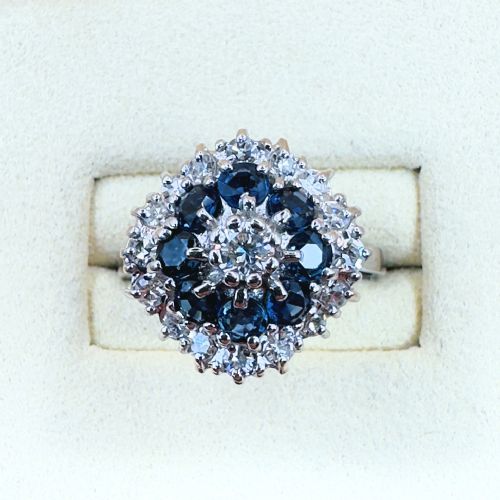
You are most likely to meet cluster arrangements on this page, where a central sapphire, ruby, emerald or opal is surrounded by diamonds. These forms cross multiple periods including the Victorian, Edwardian, Art Deco and retro modern eras.
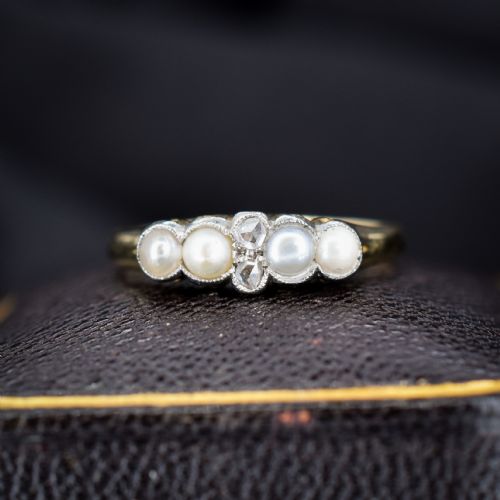
The objects span simpler five-stone configurations and solitaire opal rings to heavy tank cocktail rings and elaborate ballerina settings. Gold purity shifts across the decades from 9ct and 15ct to standard 18ct yellow and white gold, alongside platinum.
How they were made
The pieces on this page are constructed primarily in 18ct yellow gold, 18ct white gold, and platinum, frequently framing coloured gemstones with diamonds. Stones are shaped in various cuts, including oval, emerald, princess, baguette, rose-cut, and cushion.
Techniques range from traditional claw settings and navette arrangements to elaborate cluster and ballerina formations. Specific regional and period methods appear, such as French manufacture and Chester hallmarking.
Central gems include sapphires, rubies, emeralds, opals, tanzanites, amethysts, garnets, and zircons, paired with diamond accents.
What varies in quality
Quality in a fine gemstone dress ring is measured by the provenance and treatment of the central stone, such as natural unheated rubies or no-oil Colombian emeralds. The optical presence of the primary gemstone dictates the stature of the piece.
The precision of the surrounding diamond work and the weight of the precious metal foundation separate standard items from finer examples. Heavier gold structures and substantial carat weights in both centre stones and accent diamonds distinguish the upper tier.
The Fine Gemstone Dress Ring Glossary
- Cluster ring
- A ring featuring a prominent central gemstone encircled by a group of smaller stones, typically diamonds. This layout maximises visual impact and light reflection.
- Navette ring
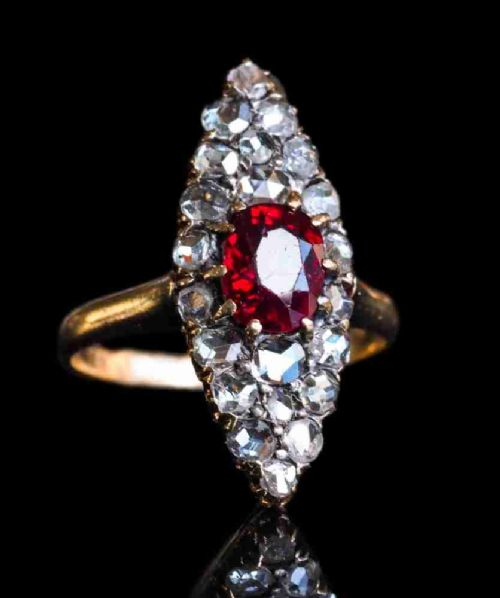
- A ring featuring an elongated, boat-shaped cluster design that tapers to points at either end. The shape covers a larger portion of the finger.
- Cabochon
- A gemstone shaped and polished with a smooth, rounded domed surface rather than faceted edges. This cut is frequently seen on opals in the inventory.
- Ballerina ring
- A complex cluster setting where tapering baguette or brilliant-cut diamonds surround a central stone to resemble a tutu. These settings are characteristic of mid-century design.
- Tank ring
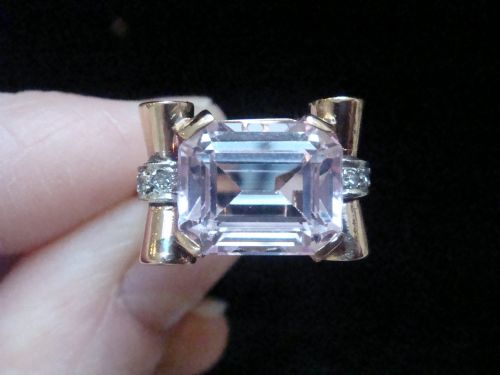
- A bold, volumetric cocktail ring style originating from the mid-twentieth century, often incorporating heavy geometric goldwork. The aesthetic reflects architectural forms of the period.
Fine Gemstone Dress Ring: Frequently Asked Questions
What periods do these rings come from?
The pieces span from the 1800s through the Victorian, Edwardian, and Art Deco eras, extending into mid-century and late twentieth-century designs.
This broad timeline means you encounter distinct stylistic shifts, from delicate nineteenth-century goldwork to substantial retro cocktail rings.
How do I care for opal rings?
Opals are softer and contain moisture, making them more vulnerable to knocks, scratches, and sudden temperature changes compared to diamonds or sapphires.
It is advisable to remove opal rings before engaging in strenuous physical activity or hand washing to preserve the stone.
What is the difference between yellow and white gold settings?
Yellow gold contains alloys like copper and silver, giving a traditional warm tone that complements antique and Victorian designs.
White gold is alloyed with white metals such as palladium or silver, offering a cooler background that often highlights the brilliance of diamonds.
How were cocktail rings worn historically?
Cocktail rings emerged as prominent, oversized hand ornaments intended to make a statement at evening gatherings and social events during the mid-twentieth century.
Their generous scale and bold use of coloured gemstones meant they were typically worn alone on the hand to avoid competition.