
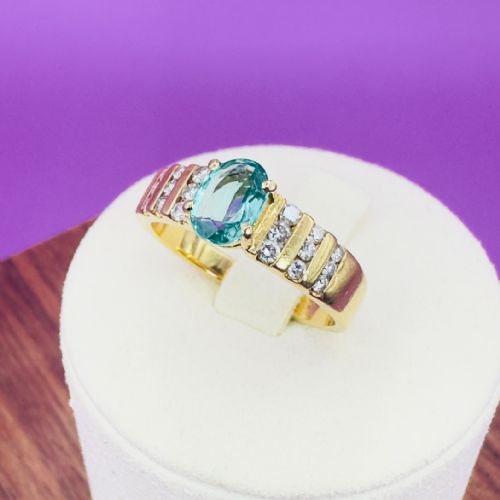


Fine Gemstone Cluster Ring
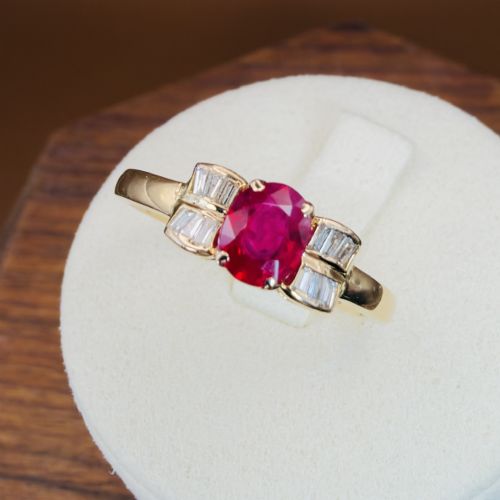
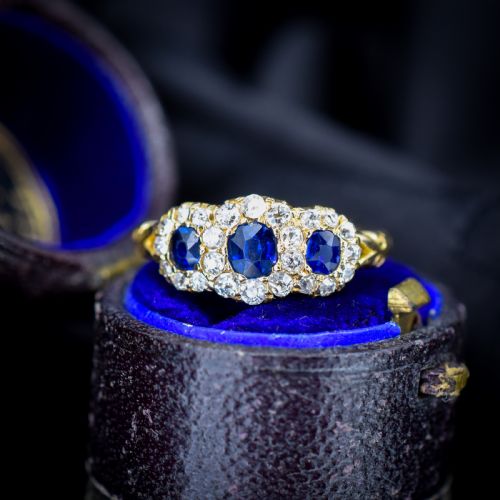
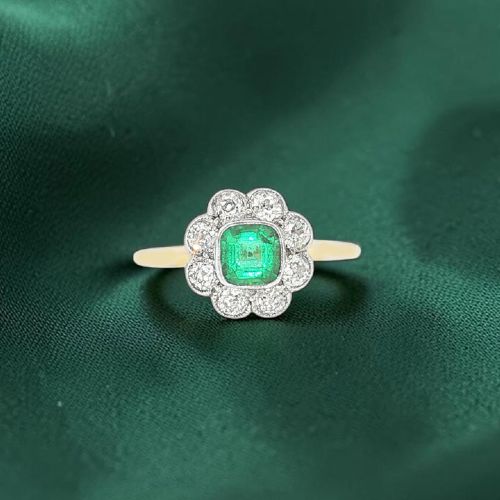
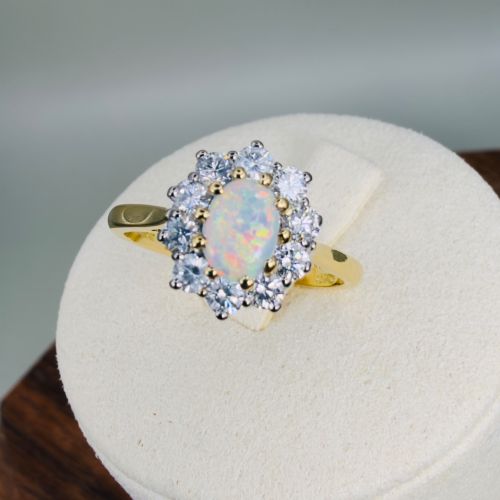
A fine gemstone cluster ring brings together a central jewel framed by smaller diamonds, offering the concentrated colour of sapphire, emerald, ruby or opal.
Fine Gemstone Cluster Ring
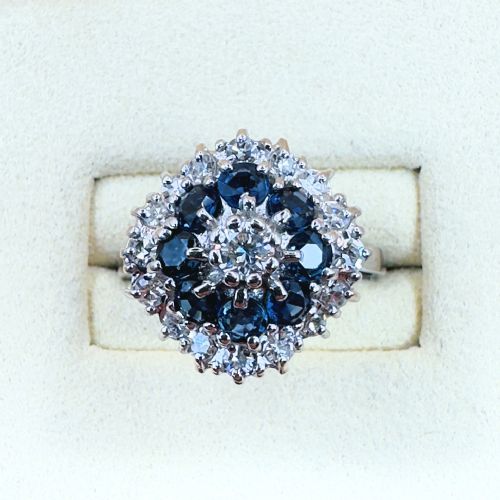
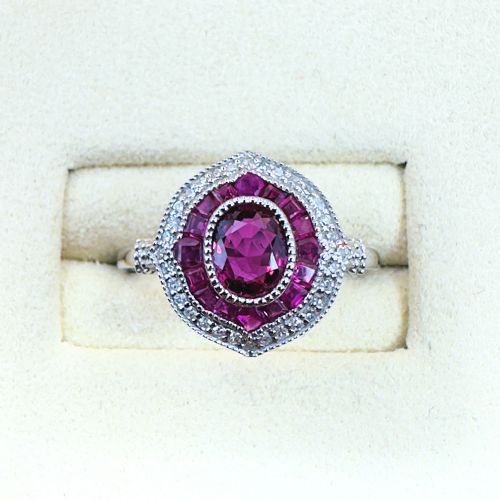
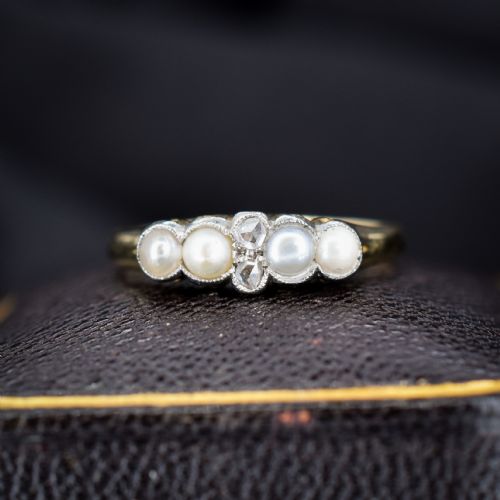
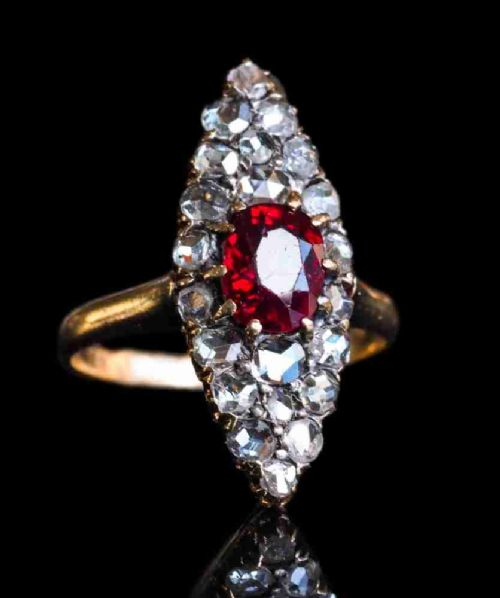
A fine gemstone cluster ring places a prominent central stone, such as sapphire, emerald, ruby, opal or tanzanite, at the focus of a design surrounded by smaller accent diamonds. Buyers seeking these pieces encounter an array of forms ranging from Victorian and Edwardian examples to Art Deco and mid-century designs.
The selections span yellow gold, white gold, platinum and occasionally 9ct or 14ct settings, reflecting periods from the late nineteenth century through to the late twentieth century. Oval, emerald cut, cabochon and princess cut stones dominate the configurations seen across these listings.
How they were made
Craftsmen utilised 18ct yellow gold, 18ct white gold and platinum to mount central gemstones alongside brilliant, baguette or rose-cut diamonds. Metalwork includes traditional claw settings and rubover techniques that secure each stone tightly within the frame.
Gemstones are shaped into oval, round, emerald, princess and cabochon cuts before being arranged into tight floral clusters, navette shapes, trefoil formations or sculptural ballerina profiles.
Listings span Victorian, Edwardian, Art Deco and 1950s periods, executed in 18ct gold, white gold and platinum.
What varies in quality
The quality of a fine gemstone cluster ring rests upon the saturation and clarity of the central gem, whether an unheated ruby, a no-oil Colombian emerald or a Ceylon sapphire. Masterful proportioning between the centre stone and the surrounding diamond halo determines the visual balance of the piece.
The crispness of the surrounding diamond work and the substantial weight of the gold or platinum shank separate ordinary commercial output from finer examples produced across the Victorian, Edwardian and mid-century decades.
The Fine Gemstone Cluster Ring Glossary
- Cluster ring
- A ring featuring a central gemstone surrounded by a border of smaller stones, typically diamonds. This arrangement maximises surface brilliance.
- Cabochon
- A gemstone shaped and polished with a smooth, convex domed surface rather than faceted. This cut is frequently seen on opals.
- Navette
- A boat-shaped gemstone setting that tapers to points at both ends. It creates an elongated silhouette on the finger.
- Rubover setting
- A method where a thin collar of metal is pushed over the edge of the gemstone to hold it securely. It provides a clean, modern outline.
- Trefoil cluster
- A cluster design incorporating three distinct lobes or stones grouped together. This form echoes natural leaf and flower motifs.
Fine Gemstone Cluster Ring: Frequently Asked Questions
How do I care for an opal cluster ring?
Opals contain natural water content and require gentle cleaning with a soft cloth rather than harsh ultrasonic baths. Store them away from extreme heat and direct sunlight to maintain their internal play of colour.
Remove the ring when performing manual tasks or using household chemicals to protect both the softer opal and the surrounding gold setting.
Are these rings suitable for daily wear?
Rings set with robust stones like sapphire, ruby or diamond withstand everyday use when paired with durable 18ct gold or platinum bands. Regular checks by a jeweller ensure the claws holding the cluster remain secure.
More delicate stones like opal require mindful wear to prevent knocks against hard surfaces.
How can I tell an Edwardian cluster ring apart?
Edwardian rings frequently utilise platinum or white gold topping on yellow gold shanks, incorporating airy openwork designs and fine millegrain detailing. The overall aesthetic leans towards light, lace-like floral motifs.
Diamonds from this period often feature rose-cut or early European cuts rather than modern brilliant facets.