

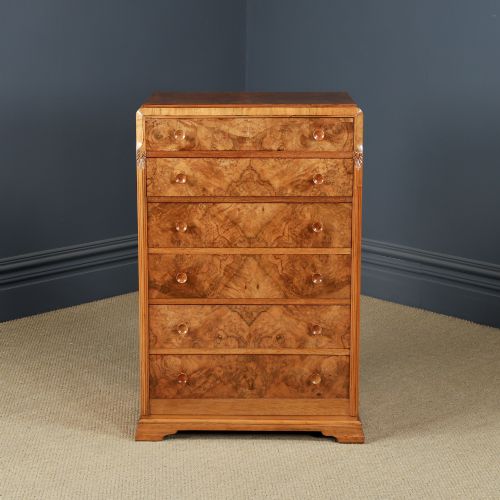
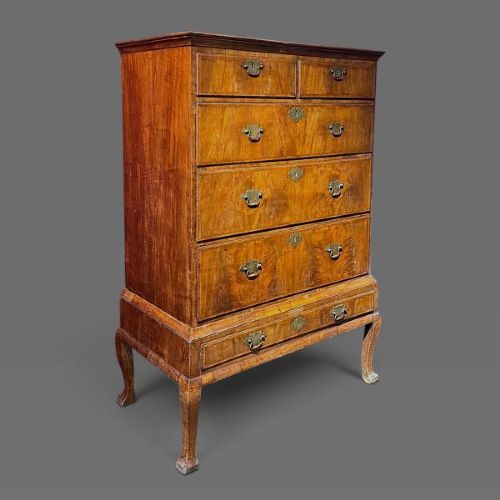
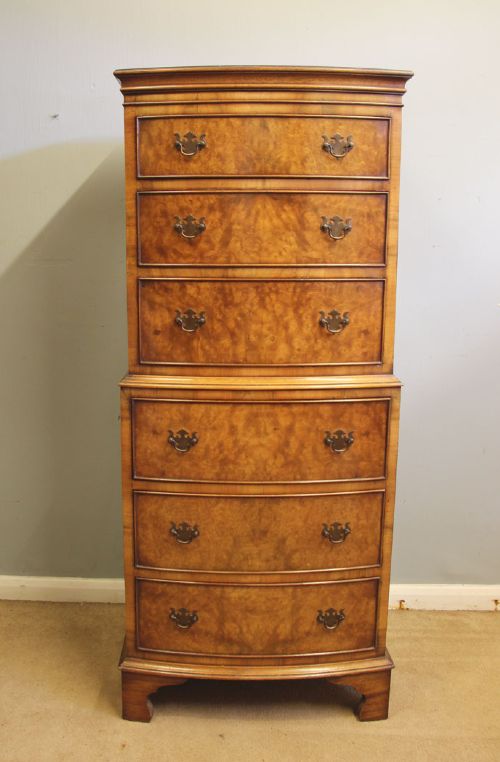
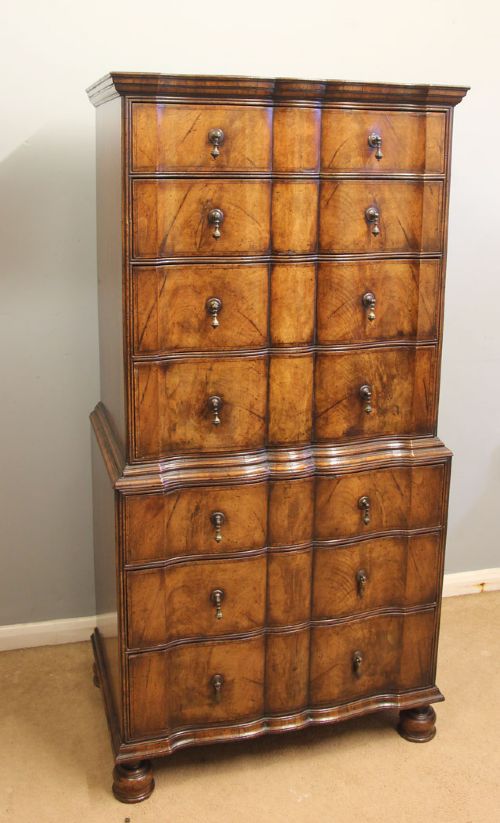


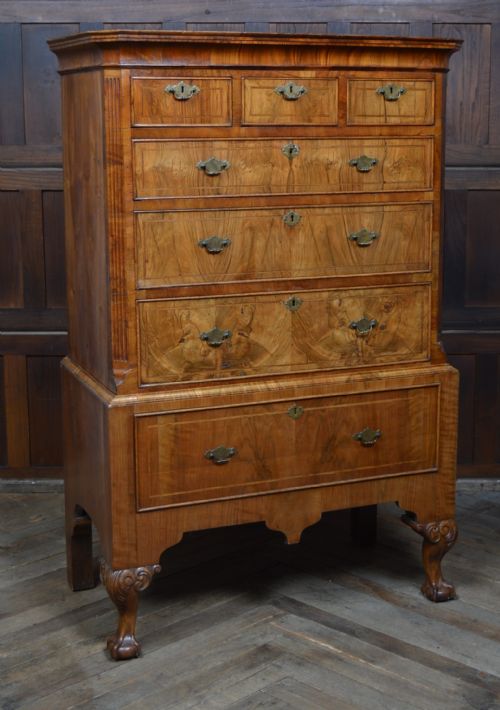
Figured Walnut Tall Chest
These figured walnut tall chest pieces bring striking timber grain and height to a room.
Figured Walnut Tall Chest
When you search for a figured walnut tall chest, you are looking at stately vertical storage pieces designed to maximise capacity while occupying a smaller floor footprint. These tall forms take several configurations across the selection, including tallboys, chests on stands, chests on chests, and narrow Wellington chests.
The pieces on this page span several distinct periods, originating from the early eighteenth century through the Georgian era, into nineteenth century examples from 1800, 1860, and 1870, alongside twentieth century pieces from 1900 and 1930. Georgian and George II examples appear alongside Victorian and Art Deco interpretations.
You will most commonly encounter chest of drawers forms and chest on chest designs utilising walnut timber. The vertical orientation allows makers to showcase decorative timber surfaces across multiple stacked drawers or tall facades.
How they were made
These chests rely primarily on walnut, burr walnut, and figured walnut veneers applied over secondary timbers such as oak. Craftsmen selected sections of timber specifically for their swirling grain patterns, cutting and matching veneers symmetrically across drawer fronts.
Hardware plays a structural and decorative role, with brass drop handles and escutcheons fitted to secure the drawers. Construction methods range from eighteenth century chest on stand joinery to nineteenth century Wellington mechanisms and twentieth century bow front carcass building.
Figured Walnut Tall Chest Retail Price Guide 2026
Typical asking prices for figured walnut tall chest among the pieces listed under this phrase on Sellingantiques today, from the lower quarter to the upper quarter. They describe what is for sale here now, not the wider market.
Listings span multiple centuries, incorporating Georgian, 19th Century, and 1930 periods alongside timber varieties like oak and brass hardware.
What varies in quality
The visual impact of the timber figure separates standard examples from exceptional ones. Premium pieces display rich, highly figured grain patterns that have been carefully matched across the entire front elevation rather than patchworked from mismatched veneer sheets.
Proportion and architectural form distinguish regional or period pieces, such as the elevation achieved by a proper chest on stand versus a standard stacked tallboy. The crispness of the mouldings and the integration of brass hardware also indicate the standard of workshop production.
Gillows of Lancaster
The Figured Walnut Tall Chest Glossary
- Figured walnut
- Timber exhibiting wavy, mottled, or highly decorative grain patterns prized for decorative furniture facades. It is sliced into thin veneers to display the natural figure across large drawer fronts.
- Burr walnut
- Wood taken from the abnormal growth or burl of a walnut tree, producing a dense cluster of swirling eyes and intricate knots. This material is highly decorative and traditionally reserved for prominent surfaces.
- Tallboy
- A tall chest of drawers, often constructed as one chest stacked upon another, providing high storage capacity. This form became popular in the eighteenth century.
- Wellington chest
- A tall, narrow chest of drawers secured by a hinged vertical locking sidebar on one side. This locking mechanism holds all drawers shut simultaneously with a single key.
- Chest on stand
- A drawer section elevated on a separate frame with legs, lifting the storage body off the floor. This form is frequently associated with earlier eighteenth century cabinet making.
Figured Walnut Tall Chest: Frequently Asked Questions
What is a tall chest?
A tall chest is a vertical storage furniture piece designed with multiple stacked drawers to hold clothing or linens while using minimal floor space.
These taller proportions allow makers to showcase decorative wood grains across a larger continuous surface area than standard low chests.
How do I date a walnut chest?
Dating relies on examining construction techniques, hardware styles, timber preparation methods, and overall architectural proportions.
Early eighteenth century pieces show different carcass assembly methods and leg configurations compared to later Victorian or Art Deco interpretations.
Where were tall chests used?
These pieces were primarily placed in bedrooms and dressing rooms to provide substantial vertical storage for personal garments.
Their commanding height and decorative wood grain also suited them for placement in hallways and landings.
What is a chest on chest?
A chest on chest consists of an upper chest of drawers stacked directly onto a slightly larger lower chest base.
This two-part construction made large vertical furniture easier to transport up staircases in historic homes.