




Figured Satsuma Pottery
Figured satsuma pottery brings together fine earthenware, rich enamels and detailed hand painting to show figures from history and folklore.
Figured Satsuma Pottery
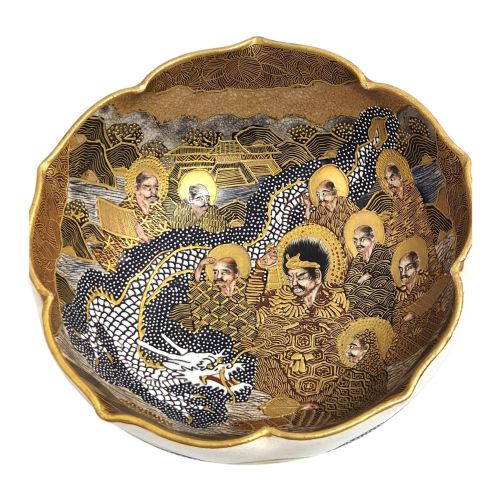
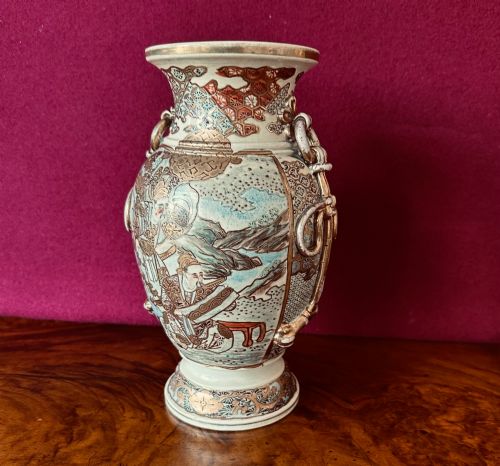
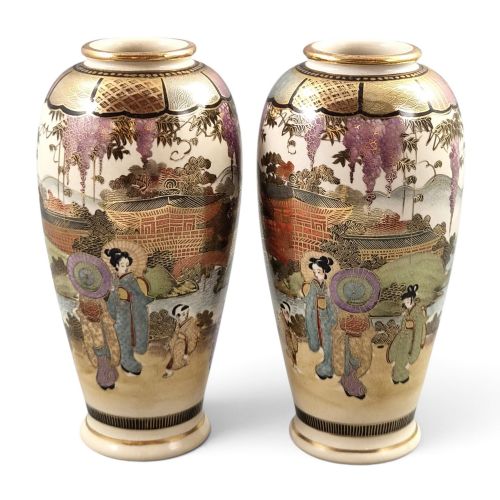
Figured satsuma pottery comprises ceramic pieces decorated with human figures such as women, children, monks and deities. Buyers searching for figured satsuma pottery encounter vases, bowls, tea jars and okimono figures from the Meiji period, Edo period and later eras.
The objects stem from Japanese export traditions alongside domestic production, appearing in forms like baluster vases, hexagonal vessels and shallow dishes. Most examples on this page date from the late nineteenth century through to the early twentieth century.
Makers and studios across Japan utilised earthenware bodies to create narrative scenes featuring Rakan, court figures and mythological subjects. These pieces range from compact tea caddies to large garniture sets.
How they were made
Potters shaped earthenware and porcelain bodies before applying intricate glaze finishes and detailed hand painting. Artisans used enamel colours and gold leaf highlights, often building up raised moriage decoration to give texture to robes and backgrounds.
Workshops combined cobalt blue grounds with gilt details and finely rendered facial expressions on figures. Many pieces incorporate signature panels and careful brushwork executed during the Meiji and Taisho periods.
Figured Satsuma Pottery Retail Price Guide 2026
Typical asking prices for figured satsuma pottery among the pieces listed under this phrase on Sellingantiques today, from the lower quarter to the upper quarter. They describe what is for sale here now, not the wider market.
Daruma monks stare out from tiny ceramic surfaces, reminding viewers of perseverance while holding court on eighteenth-century shelves.
What varies in quality
The richness of the gilding and the depth of the enamel work determine the visual weight of each piece. Superior examples display balanced composition across complex forms such as hexagonal vases and large garnitures.
Kinkozan Kyoto Satsuma·Tokyo Taizan
The Figured Satsuma Pottery Glossary
- Okimono
- A Japanese freestanding ornamental figure or sculpture. These carvings and ceramic figures depict deities, monks and historical personages.
- Moriage
- A type of raised clay decoration applied to pottery before glazing and firing. This technique creates a textured, tactile surface on vases and bowls.
- Bijin
- A traditional Japanese representation of a beautiful woman. These figures frequently appear in traditional dress on Satsuma pottery and plates.
- Rakan
- An enlightened disciple of Buddha. Such figures are often depicted in groups on Satsuma vases and tea jars.
- Gilt
- A thin layer of gold applied to the surface of ceramic or wood. This material provides metallic highlights across decorated panels and borders.
Figured Satsuma Pottery: Frequently Asked Questions
What periods do these pieces come from?
The pieces span several eras, with many originating in the Meiji period during the late nineteenth century. Other examples date to the Edo period, the Taisho period and the early twentieth century.
Production methods shifted across these eras, moving from traditional hand-formed wares to more structured export output while maintaining painted figural motifs.
How were Satsuma figures used?
Many figures served as decorative okimono placed within interiors to display craftsmanship and honour cultural traditions. Other pieces functioned as functional vessels like tea jars and footed bowl burners.
Larger vases and garnitures were designed for prominent display in reception rooms during the late Victorian period.
How do I care for Satsuma pottery?
These ceramic items require gentle handling to protect the delicate enamel and gold leaf decorations. Dusting with a soft, dry cloth preserves the painted surface without risking abrasion.
Keep pieces away from direct sunlight and moisture to safeguard the historic glazes and earthenware bodies.
How can I tell different styles apart?
Style differences often relate to the background colours and the nature of the figures depicted. Cobalt blue grounds with moriage work contrast with lighter painted surfaces featuring court scenes or figures like Hotei and Daruma.
Examining the base for signatures or period marks helps clarify the origin and manufacturing era of each item.